
1984
Issue 17

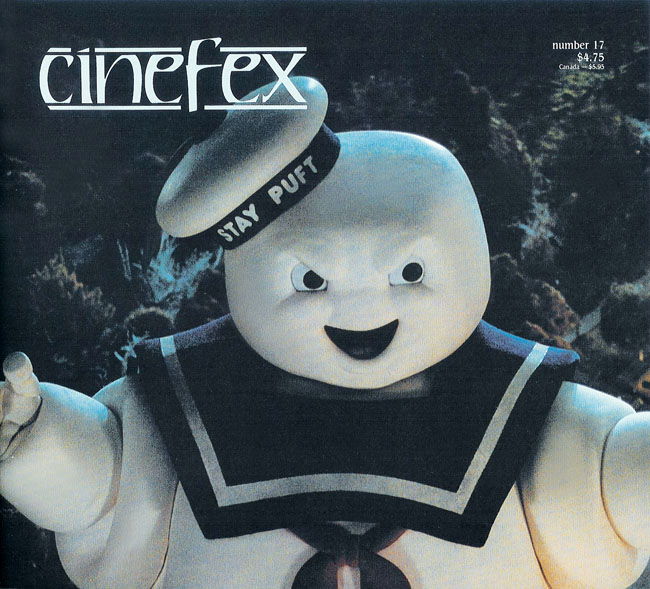
Ghostbusters: After a stellar seven-year association with the Lucasfilm family, four-time Oscar-winner Richard Edlund departed Industrial Light & Magic to establish his own effects organization at Entertainment Effects Group. Ghostbusters - his first independent assignment - presented him with the challenge of producing nearly two hundred varied and complex effects shots in considerably less than a year. Before he could even begin, however, the facility - formerly operated by Douglas Trumbull and Richard Yuricich - had to be restructured, additional equipment had to be designed and built, and a top-notch crew had to be assembled from the ground up. Edlund details the problems involved and - together with key members of his production unit - discusses the magic that went into Ivan Reitman's supernatural comedy. Article by Adam Eisenberg
The Last Starfighter - Imagery Wrought in the Total Forge: When John Whitney Jr. and Gary Demos established Digital Productions in 1981, they did so with an eye towards building a facility that would revolutionize the field of computer generated imagery and at the same time introduce to the film industry a viable alternative to optical effects and motion control photography. Armed with the Cray X-MP - the world's most powerful computer - they turned their high tech talents loose on The Last Starfighter, generating an unprecedented twenty-five minutes of digital scene simulation. Whitney and Demos discuss the unique nature and capabilities of Digital Productions, while individual members of the simulation team delve into the specifics of their premiere film - featuring, among other things, some of the most complex computer imagery every produced. Article by Peter Sorensen
The Last Starfighter - Imagery Wrought in the Total Forge: When John Whitney Jr. and Gary Demos established Digital Productions in 1981, they did so with an eye towards building a facility that would revolutionize the field of computer generated imagery and at the same time introduce to the film industry a viable alternative to optical effects and motion control photography. Armed with the Cray X-MP - the world's most powerful computer - they turned their high tech talents loose on The Last Starfighter, generating an unprecedented twenty-five minutes of digital scene simulation. Whitney and Demos discuss the unique nature and capabilities of Digital Productions, while individual members of the simulation team delve into the specifics of their premiere film - featuring, among other things, some of the most complex computer imagery every produced. Article by Peter Sorensen
Ghostbusters: After a stellar seven-year association with the Lucasfilm family, four-time Oscar-winner Richard Edlund departed Industrial Light & Magic to establish his own effects organization at Entertainment Effects Group. Ghostbusters...
more

Issue 18

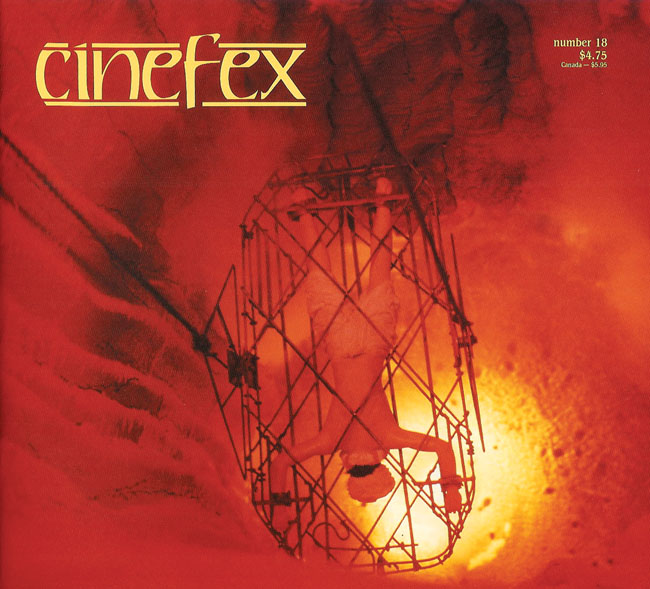
Indiana Jones and the Temple of Doom: Hell and High Water: Indiana Jones and the Temple of Doom marks the second blockbuster association between executive producer George Lucas and director Steven Spielberg. Unlike Raiders of the Lost Ark, which - with the exception of its cosmic finale - relied primarily on dazzling stuntwork for its thrills and chills, many of the key sequences in the second Indiana Jones adventure were made possible only through the employment of elaborate visual effects. From miniature airplanes and mine cars to large-scale lava and water effects, the cinemagicians of Industrial Light & Magic stretched the limits of their experience and expertise to produce some 140 effects shots for the consummate cliffhanger. Three-time Oscar-winning effects supervisor Dennis Muren discusses the project in detail, aided and abetted by numerous members of his highly-specialized team. Article by Robert P. Everett
Star Trek III: The Search for Spock: The Final Voyage of the Starship 'Enterprise': Concurrent with their involvement in Indiana Jones, the artists and technicians of Industrial Light & Magic were also at work on a vastly different project - their second foray into Star Trek's final frontier. In Star Trek III: The Search for Spock, Oscar-winning effects supervisor Ken Ralston and his team were called upon to create alien creatures, several new spacecraft, a mammoth orbiting drydock, planetary surfaces for Genesis and Vulcan - and most memorable, the destruction of the starship Enterprise. Ralston and key members of the effects unit detail the challenges involved and the techniques employed in achieving these and other cinematic wonders. Article by Brad Munson
Star Trek III: The Search for Spock: The Final Voyage of the Starship 'Enterprise': Concurrent with their involvement in Indiana Jones, the artists and technicians of Industrial Light & Magic were also at work on a vastly different project - their second foray into Star Trek's final frontier. In Star Trek III: The Search for Spock, Oscar-winning effects supervisor Ken Ralston and his team were called upon to create alien creatures, several new spacecraft, a mammoth orbiting drydock, planetary surfaces for Genesis and Vulcan - and most memorable, the destruction of the starship Enterprise. Ralston and key members of the effects unit detail the challenges involved and the techniques employed in achieving these and other cinematic wonders. Article by Brad Munson
Indiana Jones and the Temple of Doom: Hell and High Water: Indiana Jones and the Temple of Doom marks the second blockbuster association between executive producer George Lucas and director...
more

Issue 19

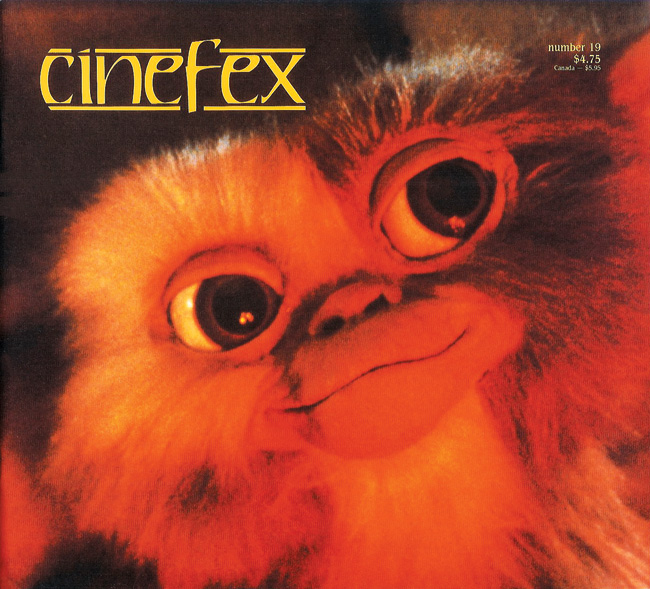
Gremlins: Never Feed Them After Midnight: A stylishly quirky master of the cult film, director Joe Dante took a giant step forward into mainstream filmmaking with Gremlins, a savagely witty fairy tale and resounding boxoffice success. To an extent beyond that of any recent film, Gremlins relied almost as much on its variously conceived mechanical creatures as it did on its live performers. With contributions from Joe Dante, producer Michael Finnell and others, mogwai and gremlin creator Chris Walas unveils the story behind the year's most remarkable cinematic newcomers. Article by Paul M. Sammon
Across the Eighth Dimension with Buckaroo Banzai: Overflowing with bizarre concepts and off-the-wall humor, The Adventures of Buckaroo Banzai demanded an equally off-centered approach to its visual effects. With this in mind, effects supervisor Michael Fink was given the task of organizing and coordinating the activities of three separate facilities, all engaged in providing footage of organic spaceships and interdimensional environments. With an overview by director W.D. Richter, Fink elaborates on the project, with additional input from Hoyt Yeatman and Keith Shartle of Dream QuestImages, Peter Kuran of VCE, Inc., and John Scheele of Greenlite Effects. Article by Nora Lee
Dreamscape: What Dreams Are Made Of: Creating a low-budget dream world was often a nightmare for the effects personnel involved in Dreamscape. Visual effects supervisor Peter Kuran details the creation of surrealistic nuclear explosions and post-holocaust environments; special makeup artist Craig Reardon outlines the construction of a full-size snakeman and various radiation-burned bomb victims; and camerman James Aupperle discusses his stop-motion animation in the film. Article by Adam Eisenberg
Across the Eighth Dimension with Buckaroo Banzai: Overflowing with bizarre concepts and off-the-wall humor, The Adventures of Buckaroo Banzai demanded an equally off-centered approach to its visual effects. With this in mind, effects supervisor Michael Fink was given the task of organizing and coordinating the activities of three separate facilities, all engaged in providing footage of organic spaceships and interdimensional environments. With an overview by director W.D. Richter, Fink elaborates on the project, with additional input from Hoyt Yeatman and Keith Shartle of Dream QuestImages, Peter Kuran of VCE, Inc., and John Scheele of Greenlite Effects. Article by Nora Lee
Dreamscape: What Dreams Are Made Of: Creating a low-budget dream world was often a nightmare for the effects personnel involved in Dreamscape. Visual effects supervisor Peter Kuran details the creation of surrealistic nuclear explosions and post-holocaust environments; special makeup artist Craig Reardon outlines the construction of a full-size snakeman and various radiation-burned bomb victims; and camerman James Aupperle discusses his stop-motion animation in the film. Article by Adam Eisenberg
Gremlins: Never Feed Them After Midnight: A stylishly quirky master of the cult film, director Joe Dante took a giant step forward into mainstream filmmaking with Gremlins, a savagely witty...
more

Issue 20


Jupiter Revisited - The Odyssey of '2010': Sixteen years ago, 2001: A Space Odyssey was launched into the cinematic firmament - a glimmering enigma which, among other things, promptly established a new aesthetic, as well as a whole new set of ground rules for motion picture special effects. Nearly a decade would pass before Star Wars and Close Encounters of the Third Kind, using computerized motion control photography and advanced compositing techniques, would begin to close the technological gap established by 2001. When Arthur C. Clarke published his much anticipated sequel 2010: Odyssey Two in 1982, it was reasonable to assume that it would soon find its way onto the screen, with the full force of contemporary state-of-the-art movie magic brought to bear on its complex effects requirements. Rising to the challenge were producer-writer-director Peter Hyams, futurist designer Syd Mead and visual effects supervisor Richard Edlund. From actualizing a Russian interplanetary spaceship to devising an authentic-looking representation of Jupiter's turbulent surface, the 2010 effects unit fulfilled the demands of the production and in the process established a fresh new look in simulated space photography. Article by Don Shay
Jupiter Revisited - The Odyssey of '2010': Sixteen years ago, 2001: A Space Odyssey was launched into the cinematic firmament - a glimmering enigma which, among other things, promptly established...
more
