
1989
Issue 37

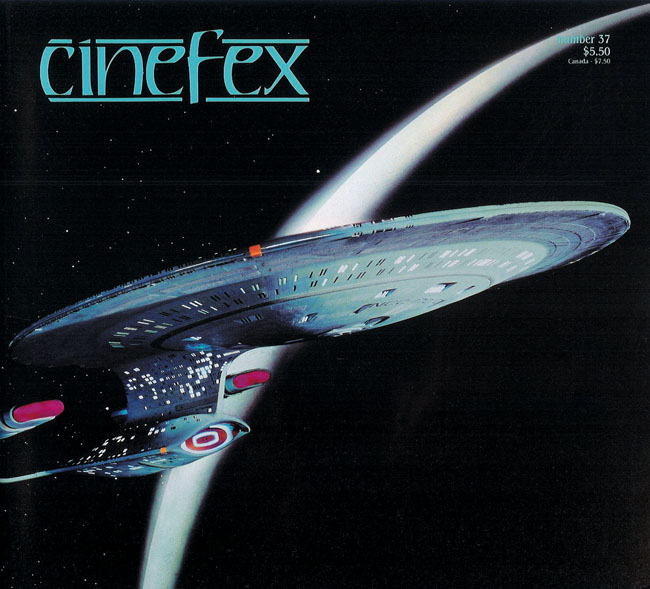
Star Trek: The Next Generation: Special Effects - The Next Generation: The issue of visual effects had to be addressed early in the planning stages for Star Trek - The Next Generation. With fifty or more quality effects shots needed for each weekly episode - and only a modicum of time and money to spend on them - an alternative to film opticals was considered essential. Aware of advances in video effects technology, the producers turned to two of the most progressive video postprodiction companies in the business - The Post Group and Composite Image Systems - to take them where no television series had gone before. Article by Glenn Campbell and Donna Trotter
The Fly II: On The Fly - The Making of a Sequel: At the end of David Cronenberg's horror hit, The Fly, Veronica Quaife is left pregnant with the child of Seth Brundle, uncertain of what effect the mutant housefly genes that destroyed her lover might have on their child. First-time director Chris Walas - who as makeup effects supervisor had won an Oscar for the first film - was given an opportunity to explore the possibilities in The Fly II. Reuniting key members of his makeup and effects unit for the sequel, Walas translated onto film the physical metamorphosis of young Martin Brundle from normal human being to murderours mutant insect. Article by Robin Brunet
From Science to Showbiz: In a serendipitous merging of skills, equipment and opportunity, Oxford Scientific Films was founded by a group of university zoologists intent upon photo-documenting the microscopic wonders of the world surrounding them. Before long, the fresh perspective they brought to motion picture problem solving led to their involvement in a variety of feature film projects. Today - expanded into a full-service facility - Oxford Scientific is a respected leader among British effects studios. Article by Pamela Duncan Looft
The Fly II: On The Fly - The Making of a Sequel: At the end of David Cronenberg's horror hit, The Fly, Veronica Quaife is left pregnant with the child of Seth Brundle, uncertain of what effect the mutant housefly genes that destroyed her lover might have on their child. First-time director Chris Walas - who as makeup effects supervisor had won an Oscar for the first film - was given an opportunity to explore the possibilities in The Fly II. Reuniting key members of his makeup and effects unit for the sequel, Walas translated onto film the physical metamorphosis of young Martin Brundle from normal human being to murderours mutant insect. Article by Robin Brunet
From Science to Showbiz: In a serendipitous merging of skills, equipment and opportunity, Oxford Scientific Films was founded by a group of university zoologists intent upon photo-documenting the microscopic wonders of the world surrounding them. Before long, the fresh perspective they brought to motion picture problem solving led to their involvement in a variety of feature film projects. Today - expanded into a full-service facility - Oxford Scientific is a respected leader among British effects studios. Article by Pamela Duncan Looft
Star Trek: The Next Generation: Special Effects - The Next Generation: The issue of visual effects had to be addressed early in the planning stages for Star Trek - The...
more

Issue 38

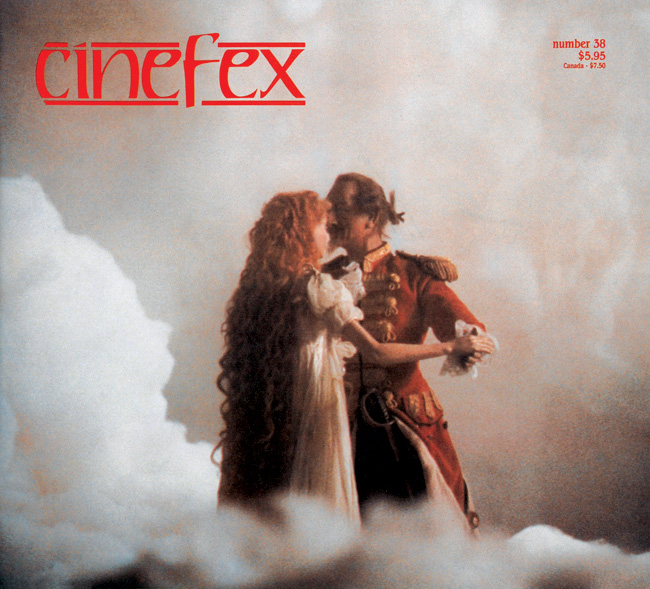
The Adventures of Terry Gilliam: While thematic similarities resonate through the collected works of all visionary artists, even the most self-aware amongst them might be hesitant to proclaim as a trilogy three decisively unique film projects unrelated in time and place and without a single character in common. Not so Terry Gilliam. For him, Time Bandits, Brazil and The Adventures of Baron Munchausen represent a three-part celebration of the persistent dreamer seeking refuge in flights of fancy from the humdrum realities of the workaday world. With massive doses of imagination - and an irreverent sense of humor springing from his Monty Python roots - Gilliam has spent the last decade leaping through time and space and into alternate universes both wondrous and bizarre. Acutely aware that special effects are the essential elements needed to unlock his wildest imaginings, Gilliam has surrounded himself with top practitioners in the field -some spanning all three pictures - who have consistently pushed the limits of budget-conscious, low-tech film trickery to produce for him an abundance of cinematic wonders both grand and small. Article by Paul M. Sammon and Don Shay
The Adventures of Terry Gilliam: While thematic similarities resonate through the collected works of all visionary artists, even the most self-aware amongst them might be hesitant to proclaim as a...
more

Issue 39

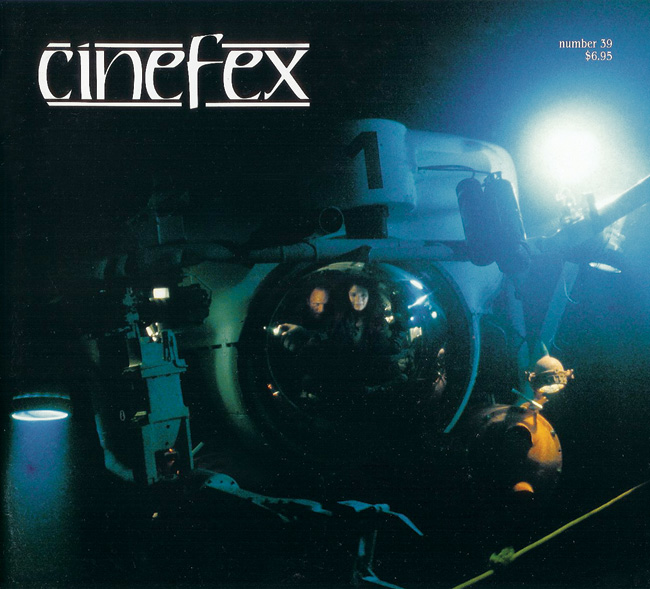
The Abyss: Dancing on the Edge of the Abyss: Writer-director James Cameron and producer Gale Anne Hurd have carved a distinct niche for themselves in the world of high-tech science fiction filmmaking. After traveling across time in The Terminator and to the outer reaches of deep space in Aliens, they have now journeyed into the Cayman Trough - one of the deepest and most impenetrable chasms on earth - for The Abyss, Set in an underwater oil drilling habitat located seventeen hundred feet beneath the ocean surface, the film begins with the search for a downed nuclear submarine and evolves into an aquatic odyssey of cosmic consequence. Forty percent of the production was shot in the largest fresh water filming tank in the world - a specially converted reactor containment building located at an uncommissioned nuclear power plant. Nine visual effects units were engaged to produce literally hundreds of shots covering the gamut of cinematic illusions from computer generated imagery and motion control to animatronic puppets and radio control vehicles to matte paintings and underwater miniatures to rear projection and bluescreen traveling mattes. Virtually no effects technique was left untapped. A trio of distinguished effects supervisors - John Bruno and Hoyt Yeatman and Dennis Muren - oversaw the activities of in-house units and teams from Dream Quest Images and Industrial Light & Magic. Ancillary units were headed by Cameron veterans Robert and Dennis Skotak and Gene Warren of Fantasy II. Though photographed thousands of miles apart - in situations both wet and dry and by artists of diverse talents and experience - the effects blended together seamlessly with the main unit photography and with one another. The end result is an unprecedented and uncompromising accomplishment - an epic film of wonder and imagination propelled by the singular vision and relentless drive of a master filmmaker just hitting his stride. Article by Don Shay
The Abyss: Dancing on the Edge of the Abyss: Writer-director James Cameron and producer Gale Anne Hurd have carved a distinct niche for themselves in the world of high-tech science...
more

Issue 40

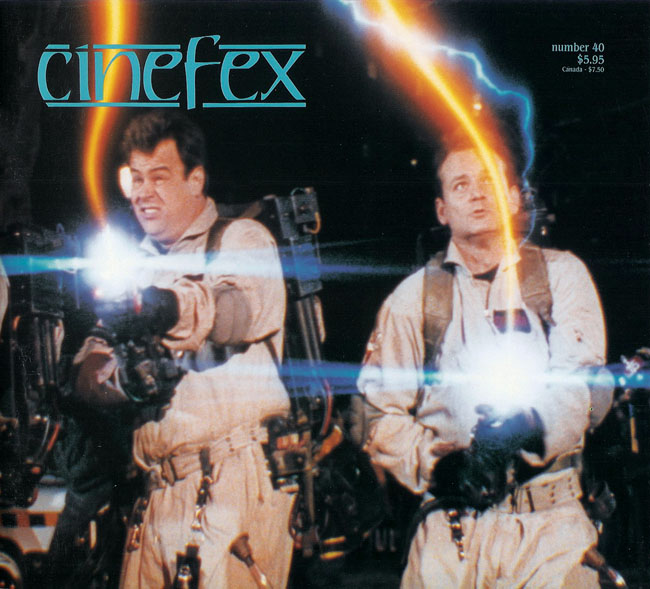
Ghostbusters II: Ghostbusters Revisited: With Ghostbusters, producer-director Ivan Reitman and company performed a minor miracle by delivering a major effects production in less than a year - from concept to release. The result was the most successful comedy in film history. For the sequel - five years later - production and postproduction schedules were even more intense. Physical effects engineer Chuck Gaspar was on hand for his second Ghostbusters outing and Industrial Light & Magic stepped in fresh to handle the visual effects - delivering not only a full array of ghostly entities, but also a subterranean river of slime and an ambulatory Statue of Liberty. As the production continued to grow, other effects facilities - including Apogee - were brought in to absorb the over-flow. Effects team members across the spectrum - augmented by screenwriting actors Dan Aykroyd and Harold Ramis - trace the evolution and execution of the long-awaited Ghostbusters II. Article by Adam Eisenberg
Indiana Jones and the Last Crusade: Father, Son and the Holy Grail: When director Steven Spielberg and producer George Lucas joined forces to reinvent in feature form the action-packed movie serials of the past, their stylish embellishment proved a boxoffice phenomenon - from a pair of filmmakers accustomed to making little else. Eight years and three films into the series, the saga of Indiana Jones culminates with Indiana Jones and the Last Crusade - a rousing finale in which the intrepid archaeologist's past is explored and his relationship with his father reinstated. Filmed in seven countries on three continents, the massive production relied heavily on physical and optical effects to recreate nearly every mode of transportation known to the period. Also required was the full disintegration of a major character - from flesh to dust - in one uninterrupted take. Rising to the challenge were physical effects technicians under George Gibbs and the optical illusionists at Industrial Light & Magic. Article by Adam Eisenberg
Indiana Jones and the Last Crusade: Father, Son and the Holy Grail: When director Steven Spielberg and producer George Lucas joined forces to reinvent in feature form the action-packed movie serials of the past, their stylish embellishment proved a boxoffice phenomenon - from a pair of filmmakers accustomed to making little else. Eight years and three films into the series, the saga of Indiana Jones culminates with Indiana Jones and the Last Crusade - a rousing finale in which the intrepid archaeologist's past is explored and his relationship with his father reinstated. Filmed in seven countries on three continents, the massive production relied heavily on physical and optical effects to recreate nearly every mode of transportation known to the period. Also required was the full disintegration of a major character - from flesh to dust - in one uninterrupted take. Rising to the challenge were physical effects technicians under George Gibbs and the optical illusionists at Industrial Light & Magic. Article by Adam Eisenberg
Ghostbusters II: Ghostbusters Revisited: With Ghostbusters, producer-director Ivan Reitman and company performed a minor miracle by delivering a major effects production in less than a year - from concept to...
more
