




2000
Issue 80
January/February/March
January/February/March
Contents
A Look Back : With this issue, Cinefex is marking its twentieth year, an occasion that has prompted us to take a wholly subjective look back -- to reflect on how Cinefex
came to be, how the effects industry has evolved since the magazine's inception,
and to recall some of the highlights of the last two decades.
20 Questions: We asked a few of our friends in the business to help us celebrate our 20th anniversary by offering up their considered opinions as to the best effects sequences
of the past 20 years. Also, in an unprecedented display of subjectivity, Cinefex
editorial staff members picked their own personal favorites.
Stuart Little: All Things Great and Little: Under director Rob Minkoff and senior effects supervisor John Dykstra, animators at Sony Pictures Imageworks created a photoreal, if fanciful, computer generated mouse for Stuart Little that effectively carried the movie, while artists at Rhythm & Hues
and Centropolis Effects supplied lip-sync to a supporting cast of talking cats.
article by Kevin H. Martin
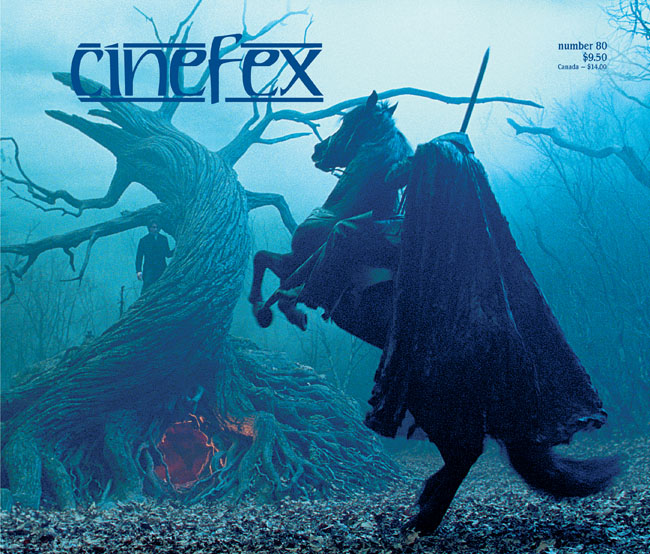
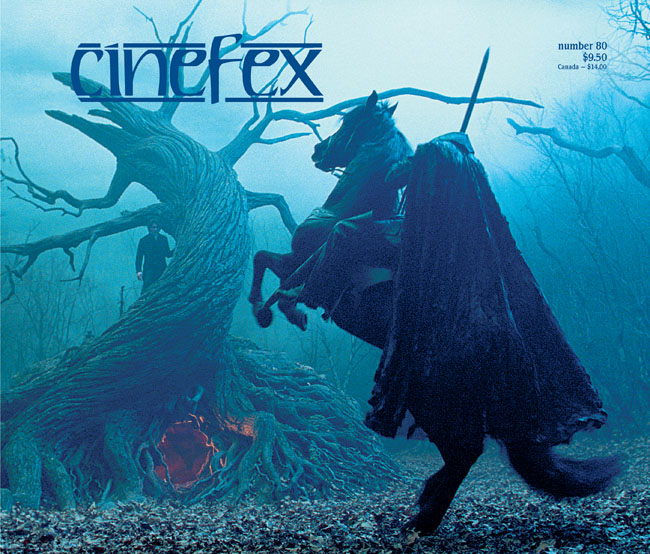
Sleepy Hollow: A Region of Shadows: For his horrific, yet stylish Sleepy Hollow, director Tim Burton created a post-colonial New York village in England and assigned effects teams at Industrial
Light & Magic, The Computer Film Company and Kevin Yagher Productions to supply
a murderous headless horseman and a gruesome array of decapitation victims.
article by Mark Cotta Vaz
Fight Club: A World of Hurt: In Fight Club, director David Fincher concocted subtle visual effects to get inside the twisted mind of his film's narrator. With oversight from visual effects supervisor
Kevin Tod Haug, teams at Digital Domain, Pixel Liberation Front, BUF, Image Savant,
Blue Sky, Command Post/Toybox and Gray Matter contributed to the effort.
article by Kevin H. Martin
Harryhausen & Tippett: The Motion in Our Minds: A one-on-one interview with stop-motion maestro Ray Harryhausen by Phil Tippett.
came to be, how the effects industry has evolved since the magazine's inception,
and to recall some of the highlights of the last two decades.
20 Questions: We asked a few of our friends in the business to help us celebrate our 20th anniversary by offering up their considered opinions as to the best effects sequences
of the past 20 years. Also, in an unprecedented display of subjectivity, Cinefex
editorial staff members picked their own personal favorites.
Stuart Little: All Things Great and Little: Under director Rob Minkoff and senior effects supervisor John Dykstra, animators at Sony Pictures Imageworks created a photoreal, if fanciful, computer generated mouse for Stuart Little that effectively carried the movie, while artists at Rhythm & Hues
and Centropolis Effects supplied lip-sync to a supporting cast of talking cats.
article by Kevin H. Martin
Sleepy Hollow: A Region of Shadows: For his horrific, yet stylish Sleepy Hollow, director Tim Burton created a post-colonial New York village in England and assigned effects teams at Industrial
Light & Magic, The Computer Film Company and Kevin Yagher Productions to supply
a murderous headless horseman and a gruesome array of decapitation victims.
article by Mark Cotta Vaz
Fight Club: A World of Hurt: In Fight Club, director David Fincher concocted subtle visual effects to get inside the twisted mind of his film's narrator. With oversight from visual effects supervisor
Kevin Tod Haug, teams at Digital Domain, Pixel Liberation Front, BUF, Image Savant,
Blue Sky, Command Post/Toybox and Gray Matter contributed to the effort.
article by Kevin H. Martin
Harryhausen & Tippett: The Motion in Our Minds: A one-on-one interview with stop-motion maestro Ray Harryhausen by Phil Tippett.
A Look Back : With this issue, Cinefex is marking its twentieth year, an occasion that has prompted us to take a wholly subjective look back -- to reflect on...
more

Issue 81
April/May/June

April/May/June

Contents
Mission to Mars: Mission Accomplished :
For Mission to Mars, a science fiction film from director Brian De Palma,
visual effects teams at Dream Quest Images, Industrial Light & Magic and Tippett
Studio used motion control miniatures and a wide range of digital effects to lend
dazzling verisimilitude to the cinematic depiction of NASA's first manned
mission to the red planet - and the staggering revelations that follow.
article by Kevin H. Martin
End of Days: Days of Fire and Brimstone:
Capitalizing on Y2K doomsday predictions, End of Days dramatizes the
biblically prophesied return of Satan to earth on the eve of the millennium. Working
with director Peter Hyams, visual effects supervisor Eric Durst oversaw the efforts
of several effects companies to manifest the devil in his true form and dramatize
his epic struggle with the one man determined to thwart him.
article by Kevin H. Martin
Galaxy Quest: Trekking into the Klaatu Nebula:
In an affectionate sendup of the Star Trek franchise and its devoted following,
Galaxy Quest tells the tale of a washed-up band of actors who give the performance
of their lives in a real-life space adventure. As lead effects house on the Dean
Parisot film, Industrial Light & Magic relied on miniature spaceships and
computer generated creatures to enliven the proceedings.
article by Jody Duncan & Estelle Shay
Bicentennial Man: In His Own Image.
Toy Story 2: Beyond Andy's Room.
Pitch Black: Chimera of the Night.
For Mission to Mars, a science fiction film from director Brian De Palma,
visual effects teams at Dream Quest Images, Industrial Light & Magic and Tippett
Studio used motion control miniatures and a wide range of digital effects to lend
dazzling verisimilitude to the cinematic depiction of NASA's first manned
mission to the red planet - and the staggering revelations that follow.
article by Kevin H. Martin
End of Days: Days of Fire and Brimstone:
Capitalizing on Y2K doomsday predictions, End of Days dramatizes the
biblically prophesied return of Satan to earth on the eve of the millennium. Working
with director Peter Hyams, visual effects supervisor Eric Durst oversaw the efforts
of several effects companies to manifest the devil in his true form and dramatize
his epic struggle with the one man determined to thwart him.
article by Kevin H. Martin
Galaxy Quest: Trekking into the Klaatu Nebula:
In an affectionate sendup of the Star Trek franchise and its devoted following,
Galaxy Quest tells the tale of a washed-up band of actors who give the performance
of their lives in a real-life space adventure. As lead effects house on the Dean
Parisot film, Industrial Light & Magic relied on miniature spaceships and
computer generated creatures to enliven the proceedings.
article by Jody Duncan & Estelle Shay
Bicentennial Man: In His Own Image.
Toy Story 2: Beyond Andy's Room.
Pitch Black: Chimera of the Night.
Mission to Mars: Mission Accomplished : For Mission to Mars, a science fiction film from director Brian De Palma, visual effects teams at Dream Quest Images, Industrial Light & Magic...
more

Issue 82
July/August/September

July/August/September

Contents
Dinosaur: Engendered Species: The feature animation division of Walt Disney Studios created an all-new digital
facility to support its first computer generated film, Dinosaur, about an orphaned
iguanodon whose gentle ways come in conflict with his species' baser instincts.
Contributing to the movie's novel look were deftly orchestrated visual effects
that blended CG characters with digitally processed live-action backgrounds.
The Perfect Storm: Perfecting the Storm: A real-life tragedy recounted in the book The Perfect Storm provided the basis
for director Wolfgang Petersen's movie of the same name, about a swordfishing boat
lost at sea during a storm of unprecedented ferocity. Raising the bar on CG water
effects, Industrial Light & Magic produced the digitally engineered tempest,
designed to work in concert with large-scale stage effects by John Frazier.
Chicken Run: Poultry in Motion: Aardman Animations, of Wallace and Gromit renown, graduated to feature status
with Chicken Run, a sendup of The Great Escape, in which a farm's resident chickens
hatch a desperate plan to escape being turned into pot pies. Though the comedy
employed Aardman's signature stop-motion puppeteering, it also benefited
from a range of digital contributions by Computer Film Company.
Gladiator: A Cut Above
U-571: Hostile Waters
Battlefield Earth: Battle Fatigue
facility to support its first computer generated film, Dinosaur, about an orphaned
iguanodon whose gentle ways come in conflict with his species' baser instincts.
Contributing to the movie's novel look were deftly orchestrated visual effects
that blended CG characters with digitally processed live-action backgrounds.
The Perfect Storm: Perfecting the Storm: A real-life tragedy recounted in the book The Perfect Storm provided the basis
for director Wolfgang Petersen's movie of the same name, about a swordfishing boat
lost at sea during a storm of unprecedented ferocity. Raising the bar on CG water
effects, Industrial Light & Magic produced the digitally engineered tempest,
designed to work in concert with large-scale stage effects by John Frazier.
Chicken Run: Poultry in Motion: Aardman Animations, of Wallace and Gromit renown, graduated to feature status
with Chicken Run, a sendup of The Great Escape, in which a farm's resident chickens
hatch a desperate plan to escape being turned into pot pies. Though the comedy
employed Aardman's signature stop-motion puppeteering, it also benefited
from a range of digital contributions by Computer Film Company.
Gladiator: A Cut Above
U-571: Hostile Waters
Battlefield Earth: Battle Fatigue
Dinosaur: Engendered Species: The feature animation division of Walt Disney Studios created an all-new digital facility to support its first computer generated film, Dinosaur, about an orphaned iguanodon whose gentle...
more

Issue 83
October/November/December

October/November/December

Contents
X-Men: The X-Men Cometh: Plagued by budget and time constraints, plus a burgeoning effects slate, visual effects supervisor Michael L. Fink overcame the odds on X-Men, a fantasy
based on the enduring Marvel comic books. To handle the film's array of mutant characters -- all exhibiting singular mental or physical powers that distinguish them from ordinary humans -- Fink divided the work among some nine visual effects companies, assigning each a particular character or type of effect. Other key contributors were physical effects coordinator Colin Chilvers and makeup effects supervisor Gordon Smith. Article by Kevin H. Martin
Hollow Man: Disappearing Act : To depict the invisible protagonist at the heart of Hollow Man, veteran director Paul Verhoeven engaged Sony Pictures Imageworks and senior visual effects
supervisor Scott Anderson to pull out all the stops, duplicating actor Kevin Bacon's physiology and live performance with a digital replica capable of revealing the character's anatomy from the inside out. Also assuming a
sizable share of the workload was Tippett Studio, under visual effects supervisor Craig Hayes. Rounding out the effort were practical effects by Stan Parks and makeup by Amalgamated Dynamics Incorporated.
Article by Estelle Shay
The Cell: Mindscape Architects
The Patriot: Picking His Battles
What Lies Beneath: Hitchcock Homage
based on the enduring Marvel comic books. To handle the film's array of mutant characters -- all exhibiting singular mental or physical powers that distinguish them from ordinary humans -- Fink divided the work among some nine visual effects companies, assigning each a particular character or type of effect. Other key contributors were physical effects coordinator Colin Chilvers and makeup effects supervisor Gordon Smith. Article by Kevin H. Martin
Hollow Man: Disappearing Act : To depict the invisible protagonist at the heart of Hollow Man, veteran director Paul Verhoeven engaged Sony Pictures Imageworks and senior visual effects
supervisor Scott Anderson to pull out all the stops, duplicating actor Kevin Bacon's physiology and live performance with a digital replica capable of revealing the character's anatomy from the inside out. Also assuming a
sizable share of the workload was Tippett Studio, under visual effects supervisor Craig Hayes. Rounding out the effort were practical effects by Stan Parks and makeup by Amalgamated Dynamics Incorporated.
Article by Estelle Shay
The Cell: Mindscape Architects
The Patriot: Picking His Battles
What Lies Beneath: Hitchcock Homage
X-Men: The X-Men Cometh: Plagued by budget and time constraints, plus a burgeoning effects slate, visual effects supervisor Michael L. Fink overcame the odds on X-Men, a fantasy based on...
more

2001
Issue 84
January/February/March

January/February/March

Contents
Red Planet: Red Scare: In Red Planet, astronauts from a dying earth encounter dire obstacles as they investigate failing terraformation experiments designed to render Mars suitable for human colonization. Faced with daunting challenges of its own - including a competing project and a ballooning effects slate that threatened to top out at nearly a thousand shots -- Warner Brothers called upon visual effects supervisor Jeffrey A. Okun to oversee the massive effects effort. Also recruited were a dozen effects vendors, delivering everything from space footage and zero-gravity effects to Martian landscapes and a CG robot performance. Article by Kevin H. Martin
The Whos and Whys of How the Grinch Stole Christmas: For his live-action version of the beloved Dr. Seuss story, How the Grinch Stole Christmas, director Ron Howard created the town of Whoville and nearby Mount Crumpit on massive soundstages at Universal, then relied upon makeup maestro Rick Baker to transform actor Jim Carrey and a huge cast of supporting actors and extras into the fictional Grinch and his Who neighbors. Adding visual dazzle to the proceedings were special effects coordinator Allen Hall, in charge of on-set gags, and Digital Domain, whose virtual set extensions and other effects lent style and verisimilitude to the fantasy world. Article by Mark Cotta Vaz
Vertical Limit: Pushing the Limit
Bedazzled: Devil's Work
102 Dalmatians: Out, Out, Damned Spot
The Whos and Whys of How the Grinch Stole Christmas: For his live-action version of the beloved Dr. Seuss story, How the Grinch Stole Christmas, director Ron Howard created the town of Whoville and nearby Mount Crumpit on massive soundstages at Universal, then relied upon makeup maestro Rick Baker to transform actor Jim Carrey and a huge cast of supporting actors and extras into the fictional Grinch and his Who neighbors. Adding visual dazzle to the proceedings were special effects coordinator Allen Hall, in charge of on-set gags, and Digital Domain, whose virtual set extensions and other effects lent style and verisimilitude to the fantasy world. Article by Mark Cotta Vaz
Vertical Limit: Pushing the Limit
Bedazzled: Devil's Work
102 Dalmatians: Out, Out, Damned Spot
Red Planet: Red Scare: In Red Planet, astronauts from a dying earth encounter dire obstacles as they investigate failing terraformation experiments designed to render Mars suitable for human colonization. Faced...
more

Issue 85
April/May/June
April/May/June
Contents
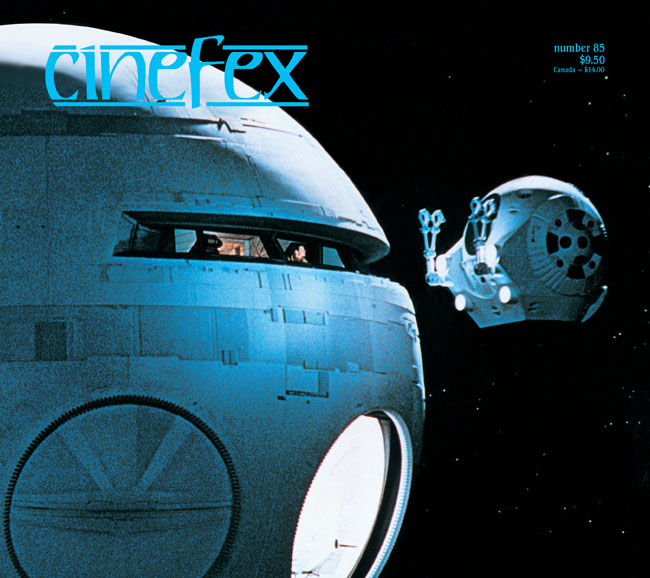
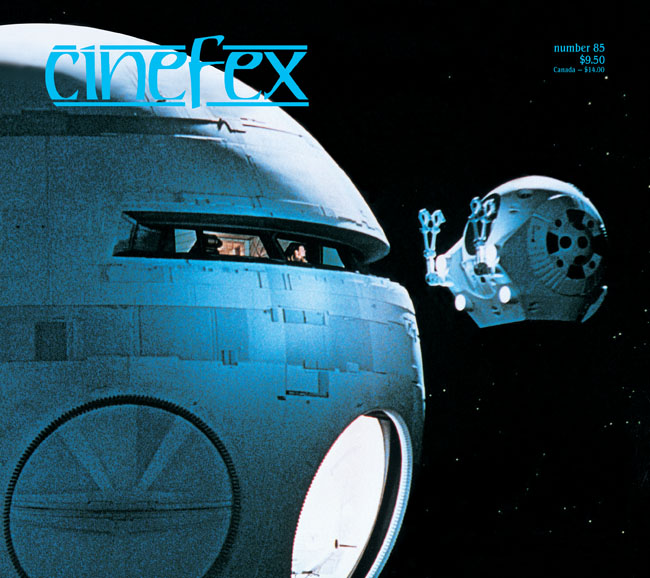
2001: A Time Capsule: Still a benchmark by which space films, old and new, are judged, 2001: A Space Odyssey has enthralled science fiction devotees for more than three decades with its purposefully ambiguous take on man's imagined first contact with an extraterrestrial intelligence. In this, its namesake year, Cinefex pays tribute to this seminal film with a comprehensive retrospective, culled from in-depth interviews with many of its principal technicians and craftsmen - some no longer with us - who were instrumental in bringing legendary director Stanley Kubrick's timeless, profound and startlingly realistic-looking vision of deep space exploration to the screen. From its inception as a novel and screenplay - a corroborative effort by Kubrick and science fiction maestro Arthur C. Clarke - through its painstaking, often frustrating, four-year-long odyssey, the epic undertaking continually tested the skills and resourcefulness of such innovators as special effects supervisors Douglas Trumbull and Wally Gentleman, production designer Tony Masters, cinematrographer John Alcott, makeup artist Stuart Freeborn and others whose recollections form the foundation of this account. Challenged by Kubrick, ever the perfectionist, all rose to the occasion, exploring countless concepts and approaches, and, in an era long before computers and motion control were endemic to visual effects, devising imaginative and heretofore untried techniques and equipment that would pave the way for future generations of filmmakers. Article by Don Shay and Jody Duncan
The Mummy Returns: Warrior Kings
The 6th Day: Copy Rights
Monkeybone: Monkey Business
The Mummy Returns: Warrior Kings
The 6th Day: Copy Rights
Monkeybone: Monkey Business
2001: A Time Capsule: Still a benchmark by which space films, old and new, are judged, 2001: A Space Odyssey has enthralled science fiction devotees for more than three decades...
more

Issue 86
July/August/September

July/August/September

Contents
Pearl Harbor: More War: In Walt Disney Studios' epic Pearl Harbor, producer Jerry Bruckheimer and director Michael Bay stage a tale of love and valor against the backdrop of World War II and the infamous Japanese air attack on the U.S. Pacific Fleet that spelled the end of the country's isolationist doctrine. Depictions of the assault, along with earlier reenactments of air battles over Britain and the retaliatory Doolittle raid on Tokyo, were achieved through extensive use of digital battleships and planes -- compliments of Industrial Light & Magic -- in combination with large-scale mechanical and pyrotechnic effects by John Frazier and his crew. Stan Winston Studio contributed makeup effects.
Evolution: Accelerated Evolution: Echoing the sensibilities of his earlier comedy hit Ghostbusters, director Ivan Reitman's newest film, Evolution, has scientists battling aliens after a meteor crashes into the Arizona desert, releasing minute extraterrestrial lifeforms that vaguely attempt to mimic earth's evolutionary cycle. Phil Tippett and his Tippett Studio artists designed and created, through digital character animation, much of the continuously metamorphosing extraterrestrial ecology, from single-cell microorganisms to complex air and land creatures. Also in the mix were digital effects by Pacific Data Images and practical creature work by KNB EFX Group and Amalgamated Dynamics.
Moulin Rouge: Paris By Numbers
Final Fantasy: Flesh For Fantasy
Driven: Speed Demons
Evolution: Accelerated Evolution: Echoing the sensibilities of his earlier comedy hit Ghostbusters, director Ivan Reitman's newest film, Evolution, has scientists battling aliens after a meteor crashes into the Arizona desert, releasing minute extraterrestrial lifeforms that vaguely attempt to mimic earth's evolutionary cycle. Phil Tippett and his Tippett Studio artists designed and created, through digital character animation, much of the continuously metamorphosing extraterrestrial ecology, from single-cell microorganisms to complex air and land creatures. Also in the mix were digital effects by Pacific Data Images and practical creature work by KNB EFX Group and Amalgamated Dynamics.
Moulin Rouge: Paris By Numbers
Final Fantasy: Flesh For Fantasy
Driven: Speed Demons
Pearl Harbor: More War: In Walt Disney Studios' epic Pearl Harbor, producer Jerry Bruckheimer and director Michael Bay stage a tale of love and valor against the backdrop of World...
more

Issue 87
October/November/December
October/November/December
Contents
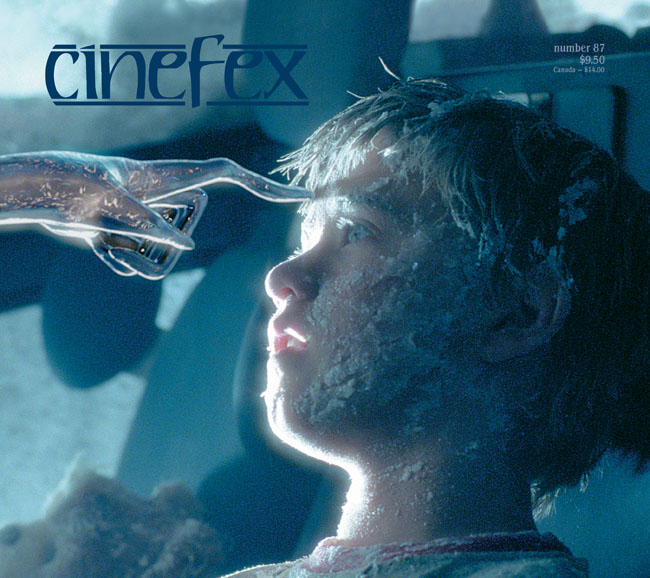
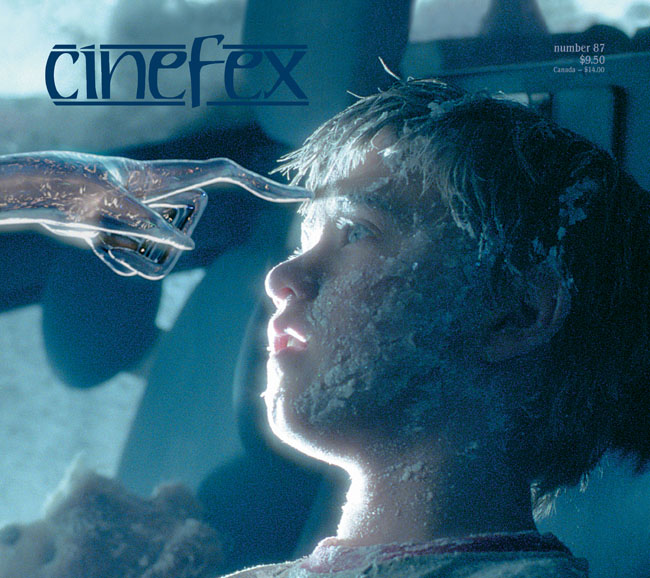
A.I.: Mecha Odyssey: After more than two decades of super-secret development by filmmaking legend Stanley Kubrick, A.I.: Artificial Intelligence - the story of a robot-child's quest for a means to become human - would finally see the light of day in the hands of Steven Spielberg, who crafted both the script and the film from notes and artwork left behind by Kubrick upon his death. Spielberg summoned Industrial Light & Magic visual effects supervisors Dennis Muren and Scott Farrar to convey onto film new and existing conceptual art of a future world ravaged by the effects of global warming and overpopulated by both humans and their mechanical creations. Spielberg also engaged Stan Winston Sutdio to design and build an extensive cast of robot characters. Article by Joe Fordham.
Inside the Planet of the Apes: Visionary director Tim Burton put his own singular spin of Planet of the Apes,, a remake of the 1968 classic, depicting evolution turned on its ear in a world where humans are subjugated by a superior race of apes. The production would boast a stellar team of effects contributors. Cementing his reputation as the undisputed master of simian simulation was makeup maestro Rick Baker, whose Cinovation Studio team would create fourteen principal ape characters, all distinct and different, plus hundreds of secondary and background players. Spearheading the postproduction visual effects, a blend of models, paintings and digital work, were visual effects supervisors Bill George and George Murphy of Industrial Light & Magic. Article by Mark Cotta Vaz.
Jurassic Park III: Bigger, Faster, Meaner.
Tomb Raider: Illuminating Lara's World.
Inside the Planet of the Apes: Visionary director Tim Burton put his own singular spin of Planet of the Apes,, a remake of the 1968 classic, depicting evolution turned on its ear in a world where humans are subjugated by a superior race of apes. The production would boast a stellar team of effects contributors. Cementing his reputation as the undisputed master of simian simulation was makeup maestro Rick Baker, whose Cinovation Studio team would create fourteen principal ape characters, all distinct and different, plus hundreds of secondary and background players. Spearheading the postproduction visual effects, a blend of models, paintings and digital work, were visual effects supervisors Bill George and George Murphy of Industrial Light & Magic. Article by Mark Cotta Vaz.
Jurassic Park III: Bigger, Faster, Meaner.
Tomb Raider: Illuminating Lara's World.
A.I.: Mecha Odyssey: After more than two decades of super-secret development by filmmaking legend Stanley Kubrick, A.I.: Artificial Intelligence - the story of a robot-child's quest for a means to...
more

2002
Issue 88
January/February/March

On cover:
January/February/March

Contents
Harry Potter & the Sorcerer's Stone: Sleight of Hand: Having singlehandedly captured the fancy of an entire generation of adolescent readers and ignited a pop culture phenomenon, English author J.K. Rowling's Harry Potter novels - about a novice wizard and his magical adventures at a school for the supernaturally gifted - were ripe for translation to the big screen. With Harry Potter and the Sorcerer's Stone, Warner Brothers has taken up the gauntlet, presenting the first installment in a highly anticipateed movie series based on the Rowling books. Director Chris Columbus, determined to remain faithful to the source material and its legion of fans, based the production in England and assembled an all-English cast, along with a virtual army of world-class artisans and technicians tasked with producing their own brand of alchemy in the service of the show. Joining forces with special effects supervisor John Richardson and makeup effects artist Nick Dudman as Oscar-winning visual effects supervisor Robert Legato, who orchestrated the efforts of eight visual effects facilities on both sides of the ocean, creating everything from wonderous settings to magical creatures to a thrilling aerial tournament played on broomsticks. Article by Joe Fordham
Monsters, Inc.: Monsters in the Closet.
The Fast and the Furious: Street Wars.
Shrek: Jowly Green Giant.
Monsters, Inc.: Monsters in the Closet.
The Fast and the Furious: Street Wars.
Shrek: Jowly Green Giant.
Harry Potter & the Sorcerer's Stone: Sleight of Hand: Having singlehandedly captured the fancy of an entire generation of adolescent readers and ignited a pop culture phenomenon, English author J.K....
more

On cover:
Issue 89
April/May/June
April/May/June
Contents
The Time Machine: The Shape of Things to Come: In his remake of the classic tale, The Time Machine, director Simon Wells called upon visual effects supervisor James Price and lead effects house Digital Domain to help bridge a narrative gap that spanned some 800,000 years. While Digital Domain was responsible for many of the movie's signature time travel scenes, practical creature effects were the work of Stan Winston Studio and KNB EFX Group, and special effects supervisor Matt Sweeney oversaw creation of the fabled machine. Article by Joe Francis
Black Hawk Down: Under Fire: Based on a nonfiction account of a 1993 military incident that ooccurred in Mogadishu, Somalia, Black Hawk Down recounts the disastrous mission and daring rescue of an elite force of U. S. Army troops, whose attempts to curb terrorist tactics by a Somali warlord were thwarted when they were ambushed by thousands of his militiamen. Ridley Scott directed the harrowing cinematic reenactment, relying heavily on in-camera effects by special effects supervisor Neil Corbould, and digital enhancements by Mill Film and Asylum Visual Effects. Article by Joe Fordham
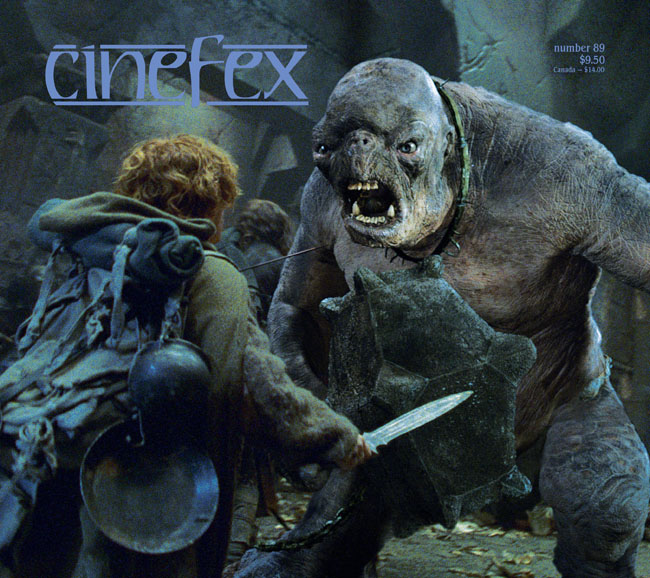
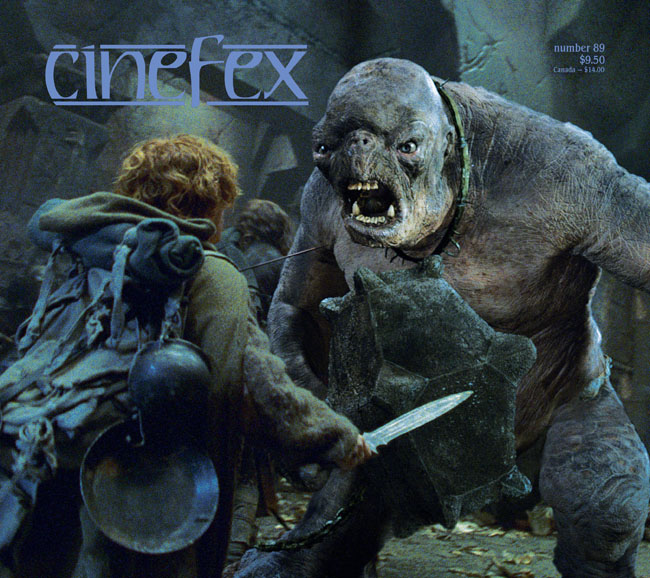
The Lord of the Rings: The Fellowship of the Ring: Ring Masters: In a marathon effort that has won raves from critics, recognition from peers and the admiration of legions of moviegoers, New Zealand director Peter Jackson accomplished the seemingly impossible - a faithful, live-action adaptation of J.R.R. Tolkien's The Lord of the Rings: The Fellowship of the Ring, with two more installments to follow. Working with a dedicated crew at Weta, his homegrown effects facility, Jackson relied on Kiwi ingenuity to overcome unimaginable hurdles, executing some 1500 visual effects that included the development of a breakthrough crowd simulation program with 'thinking' characters capable of autonomous behavior.
Black Hawk Down: Under Fire: Based on a nonfiction account of a 1993 military incident that ooccurred in Mogadishu, Somalia, Black Hawk Down recounts the disastrous mission and daring rescue of an elite force of U. S. Army troops, whose attempts to curb terrorist tactics by a Somali warlord were thwarted when they were ambushed by thousands of his militiamen. Ridley Scott directed the harrowing cinematic reenactment, relying heavily on in-camera effects by special effects supervisor Neil Corbould, and digital enhancements by Mill Film and Asylum Visual Effects. Article by Joe Fordham
The Lord of the Rings: The Fellowship of the Ring: Ring Masters: In a marathon effort that has won raves from critics, recognition from peers and the admiration of legions of moviegoers, New Zealand director Peter Jackson accomplished the seemingly impossible - a faithful, live-action adaptation of J.R.R. Tolkien's The Lord of the Rings: The Fellowship of the Ring, with two more installments to follow. Working with a dedicated crew at Weta, his homegrown effects facility, Jackson relied on Kiwi ingenuity to overcome unimaginable hurdles, executing some 1500 visual effects that included the development of a breakthrough crowd simulation program with 'thinking' characters capable of autonomous behavior.
The Time Machine: The Shape of Things to Come: In his remake of the classic tale, The Time Machine, director Simon Wells called upon visual effects supervisor James Price and...
more

Issue 90
July/August/September

July/August/September

Contents
Spider-Man: Spin City: Following in the footsteps of countless comic book tales immortalized by Hollywood, Spider-Man distinguishes itself as one of the most memorable. Director Sam Raimi brought the popular teen crime fighter to life with help from visual effects supervisor John Dykstra and physical effects supervisor John Frazier, whose efforts enabled actor Toby Maguire to perform such superhuman feats as web-slinging and wall crawling. Though live mechanical means were used whenever possible, leaps into a more fantastic realm were accomplished by Sony Pictures Imageworks. Article by Joe Fordham
Star Wars Episode II: Attack of the Clones: Love & War: In Attack of the Clones, the promised second prequel to the Star Wars saga, George Lucas once again called upon the artists at Industrial Light & Magic to push the technological envelope in the service of his vision. The result is a film in which nearly every frame bursts with manufactured imagery, captured entirely on high-definition digital video - a first for the motion picture industry. Among the accomplishments were an all-new CG Yoda, visually stunning miniature and digital environments, and thrilling action sequences involving armies of battle droids. Article by Jody Duncan
Star Wars Episode II: Attack of the Clones: Love & War: In Attack of the Clones, the promised second prequel to the Star Wars saga, George Lucas once again called upon the artists at Industrial Light & Magic to push the technological envelope in the service of his vision. The result is a film in which nearly every frame bursts with manufactured imagery, captured entirely on high-definition digital video - a first for the motion picture industry. Among the accomplishments were an all-new CG Yoda, visually stunning miniature and digital environments, and thrilling action sequences involving armies of battle droids. Article by Jody Duncan
Spider-Man: Spin City: Following in the footsteps of countless comic book tales immortalized by Hollywood, Spider-Man distinguishes itself as one of the most memorable. Director Sam Raimi brought the popular...
more

Issue 91
October/November/December

October/November/December

Contents
Reign of Fire: Burnt Offerings: Flame-spewing dragons awakened from centuries of sleep are imbued with a terrifying reality in Reign of Fire, directed by Rob Bowman. Pushing the envelope on character animation in its design and execution of the dragons was The Secret Lab, responsible for the film's digital and miniature work. Special effects by Dave Gauthier and additional fire effects by Reelistic FX also helped Bowman realize his vision of a charred and smoking post-apocalyptic world overrun by the beasts. Article by Bill Norton
Men In Black 2: Building a Better Pug: Back by popular demand after a five-year hiatus, agents Kay and Jay, secret operatives in a covert alien control agency confront a host of new lifeforms in Men in Black 2. Also returning to the fold were director Barry Sonnenfeld and many of the original film's core creative team, including Industrial Light & Magic and Rick Baker's Cinovation Studio. Their contributions, along with those of Sony Pictures Imageworks and Tippett Studio, ensured that the sequel's trademark aliens would be even more outrageous than the first. Article by Brad Munson
Minority Report: Future Reality: Director Steven Spielberg ventured into the realm of science fiction in Minority Report, a futuristic parable in which the telepathic visions of genetically engineered 'precogs' have made it possible to apprehend murderers before they commit their crimes. Visual effects by Industrial Light & Magic and a host of other vendors, and physical effects by Michael Lantieri lent authenticity to the story, meticulously conveying the technological advances of a society whose efforts to police itself have strayed into questionable moral territory. Article by Joe Fordham
Men In Black 2: Building a Better Pug: Back by popular demand after a five-year hiatus, agents Kay and Jay, secret operatives in a covert alien control agency confront a host of new lifeforms in Men in Black 2. Also returning to the fold were director Barry Sonnenfeld and many of the original film's core creative team, including Industrial Light & Magic and Rick Baker's Cinovation Studio. Their contributions, along with those of Sony Pictures Imageworks and Tippett Studio, ensured that the sequel's trademark aliens would be even more outrageous than the first. Article by Brad Munson
Minority Report: Future Reality: Director Steven Spielberg ventured into the realm of science fiction in Minority Report, a futuristic parable in which the telepathic visions of genetically engineered 'precogs' have made it possible to apprehend murderers before they commit their crimes. Visual effects by Industrial Light & Magic and a host of other vendors, and physical effects by Michael Lantieri lent authenticity to the story, meticulously conveying the technological advances of a society whose efforts to police itself have strayed into questionable moral territory. Article by Joe Fordham
Reign of Fire: Burnt Offerings: Flame-spewing dragons awakened from centuries of sleep are imbued with a terrifying reality in Reign of Fire, directed by Rob Bowman. Pushing the envelope on...
more

2003
Issue 92
January/February/March

January/February/March

Contents
The Lord of the Rings: The Two Towers: Middle-earth Strikes Back: In The Lord of the Rings: The Two Towers, the second installment in the epic live-action film adaptation of J.R.R. Tolkien's trilogy, director Peter Jackson ramps up the action as the fellowship continues to battle the forces of darkness threatening Middle-earth. Academy Award-winning effects facilities Weta Digital and Weta Workshop again partnered with Jackson to produce some 800 visual effects shots for the film, running the gamut from elaborate creature effects and miniature work to sophisticated character animation. Lending a hand in the proceedings was Sony Pictures Imageworks. Article by Joe Fordham
Spy Kids: Working at the Speed of Thought: With the success of Spy Kids and its equally popular sequel, Spy Kids 2, independent filmmaker Robert Rodriguez proved that high production values and a multitude of slick effects need not require a nine-digit budget. Offering up his recipe for success, Rodriguez provides an insider's view of the guerrilla-style tactics terhat he and his team of innovative effects vendors relied upon to achieve remarkable results working outside the traditional Hollywood infrastructure. Article by Jody Duncan
xXx: Shaken and Stirred: Director Rob Cohen and action star Vin Diesel reunite for xXx, a new breed of spy film whose secret agent -- a career never-do-well recruited from the fringe culture of extreme sports - relies on death-defying feats of athleticism as his modus operandi. Special effects supervisor John Frazier staged numerous live effects on set, while Digital Domain handled the bulk of the visual effects work required to place Vin Diesel squarely in the midst of the action. Additional effects support was provided by Illusion Arts, Digiscope and Gray Matter. Article by Christian Carvajal
Spy Kids: Working at the Speed of Thought: With the success of Spy Kids and its equally popular sequel, Spy Kids 2, independent filmmaker Robert Rodriguez proved that high production values and a multitude of slick effects need not require a nine-digit budget. Offering up his recipe for success, Rodriguez provides an insider's view of the guerrilla-style tactics terhat he and his team of innovative effects vendors relied upon to achieve remarkable results working outside the traditional Hollywood infrastructure. Article by Jody Duncan
xXx: Shaken and Stirred: Director Rob Cohen and action star Vin Diesel reunite for xXx, a new breed of spy film whose secret agent -- a career never-do-well recruited from the fringe culture of extreme sports - relies on death-defying feats of athleticism as his modus operandi. Special effects supervisor John Frazier staged numerous live effects on set, while Digital Domain handled the bulk of the visual effects work required to place Vin Diesel squarely in the midst of the action. Additional effects support was provided by Illusion Arts, Digiscope and Gray Matter. Article by Christian Carvajal
The Lord of the Rings: The Two Towers: Middle-earth Strikes Back: In The Lord of the Rings: The Two Towers, the second installment in the epic live-action film adaptation of...
more

Issue 93
April/May/June
April/May/June
Contents
Adaptation: Twin Geeks: Witty, imaginative and highly unorthodox, Adaptation, directed by Spike Jonze, pits the film's real-life screenwriter Charlie Kaufman against his fictional twin brother, Donald - both portrayed by Nicolas Cage -- as the two go head-to-head in a comical search for artistic truth and familial redemption. Twinning and other effects were the work of visual effects supervisor Gray Marshall and his Gray Matter FX team, while makeup artists Joel Harlow and Kevin Yagher provided facial and body prosthetics. Article by Joe Fordham
Daredevil: Blind Justice: Continuing the tradition of comic book characters making the leap from panel to screen, Daredevil follows the crimefighting adventures of vigilante lawyer Matt Murdock, whose heightened sensory powers are a by-product of a freak accident in childhood that blinded him. Director Mark Steven Johnson called upon visual effects supervisor Rich Thorne and principal vendors Rhythm & Hues, Digital Domain and Pixel Magic to render his superhero's antics, making extensive use of digital doubles in combination with practical effects and live-action stuntwork. Article by Joe Fordham
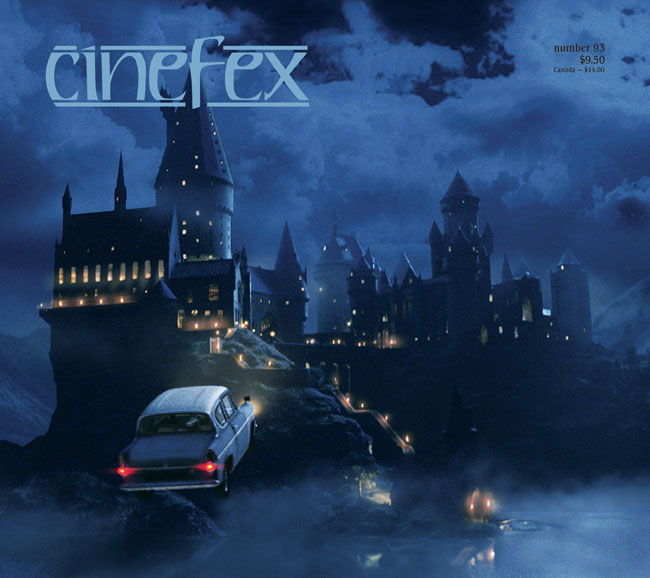
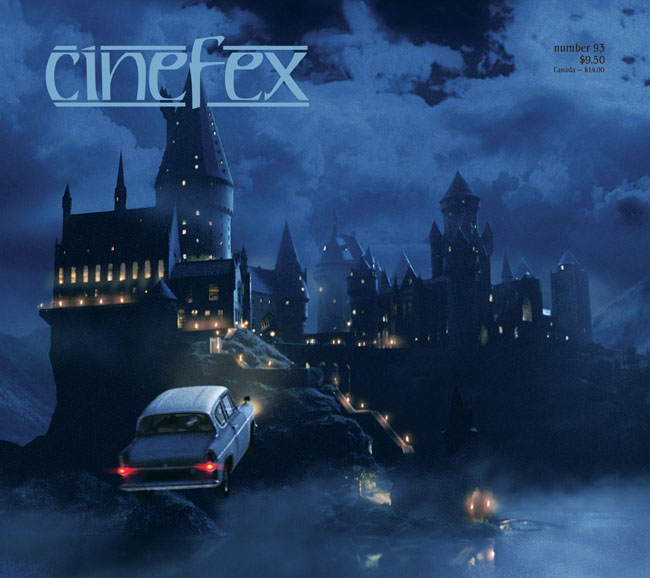
Harry Potter and the Chamber of Secrets: When Harry Met Dobby: Harry Potter and the Chamber of Secrets, the second in a series of films based on J.K. Rowling's popular children's books, serves up more of everything - more effects, more complex action and environments, more 3D creature work. Reuniting for the sequel were director Chris Columbus and many of the first film's core effects contributors, including special effects supervisor John Richardson, creature creator Nick Dudman and London-based vendors Mill Film, The Moving Picture Company, Cinesite and Framestore CFC. Leading the visual effects effort was Jim Mitchell of Industrial Light & Magic. Article by Barbara Robertson
Star Trek Nemesis: Through a Glass Darkly: Following a lengthy hiatus, Paramount Pictures' most enduring film franchise returns with Star Trek Nemesis, the tenth installment in the series and fourth based on the Emmy-winning Next Generation television show. First-time Trek director Stuart Baird challenged veteran production personnel such as makeup head Michael Westmore and production designer Herman Zimmerman, as well as Trek rookie Mark Forker -- who headed the visual effects team at Digital Domain -- to infuse the show with a fresh perspective. Article by Bill Norton
Daredevil: Blind Justice: Continuing the tradition of comic book characters making the leap from panel to screen, Daredevil follows the crimefighting adventures of vigilante lawyer Matt Murdock, whose heightened sensory powers are a by-product of a freak accident in childhood that blinded him. Director Mark Steven Johnson called upon visual effects supervisor Rich Thorne and principal vendors Rhythm & Hues, Digital Domain and Pixel Magic to render his superhero's antics, making extensive use of digital doubles in combination with practical effects and live-action stuntwork. Article by Joe Fordham
Harry Potter and the Chamber of Secrets: When Harry Met Dobby: Harry Potter and the Chamber of Secrets, the second in a series of films based on J.K. Rowling's popular children's books, serves up more of everything - more effects, more complex action and environments, more 3D creature work. Reuniting for the sequel were director Chris Columbus and many of the first film's core effects contributors, including special effects supervisor John Richardson, creature creator Nick Dudman and London-based vendors Mill Film, The Moving Picture Company, Cinesite and Framestore CFC. Leading the visual effects effort was Jim Mitchell of Industrial Light & Magic. Article by Barbara Robertson
Star Trek Nemesis: Through a Glass Darkly: Following a lengthy hiatus, Paramount Pictures' most enduring film franchise returns with Star Trek Nemesis, the tenth installment in the series and fourth based on the Emmy-winning Next Generation television show. First-time Trek director Stuart Baird challenged veteran production personnel such as makeup head Michael Westmore and production designer Herman Zimmerman, as well as Trek rookie Mark Forker -- who headed the visual effects team at Digital Domain -- to infuse the show with a fresh perspective. Article by Bill Norton
Adaptation: Twin Geeks: Witty, imaginative and highly unorthodox, Adaptation, directed by Spike Jonze, pits the film's real-life screenwriter Charlie Kaufman against his fictional twin brother, Donald - both portrayed by...
more

Issue 94
July/August/September
July/August/September
Contents
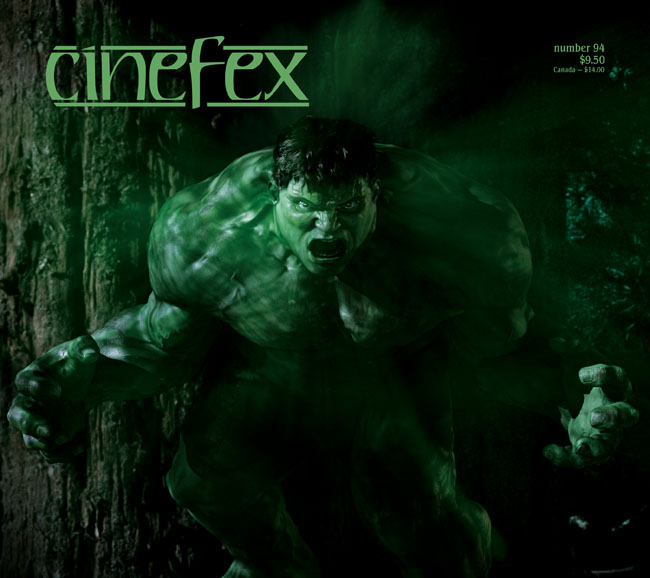
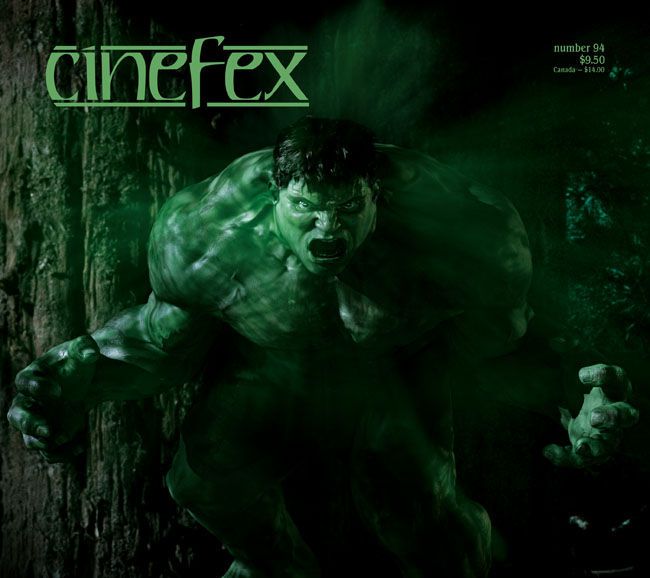
The Hulk: Green Destiny: From the pages of Marvel Comics through a popular eighties television series and several movies-of-the-week, the Hulk has endured as one of the most memorable characters of its genre. However, his big-screen debut in The Hulk, directed by Ang Lee, promises to be his most impressive, thanks to the work of award winning visual effects supervisor Dennis Muren and a team at Industrial Light & Magic, who were charged with bringing the green-skinned behemoth to life as an entirely computer generated character. Article by Joe Fordham
X-Men United: Generation X2: The reluctant heroes and singular villains of X-Men, a film based on the popular Marvel Comics series, are back for a return engagement in the sequel, X2: X-Men United -- this time accompanied by a new generation of 'X-kids.' Also returning to the fold was visual effects supervisor Michael L. Fink and many of the original film's effects artisans, who tackled the sequel's more ambitious workload - new and improved looks for returning characters, the fleshing out of new characters and the execution of several spectacular action sequences. Article by Brad Munson
The Core: Innerspace: A subterranean odyssey undertaken by terranauts to save the earth from destructive magnetic forces is the focus of The Core, directed by Jon Amiel. To realize the film's fantastic premise -- which included an exploration of the earth's core by the terranauts in an experimental vessel, as well as a series of spectacular natural disturbances that rock the earth's inhabitants above-ground -- visual effects supervisor Gregory McMurry relied on an international contingent of effects vendors and a panoply of effects techniques. Article by Joe Fordham
X-Men United: Generation X2: The reluctant heroes and singular villains of X-Men, a film based on the popular Marvel Comics series, are back for a return engagement in the sequel, X2: X-Men United -- this time accompanied by a new generation of 'X-kids.' Also returning to the fold was visual effects supervisor Michael L. Fink and many of the original film's effects artisans, who tackled the sequel's more ambitious workload - new and improved looks for returning characters, the fleshing out of new characters and the execution of several spectacular action sequences. Article by Brad Munson
The Core: Innerspace: A subterranean odyssey undertaken by terranauts to save the earth from destructive magnetic forces is the focus of The Core, directed by Jon Amiel. To realize the film's fantastic premise -- which included an exploration of the earth's core by the terranauts in an experimental vessel, as well as a series of spectacular natural disturbances that rock the earth's inhabitants above-ground -- visual effects supervisor Gregory McMurry relied on an international contingent of effects vendors and a panoply of effects techniques. Article by Joe Fordham
The Hulk: Green Destiny: From the pages of Marvel Comics through a popular eighties television series and several movies-of-the-week, the Hulk has endured as one of the most memorable characters...
more

Issue 95
October/November/December
October/November/December
Contents
Seabiscuit: Photo Finish: Written and directed by Gary Ross, and adapted from the Laura Hillenbrand best-selling book, Seabiscuit recounts the legendary rise of America's favorite Depression-era racehorse. To achieve dynamic race scenes set on authentic-looking period tracks, Ross relied heavily on live-action camera work aided by Michael Lantieri's practical effects, while visual effects supervisor Richard Hoover oversaw digital effects in some 240 shots provided by Sony Pictures Imageworks, Pixel Playground, The Orphanage and New Deal Studios. Article by Jody Duncan
Spy Kids 3D: Game Over: Comin' at Ya! Maverick filmmaker Robert Rodriguez, whose credo of low-budget filmmaking was put to the test in the immensely popular Spy Kids series, offers up a third eye-popping installment in the franchise - Spy Kids 3D: Game Over. Having shot the film in digital video and anaglyphic stereo, Rodriguez - who wore many hats including that of visual effects supervisor -- worked with an array of vendors to produce some 850 effects shots, most rendered twice for stereoscopic effect. Article by Joe Fordham
Terminator 3: Rise of the Machines: Winds of War: In Terminator 3: Rise of the Machines, director Jonathan Mostow picks up the reins of James Cameron's futuristic tale, introduced in his breakout film The Terminator and revisited in the sequel, Terminator 2: Judgment Day. Back for a return engagement are the film's star, Arnold Schwarzenegger, as well as creature creator Stan Winston and the maestros of Industrial Light & Magic, who pushed the saga to new heights with a powerful blend of cutting-edge animatronics and digital technology used to depict the Terminator and an even deadlier threat from the future - a T-X female cyborg. Article by Barbara Robertson
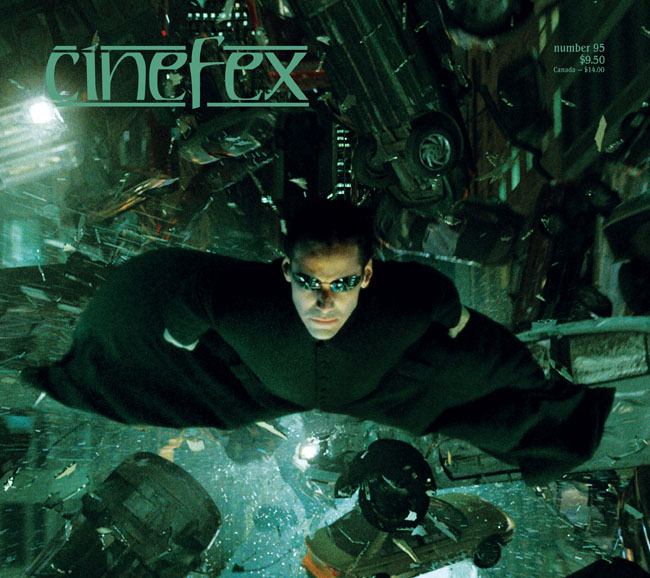
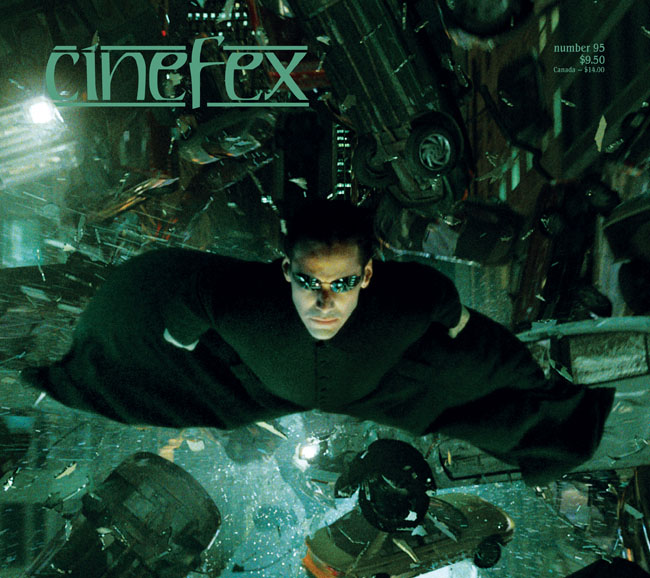
The Matrix Reloaded: Neo Realism: Delivering the first of two sequels to their 1999 hit, The Matrix, which took audiences by storm with its tale of alternate realities, the Wachowski Brothers are back with The Matrix Reloaded. This time, returning visual effects supervisor John Gaeta and an international array of visual effects vendors -- led by ESC Entertainment -- advanced synthetic imaging techniques and motion capture technology. The results are virtual-world visuals that defy description and action scenes whose complex choreography and camera work reflect a total liberation from real-world constraints. Article by Joe Fordham
Spy Kids 3D: Game Over: Comin' at Ya! Maverick filmmaker Robert Rodriguez, whose credo of low-budget filmmaking was put to the test in the immensely popular Spy Kids series, offers up a third eye-popping installment in the franchise - Spy Kids 3D: Game Over. Having shot the film in digital video and anaglyphic stereo, Rodriguez - who wore many hats including that of visual effects supervisor -- worked with an array of vendors to produce some 850 effects shots, most rendered twice for stereoscopic effect. Article by Joe Fordham
Terminator 3: Rise of the Machines: Winds of War: In Terminator 3: Rise of the Machines, director Jonathan Mostow picks up the reins of James Cameron's futuristic tale, introduced in his breakout film The Terminator and revisited in the sequel, Terminator 2: Judgment Day. Back for a return engagement are the film's star, Arnold Schwarzenegger, as well as creature creator Stan Winston and the maestros of Industrial Light & Magic, who pushed the saga to new heights with a powerful blend of cutting-edge animatronics and digital technology used to depict the Terminator and an even deadlier threat from the future - a T-X female cyborg. Article by Barbara Robertson
The Matrix Reloaded: Neo Realism: Delivering the first of two sequels to their 1999 hit, The Matrix, which took audiences by storm with its tale of alternate realities, the Wachowski Brothers are back with The Matrix Reloaded. This time, returning visual effects supervisor John Gaeta and an international array of visual effects vendors -- led by ESC Entertainment -- advanced synthetic imaging techniques and motion capture technology. The results are virtual-world visuals that defy description and action scenes whose complex choreography and camera work reflect a total liberation from real-world constraints. Article by Joe Fordham
Seabiscuit: Photo Finish: Written and directed by Gary Ross, and adapted from the Laura Hillenbrand best-selling book, Seabiscuit recounts the legendary rise of America's favorite Depression-era racehorse. To achieve dynamic...
more

2004
Issue 96
January/February/March

January/February/March

Contents
The Lord of the Rings: The Return of the King: Journey's End: In The Return of the King, the stirring finale to New Zealand filmmaker Peter Jackson's acclaimed adaptation of J. R. R. Tolkien's The Lord of the Rings, the director pulls out all the stops, bringing the epic fantasy to its long-awaited conclusion. Once again, Jackson's homegrown effects facilities, Weta Digital and Weta Workshop, faced daunting challenges in creating more creatures, more environments and even greater epic battles. Chief among the accomplishments were the depictions of Shelob, Gollum and a host of other fantasy CG characters, the super battle at Pelennor Fields, the majesty of Minas Tirith and the final assault on Mount Doom. Article by Joe Fordham
Q&A: Peter Jackson: In an exclusive interview, Lord of the Rings director Peter Jackson reflects on the odyssey of the past eight years that has taken him from relative obscurity to world-class status. Included are insights into Jackson's philosophic and creative choices in adapting Tolkien's material, as well as his approach to the increasingly sophisticated visual effects challenges inherent in the final epic installment. Interview by Joe Fordham
Master and Commander: Victory at Sea: A rousing tale of adventure based on the seafaring novels of Patrick O'Brian, Master and Commander: The Far Side of the World depicts life aboard an early nineteenth-century British sailing vessel navigating the dangerous seas of the Napoleonic era. Determined to capture the same degree of historically accurate detail as the novels, director Peter Weir called upon visual effects supervisors Nathan McGuinness of Asylum and Stefen Fangmeier of Industrial Light & Magic to oversee visual effects, which were used in combination with full-scale ship replicas and miniatures to recreate two major ship-to-ship battles and a raging storm at sea. Article by Jody Duncan
Peter Pan: New Toys for Lost Boys: A perennial favorite, Peter Pan has seen many incarnations on both stage and screen during the hundred years since J. M. Barrie first penned his children's tale of perpetual youth in Never Never Land. In the latest film adaptation, director P. J. Hogan takes advantage of modern visual effects technology to bring a live-action Peter Pan to the screen, heightening the story's magical elements with the use of sophisticated flying rigs by special effects supervisor Clay Pinney and visual effects by artists at Industrial Light & Magic, Digital Domain and Sony Pictures Imageworks, who brought to bear all of their tools and talents in the service of the story's fantasy settings and characters. Article by Jody Duncan
Q&A: Peter Jackson: In an exclusive interview, Lord of the Rings director Peter Jackson reflects on the odyssey of the past eight years that has taken him from relative obscurity to world-class status. Included are insights into Jackson's philosophic and creative choices in adapting Tolkien's material, as well as his approach to the increasingly sophisticated visual effects challenges inherent in the final epic installment. Interview by Joe Fordham
Master and Commander: Victory at Sea: A rousing tale of adventure based on the seafaring novels of Patrick O'Brian, Master and Commander: The Far Side of the World depicts life aboard an early nineteenth-century British sailing vessel navigating the dangerous seas of the Napoleonic era. Determined to capture the same degree of historically accurate detail as the novels, director Peter Weir called upon visual effects supervisors Nathan McGuinness of Asylum and Stefen Fangmeier of Industrial Light & Magic to oversee visual effects, which were used in combination with full-scale ship replicas and miniatures to recreate two major ship-to-ship battles and a raging storm at sea. Article by Jody Duncan
Peter Pan: New Toys for Lost Boys: A perennial favorite, Peter Pan has seen many incarnations on both stage and screen during the hundred years since J. M. Barrie first penned his children's tale of perpetual youth in Never Never Land. In the latest film adaptation, director P. J. Hogan takes advantage of modern visual effects technology to bring a live-action Peter Pan to the screen, heightening the story's magical elements with the use of sophisticated flying rigs by special effects supervisor Clay Pinney and visual effects by artists at Industrial Light & Magic, Digital Domain and Sony Pictures Imageworks, who brought to bear all of their tools and talents in the service of the story's fantasy settings and characters. Article by Jody Duncan
The Lord of the Rings: The Return of the King: Journey's End: In The Return of the King, the stirring finale to New Zealand filmmaker Peter Jackson's acclaimed adaptation of...
more

Issue 97
April/May/June

April/May/June

Contents
Q&A: Phil Tippett: In an exclusive interview, Oscar-winning visual effects maestro Phil Tippett, founder of Tippett Studio -- one of the industry's top-rated computer animation facilities -- discusses his recent foray into film directing, with Starship Troopers 2, and the remarkable 27-year career that has carried him from stop-motion animation in Star Wars to go-motion in Dragonslayer to 3D character animation in Jurassic Park and beyond. Interview by Joe Fordham.
The Passion of the Christ: Passion Play: Unflinching in its depiction of the crucifixion of Jesus Christ, Mel Gibson's controversial film, The Passion of the Christ, presents the horror of the event like no other. To realize his vision, Gibson chose makeup effects creator Keith Vanderlaan and his company, Captive Audience, to handle all of the film's effects work, marking the facility's debut as a full-service shop. The result was a deft blending of makeup and animatronics with sophisticated digital effects to deliver shockingly realistic images in the service of Gibson's gritty interpretation. Article by Jody Duncan.
Matte World Digital: A Company of Artists: Having transitioned successfully from traditional matte painting to the digital backlot approach used in modern filmmaking, Matte World Digital is one of a handful of companies to survive the swift technological advances in the visual effects industry over the past decade. Co-founder Craig Barron details the company's efforts to stay at the forefront of the digital revolution and its impact on his craft, as canvasses and bushes gave way to computer workstations and sophisticated software tools. Article by Jody Duncan.
Hellboy: To Hell and Back: Based on the graphic novels of Mike Mignola, Hellboy features the demon head of an occult crimefighting team gathered to counter the forces of evil. Charged with delivering the effects-heavy film on a modest budget, director Guillermo del Toro relied heavily on practical effects by Nick Allder and makeup and animatronics by Cinovation Studio, Spectral Motion and DDT Efectos Especiales. Complementing the practical effects were some 800 visual effects shots featuring miniatures, CG environments and character animation, with visual effects supervisor Edward Irastorza and principal vendors Tippett Studio and The Orphanage leading the effort. Article by Joe Fordham.
The Matrix Revolutions: Heavy Metal: The Matrix Revolutions -- the final installment in the Wachowski Brothers' post-apocalyptic trilogy -- marked the close of a four-year odyssey for visual effects supervisor John Gaeta and ESC Entertainment, the company formed to lead the visual effects effort for both sequels. Working with effects vendors and physical and miniature effects teams in the U.S. and abroad, Gaeta and his collaborators devised new virtual technologies, and in Revolutions, capitalized on those advances to deliver stunning scenes of the machine world's final war against humanity. Article by Joe Fordham.
The Passion of the Christ: Passion Play: Unflinching in its depiction of the crucifixion of Jesus Christ, Mel Gibson's controversial film, The Passion of the Christ, presents the horror of the event like no other. To realize his vision, Gibson chose makeup effects creator Keith Vanderlaan and his company, Captive Audience, to handle all of the film's effects work, marking the facility's debut as a full-service shop. The result was a deft blending of makeup and animatronics with sophisticated digital effects to deliver shockingly realistic images in the service of Gibson's gritty interpretation. Article by Jody Duncan.
Matte World Digital: A Company of Artists: Having transitioned successfully from traditional matte painting to the digital backlot approach used in modern filmmaking, Matte World Digital is one of a handful of companies to survive the swift technological advances in the visual effects industry over the past decade. Co-founder Craig Barron details the company's efforts to stay at the forefront of the digital revolution and its impact on his craft, as canvasses and bushes gave way to computer workstations and sophisticated software tools. Article by Jody Duncan.
Hellboy: To Hell and Back: Based on the graphic novels of Mike Mignola, Hellboy features the demon head of an occult crimefighting team gathered to counter the forces of evil. Charged with delivering the effects-heavy film on a modest budget, director Guillermo del Toro relied heavily on practical effects by Nick Allder and makeup and animatronics by Cinovation Studio, Spectral Motion and DDT Efectos Especiales. Complementing the practical effects were some 800 visual effects shots featuring miniatures, CG environments and character animation, with visual effects supervisor Edward Irastorza and principal vendors Tippett Studio and The Orphanage leading the effort. Article by Joe Fordham.
The Matrix Revolutions: Heavy Metal: The Matrix Revolutions -- the final installment in the Wachowski Brothers' post-apocalyptic trilogy -- marked the close of a four-year odyssey for visual effects supervisor John Gaeta and ESC Entertainment, the company formed to lead the visual effects effort for both sequels. Working with effects vendors and physical and miniature effects teams in the U.S. and abroad, Gaeta and his collaborators devised new virtual technologies, and in Revolutions, capitalized on those advances to deliver stunning scenes of the machine world's final war against humanity. Article by Joe Fordham.
Q&A: Phil Tippett: In an exclusive interview, Oscar-winning visual effects maestro Phil Tippett, founder of Tippett Studio -- one of the industry's top-rated computer animation facilities -- discusses his recent...
more

Issue 98
July/August/September
July/August/September
Contents
Sky Captain and the World of Tomorrow: Brave New World: Written and directed by first-time filmmaker Kerry Conran, Sky Captain and the World of Tomorrow is a stylized and imaginative spin on the old Republic serials, achieved via an unorthodox approach to effects filmmaking. With remarkable result, artists at World of Tomorrow, the production's own effects company established to handle the task -- and aided by more than a dozen visual effects subcontractors -- relied exclusively on bluescreened performances by the film's principal actors, composited into backgrounds constructed entirely from digital models, photographic and archival material. Article by Joe Fordham.
Troy: Bronze Age Ballistics: In his epic film Troy, loosely adapted from Homer's The Iliad, director Wolfgang Petersen called upon effects artists across three continents to re-create the fabled city and depict its subsequent destruction. Led by visual effects supervisor Nick Davis, physical effects supervisor Joss Williams and makeup effects supervisor Daniel Parker, artists conjured expansive views of ancient cities, complex battle scenes involving thousands of warriors, and the arrival of the massive Greek armada -- a feat made possible through the clever combination of live-action and innovative digital technology. Article by Joe Fordham.
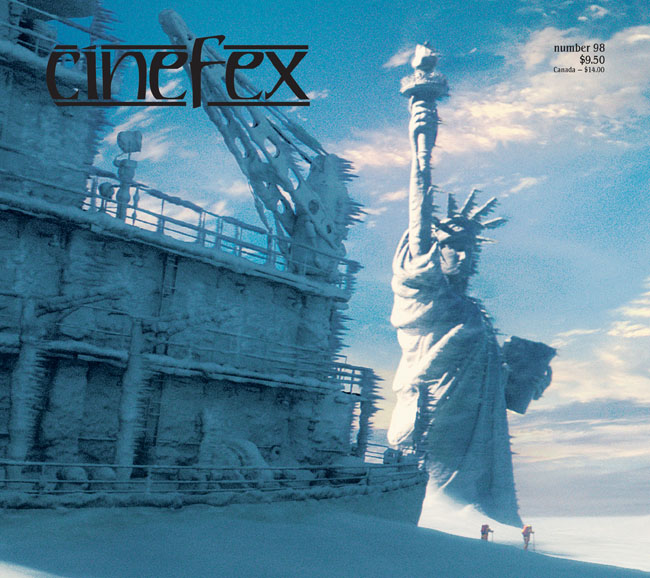
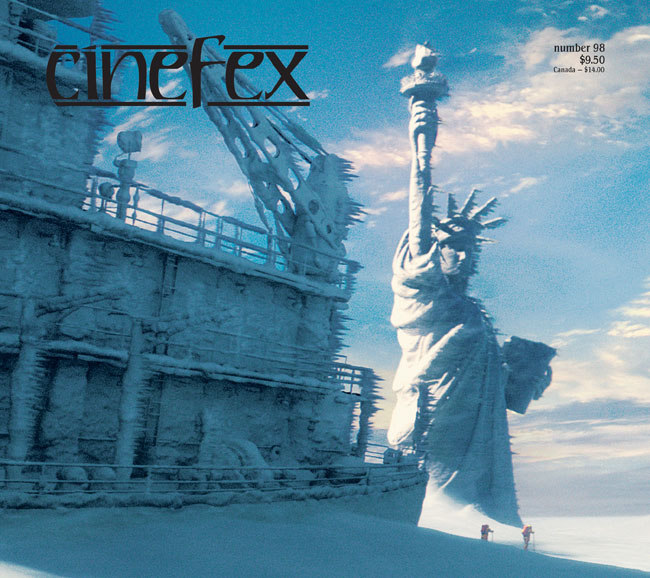
The Day After Tomorrow: Freeze Frames: When global warming causes a sudden catastrophic climate shift, storms, floods, tornadoes and other extreme weather phenomena are unleashed upon earth's inhabitants in director Roland Emmerich's disaster film, The Day After Tomorrow. Visual effects supervisor Karen Goulekas commanded a veritable army of effects companies and artists charged with using modern digital technology to depict the calamitous conditions and wholesale destruction of cities and recognizable landmarks with frightening reality. Article by Jody Duncan.
Van Helsing: Man Made Monsters: Serving up a smorgasbord of creatures in homage to the Universal horror films of old, Van Helsing resurrects Dracula, Frankenstein's monster and the Wolf Man, among others, to battle the venerated vampire killer of the film's title. Principal effects vendors Industrial Light & Magic and Illusion Arts - along with a dozen other companies -- provided director Stephen Sommers with creature designs and character animations, as well as digitally derived 19th-century Transylvania locales, while Captive Audience Productions tackled special makeup effects. Article by Jody Duncan.
Troy: Bronze Age Ballistics: In his epic film Troy, loosely adapted from Homer's The Iliad, director Wolfgang Petersen called upon effects artists across three continents to re-create the fabled city and depict its subsequent destruction. Led by visual effects supervisor Nick Davis, physical effects supervisor Joss Williams and makeup effects supervisor Daniel Parker, artists conjured expansive views of ancient cities, complex battle scenes involving thousands of warriors, and the arrival of the massive Greek armada -- a feat made possible through the clever combination of live-action and innovative digital technology. Article by Joe Fordham.
The Day After Tomorrow: Freeze Frames: When global warming causes a sudden catastrophic climate shift, storms, floods, tornadoes and other extreme weather phenomena are unleashed upon earth's inhabitants in director Roland Emmerich's disaster film, The Day After Tomorrow. Visual effects supervisor Karen Goulekas commanded a veritable army of effects companies and artists charged with using modern digital technology to depict the calamitous conditions and wholesale destruction of cities and recognizable landmarks with frightening reality. Article by Jody Duncan.
Van Helsing: Man Made Monsters: Serving up a smorgasbord of creatures in homage to the Universal horror films of old, Van Helsing resurrects Dracula, Frankenstein's monster and the Wolf Man, among others, to battle the venerated vampire killer of the film's title. Principal effects vendors Industrial Light & Magic and Illusion Arts - along with a dozen other companies -- provided director Stephen Sommers with creature designs and character animations, as well as digitally derived 19th-century Transylvania locales, while Captive Audience Productions tackled special makeup effects. Article by Jody Duncan.
Sky Captain and the World of Tomorrow: Brave New World: Written and directed by first-time filmmaker Kerry Conran, Sky Captain and the World of Tomorrow is a stylized and imaginative...
more

Issue 99
October/November/December
October/November/December
Contents
Alien Vs. Predator: Predator and Prey: In an ancient pyramid beneath the Antarctic ice shelf, iconic monsters from two celebrated film franchises battle each other and a team of hapless scientists in director Paul W.S. Anderson's science fiction thriller, Alien Vs. Predator. Practical creature effects for the Prague-based production were created by Alec Gillis and Tom Woodruff Jr. of Amalgamated Dynamics Incorporated, while visual effects supervisor John Bruno directed the work of five English and Czech effects houses, which together produced nearly 500 visual effects shots in only three months. Article by Jody Duncan.
Harry Potter and the Prisoner of Azkaban: Something Wicked This Way Comes: With a new director at the helm -- Alfonso Cuaron -- Harry Potter and the Prisoner of Azkaban rejoins the young wizard-in-training as he returns for his third year at Hogwarts amid concerns that he is being stalked by an infamous murderer who has escaped from prison. Providing massive effects support to the third film based on J.K. Rowling's bestselling novels were series regulars including special effects supervisor John Richardson, creature and makeup effects designer Nick Dudman, and eight visual effects houses under the supervision of Roger Guyett and Tim Burke. Article by Joe Fordham.
Spider-Man 2: Armed and Dangerous: Reluctant superhero Peter Parker, yearning for a normal life, continues to pine for Mary Jane Watson while attending college and battling a new adversary in the form of Doc Ock, a fiendish genius with mechanical tentacles fused to his body. Enlisted by returning director Sam Raimi to provide digital effects for Spider-Man 2 were visual effects designer John Dykstra and the team at Sony Pictures Imageworks. Providing on-set animatronics for the production was animatronic supervisor Steve Johnson and his Edge FX company. Article by Joe Fordham.
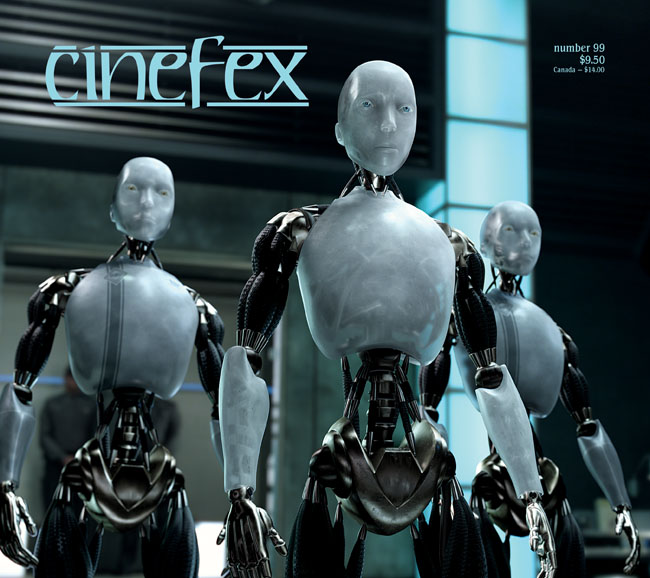
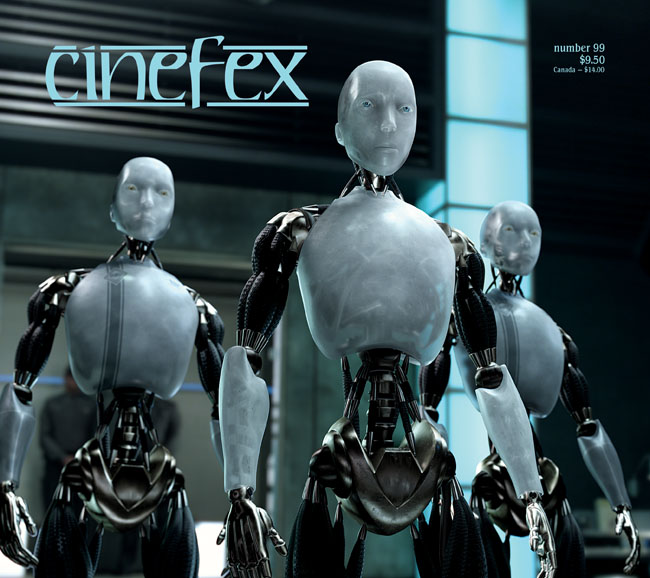
I, Robot: Ghosts in the Machine: As the world's most advanced domestic robot is about to undergo mass distribution, one of them is accused of murdering a human in apparent violation of the immutable Thee Laws of Robotics. Actor Will Smith plays a detective assigned to the case in director Alex Proyas' near-future film, I, Robot, based on Isaac Asimov's classic short story collection. Supplying computer generated robots and futuristic environments were visual effects crews at Digital Domain and Weta Digital. Article by Jody Duncan.
Harry Potter and the Prisoner of Azkaban: Something Wicked This Way Comes: With a new director at the helm -- Alfonso Cuaron -- Harry Potter and the Prisoner of Azkaban rejoins the young wizard-in-training as he returns for his third year at Hogwarts amid concerns that he is being stalked by an infamous murderer who has escaped from prison. Providing massive effects support to the third film based on J.K. Rowling's bestselling novels were series regulars including special effects supervisor John Richardson, creature and makeup effects designer Nick Dudman, and eight visual effects houses under the supervision of Roger Guyett and Tim Burke. Article by Joe Fordham.
Spider-Man 2: Armed and Dangerous: Reluctant superhero Peter Parker, yearning for a normal life, continues to pine for Mary Jane Watson while attending college and battling a new adversary in the form of Doc Ock, a fiendish genius with mechanical tentacles fused to his body. Enlisted by returning director Sam Raimi to provide digital effects for Spider-Man 2 were visual effects designer John Dykstra and the team at Sony Pictures Imageworks. Providing on-set animatronics for the production was animatronic supervisor Steve Johnson and his Edge FX company. Article by Joe Fordham.
I, Robot: Ghosts in the Machine: As the world's most advanced domestic robot is about to undergo mass distribution, one of them is accused of murdering a human in apparent violation of the immutable Thee Laws of Robotics. Actor Will Smith plays a detective assigned to the case in director Alex Proyas' near-future film, I, Robot, based on Isaac Asimov's classic short story collection. Supplying computer generated robots and futuristic environments were visual effects crews at Digital Domain and Weta Digital. Article by Jody Duncan.
Alien Vs. Predator: Predator and Prey: In an ancient pyramid beneath the Antarctic ice shelf, iconic monsters from two celebrated film franchises battle each other and a team of hapless...
more

2005
Issue 100
January/February/March

January/February/March

Contents
State of the Art: A Cinefex 25th Anniversary Forum: Cinefex marks the occasion of its 100th issue with a probing 'roundtable' discussion of the past, present and future of visual effects by more than 50 of the industry's leading effects practitioners. Filled with insightful observations from those who have been in the trenches, pushing effects technology to new and dazzling heights over the years, the article also offers color reproductions of every Cinefex cover to date. Edited by Jody Duncan. Interviews by Don Shay & Joe Fordham.
The Polar Express: A Dream of Christmas: For his adaption of the award-winning children's book by Chris Van Allsburg, about a young boy who embarks on a journey to the North Pole on a phantom locomotive, director Robert Zemeckis pulls out all the stops in The Polar Express. Entirely computer generated, the film relies on new and innovative techniques in performance capture and rendering to retain the charm and artistic vision of Van Allsburg's classic tale. Spearheading the effort were Oscar-winning visual effects veteran Ken Ralston and supervisor Jerome Chen, working with a team at Sony Pictures Imageworks. Article by Joe Fordham.
Lemony Snicket's A Series of Unfortunate Events: A Series of Persnickety Effects: Trouble looms around every corner for the Baudelaire orphans in Lemony Snicket's A Series of Unfortunate Events, directed by Brad Silberling and based on the first three installments in the immensely popular children's book series. Industrial Light & Magic led the visual effects effort, providing some 500 shots for the production that ranged from digital matte paintings and models of the Baudelaire mansion to a CG version of the youngest Baudelaire, baby Sunny. Makeups for Jim Carrey as the evil Count Olaf, whose schemes to claim the orphans' inheritance entail an elaborate series of disguises, were designed and implemented by Bill Corso. Article by Jody Duncan.
The Polar Express: A Dream of Christmas: For his adaption of the award-winning children's book by Chris Van Allsburg, about a young boy who embarks on a journey to the North Pole on a phantom locomotive, director Robert Zemeckis pulls out all the stops in The Polar Express. Entirely computer generated, the film relies on new and innovative techniques in performance capture and rendering to retain the charm and artistic vision of Van Allsburg's classic tale. Spearheading the effort were Oscar-winning visual effects veteran Ken Ralston and supervisor Jerome Chen, working with a team at Sony Pictures Imageworks. Article by Joe Fordham.
Lemony Snicket's A Series of Unfortunate Events: A Series of Persnickety Effects: Trouble looms around every corner for the Baudelaire orphans in Lemony Snicket's A Series of Unfortunate Events, directed by Brad Silberling and based on the first three installments in the immensely popular children's book series. Industrial Light & Magic led the visual effects effort, providing some 500 shots for the production that ranged from digital matte paintings and models of the Baudelaire mansion to a CG version of the youngest Baudelaire, baby Sunny. Makeups for Jim Carrey as the evil Count Olaf, whose schemes to claim the orphans' inheritance entail an elaborate series of disguises, were designed and implemented by Bill Corso. Article by Jody Duncan.
State of the Art: A Cinefex 25th Anniversary Forum: Cinefex marks the occasion of its 100th issue with a probing 'roundtable' discussion of the past, present and future of visual...
more

Issue 101
April/May/June

April/May/June

Contents
State of the Business: A Cinefex 25th Anniversary Forum: Cinefex continues its visual effects forum, begun in Issue 100 as a 'roundtable discussion' on the state of the art. This time around, some 35 industry luminaries share their experiences and insights into the highly volatile nature of visual effects as a business. Their entertaining and often brutally frank assessments of the challenges they have encountered in the past and envision for the future are accompanied by cartoons from the portfolio of freelance visual effects supervisor John Van Vliet, whose witty observations on life in the visual effects trenches have earned him a devoted following. Article by Jody Duncan.
The Aviator: Angels and Demons: Exploring the untapped early years of famed aviator and industrialist Howard Hughes in The Aviator, director Martin Scorsese called upon Oscar-winning visual effects supervisor Rob Legato to oversee effects that involved the re-creation of historic aircraft and the reenactment of thrilling aerial sequences through a blending of contemporary digital technology with old-school in-camera filmmaking techniques. Heading up the digital work was Sony Pictures Imageworks and a handful of ancillary vendors, while miniatures were the purview of New Deal Studios, and full-scale effects were provided by special effects supervisor R. Bruce Steinheimer. Article by Joe Fordham.
Son of the Mask: Acme Effects: In a zany sequel to The Mask, the 1994 comedy hit that provided fertile ground for the comic contortions of actor Jim Carrey, Son of the Mask introduces an all-new plot and cast of characters, whose encounters with the transformative Mask wreak havoc on their household. Director Lawrence Guterman, in search of Chuck Jones-inspired animation and a classic cartoon aesthetic, turned to visual effects supervisor Jamie Price, and a team that included special effects supervisor Brian Cox, makeup effects and animatronics artists at Captive Audience Productions and animators at Tippett Studio, Industrial Light & Magic and nearly a dozen other digital vendors. Article by Joe Fordham.
The Aviator: Angels and Demons: Exploring the untapped early years of famed aviator and industrialist Howard Hughes in The Aviator, director Martin Scorsese called upon Oscar-winning visual effects supervisor Rob Legato to oversee effects that involved the re-creation of historic aircraft and the reenactment of thrilling aerial sequences through a blending of contemporary digital technology with old-school in-camera filmmaking techniques. Heading up the digital work was Sony Pictures Imageworks and a handful of ancillary vendors, while miniatures were the purview of New Deal Studios, and full-scale effects were provided by special effects supervisor R. Bruce Steinheimer. Article by Joe Fordham.
Son of the Mask: Acme Effects: In a zany sequel to The Mask, the 1994 comedy hit that provided fertile ground for the comic contortions of actor Jim Carrey, Son of the Mask introduces an all-new plot and cast of characters, whose encounters with the transformative Mask wreak havoc on their household. Director Lawrence Guterman, in search of Chuck Jones-inspired animation and a classic cartoon aesthetic, turned to visual effects supervisor Jamie Price, and a team that included special effects supervisor Brian Cox, makeup effects and animatronics artists at Captive Audience Productions and animators at Tippett Studio, Industrial Light & Magic and nearly a dozen other digital vendors. Article by Joe Fordham.
State of the Business: A Cinefex 25th Anniversary Forum: Cinefex continues its visual effects forum, begun in Issue 100 as a 'roundtable discussion' on the state of the art. This...
more

Issue 102
July/August/September

July/August/September

Contents
Star Wars Episode III Revenge Of The Sith: All the visual effects firepower of Industrial Light & Magic was applied to complete the final installment of the second Star Wars trilogy, in which writer-director George Lucas chronicles Anakin Skywalker's surrender to the dark side of the Force and the fall of the Galactic Republic.
Sin City: Maverick filmmaker Robert Rodriguez shares directing credit with Frank Miller in a cinematic adaptation of Miller's graphic novels about police officials hunting a street fighter on a rampage of violence. Makeup artists at KNB EFX and visual effects artists at Hybride and The Orphanage contributed to the film's future-noir look.
The Hitchhiker's Guide To The Galaxy: Jim Henson's Creature Shop and the visual effects team at Cinesite apply their talents to the long-awaited big-screen adaptation of Douglas Adam's comic radio show and novel about a bewildered earthling stranded after the destruction of his home planet.
Constantine: Alan Moore's graphic novel, about a world-weary investigator of supernatural mysteries prone to walking a thin line between good and evil, is brought to the screen by director Francis Lawrence. Visual effects supervisor Michael Fink oversaw an assemblage of nine effects companies to bring the effects extravaganza to fruition.
Sin City: Maverick filmmaker Robert Rodriguez shares directing credit with Frank Miller in a cinematic adaptation of Miller's graphic novels about police officials hunting a street fighter on a rampage of violence. Makeup artists at KNB EFX and visual effects artists at Hybride and The Orphanage contributed to the film's future-noir look.
The Hitchhiker's Guide To The Galaxy: Jim Henson's Creature Shop and the visual effects team at Cinesite apply their talents to the long-awaited big-screen adaptation of Douglas Adam's comic radio show and novel about a bewildered earthling stranded after the destruction of his home planet.
Constantine: Alan Moore's graphic novel, about a world-weary investigator of supernatural mysteries prone to walking a thin line between good and evil, is brought to the screen by director Francis Lawrence. Visual effects supervisor Michael Fink oversaw an assemblage of nine effects companies to bring the effects extravaganza to fruition.
Star Wars Episode III Revenge Of The Sith: All the visual effects firepower of Industrial Light & Magic was applied to complete the final installment of the second Star Wars...
more

Issue 103
October/November/December

October/November/December

Contents
War of the Worlds: Alien Apocalypse: In War of the Worlds, a gritty, contemporary retelling of the 1950s George Pal film, adapted from the novel by H.G. Wells, director Steven Spielberg reunites with longtime collaborators at Industrial Light & Magic and actor/producer Tom Cruise to put a modern spin on the classic alien invasion story, told from a more intimate point of view. Working at breakneck speed to accommodate a compressed shooting and postproduction schedule, ILM crews, under senior visual effects supervisor Dennis Muren and visual effects supervisor Pablo Helman, took advantage of upgraded digital tools and a revamped pipeline to produce the fearsome army of extraterrestrial tripod war machines intent on destroying the world. Article by Joe Fordham
Batman Begins: Starting Over: Following an eight-year hiatus, D.C. Comics' masked crusader returns to the big screen in Batman Begins, directed by Christopher Nolan. For the newest installment, which traces the traumatic events of Wayne's childhood and his early adulthood as a means of exploring the psychological underpinnings of a superhero, Nolan rooted the film in a real-world sensibility that serves as a counterpoint to its comic book origins. Dan Glass and Janek Sirrs headed up the visual effects work, which included elaborate miniatures by Cutting Edge and Steve Begg, and digital effects by Double Negative, The Moving Picture Company and Buf Compagnie. Chris Corbould supervised the film's extensive physical effects, including a radically remodeled Batmobile. Article by Joe Fordham
Stealth: Gamer Cool: Director Rob Cohen once again demonstrates his penchant for visceral displays of speed in Stealth, a cautionary tale of technology run amuck in a not-too-distant-future where computer-controlled drone fighter jets are used in combat. For thrilling aerial scenes involving the drone and a fleet of futuristic stealth bombers, Cohen turned to a Digital Domain crew headed by visual effects supervisor Joel Hynek, tasked with creating digital planes and environments, as well as a host of miniature effects for the film. Physical effects supervisor John Frazier led the practical work, which included construction of an elaborate hydraulic gimbal enabling Cohen to shoot his actors in dynamically moving cockpits. Article by Jody Duncan
OVERVIEWS
Visual effects supervisor Kurt Williams discusses makeup and visual effects employed by a dozen vendors to create the superheroes and villains for director Tim Story's film adaptation of the Marvel Comics favorite, Fantastic Four.
Industrial Light & Magic visual effects supervisor Eric Brevig reteams with director Michael Bay to create futuristic effects for The Island, about two members of a clone community who discover that they have been bred and raised as involuntary organ donors.
Visual effects supervisor Nick Davis delves into the creation of Oompa Loompas and a fanciful candy factory for director Tim Burton's Charlie and the Chocolate Factory.
Visual effects supervisor John Van Vliet goes behind-the-scenes with a discussion of the physical and visual effects needed to manufacture a Volkswagen with a mind of its own in Herbie: Fully Loaded.
Batman Begins: Starting Over: Following an eight-year hiatus, D.C. Comics' masked crusader returns to the big screen in Batman Begins, directed by Christopher Nolan. For the newest installment, which traces the traumatic events of Wayne's childhood and his early adulthood as a means of exploring the psychological underpinnings of a superhero, Nolan rooted the film in a real-world sensibility that serves as a counterpoint to its comic book origins. Dan Glass and Janek Sirrs headed up the visual effects work, which included elaborate miniatures by Cutting Edge and Steve Begg, and digital effects by Double Negative, The Moving Picture Company and Buf Compagnie. Chris Corbould supervised the film's extensive physical effects, including a radically remodeled Batmobile. Article by Joe Fordham
Stealth: Gamer Cool: Director Rob Cohen once again demonstrates his penchant for visceral displays of speed in Stealth, a cautionary tale of technology run amuck in a not-too-distant-future where computer-controlled drone fighter jets are used in combat. For thrilling aerial scenes involving the drone and a fleet of futuristic stealth bombers, Cohen turned to a Digital Domain crew headed by visual effects supervisor Joel Hynek, tasked with creating digital planes and environments, as well as a host of miniature effects for the film. Physical effects supervisor John Frazier led the practical work, which included construction of an elaborate hydraulic gimbal enabling Cohen to shoot his actors in dynamically moving cockpits. Article by Jody Duncan
OVERVIEWS
Visual effects supervisor Kurt Williams discusses makeup and visual effects employed by a dozen vendors to create the superheroes and villains for director Tim Story's film adaptation of the Marvel Comics favorite, Fantastic Four.
Industrial Light & Magic visual effects supervisor Eric Brevig reteams with director Michael Bay to create futuristic effects for The Island, about two members of a clone community who discover that they have been bred and raised as involuntary organ donors.
Visual effects supervisor Nick Davis delves into the creation of Oompa Loompas and a fanciful candy factory for director Tim Burton's Charlie and the Chocolate Factory.
Visual effects supervisor John Van Vliet goes behind-the-scenes with a discussion of the physical and visual effects needed to manufacture a Volkswagen with a mind of its own in Herbie: Fully Loaded.
War of the Worlds: Alien Apocalypse: In War of the Worlds, a gritty, contemporary retelling of the 1950s George Pal film, adapted from the novel by H.G. Wells, director Steven...
more

2006
Issue 104
January/February/March

January/February/March

Contents
King Kong: One of the most beloved fantasy adventures of all time returns to the big screen in director Peter Jackson's adaptation of the 1933 film classic about a giant ape who reigns over an island of prehistoric beasts, but who falls for a winsome blonde and is transported to civilization for an epic rampage through the streets of New York. Jackson's longtime dream project, and his first film since completing The Lord of the Rings trilogy, King Kong comes alive through the efforts of Jackson's own Oscar-winning effects companies, Weta Digital and Weta Workshop in New Zealand.
The Chronicles of Narnia: Several generations of children and adults have been captivated by C.S. Lewis' The Chronicles of Narnia, about four young children who step into an enchanted wardrobe and find themselves in the frozen land of Narnia, inhabited by witches, fauns and other magical beasts. Now, director Andrew Adamson, drawing upon the talents of three top visual effects companies (Industrial Light & Magic, Sony Pictures Imageworks and Rhythm & Hues), brings to film the first installment of the Narnia series, The Lion, the Witch and the Wardrobe.
The Legend of Zorro: Visual effects supervisor Pete Kozachik dissects the stop-motion animation and visual effects in Tim Burton's The Corpse Bride. Visual effects supervisor Michael Shelton discusses the subtle, but creepy, digital makeup employed in The Exorcism of Emily Rose. And visual effects supervisor Kent Houston talks about exploding trains and other effects in the rollicking sequel, The Legend of Zorro.
The Chronicles of Narnia: Several generations of children and adults have been captivated by C.S. Lewis' The Chronicles of Narnia, about four young children who step into an enchanted wardrobe and find themselves in the frozen land of Narnia, inhabited by witches, fauns and other magical beasts. Now, director Andrew Adamson, drawing upon the talents of three top visual effects companies (Industrial Light & Magic, Sony Pictures Imageworks and Rhythm & Hues), brings to film the first installment of the Narnia series, The Lion, the Witch and the Wardrobe.
The Legend of Zorro: Visual effects supervisor Pete Kozachik dissects the stop-motion animation and visual effects in Tim Burton's The Corpse Bride. Visual effects supervisor Michael Shelton discusses the subtle, but creepy, digital makeup employed in The Exorcism of Emily Rose. And visual effects supervisor Kent Houston talks about exploding trains and other effects in the rollicking sequel, The Legend of Zorro.
King Kong: One of the most beloved fantasy adventures of all time returns to the big screen in director Peter Jackson's adaptation of the 1933 film classic about a giant...
more

Issue 105
April/May/June

April/May/June

Contents
Harry Potter and the Goblet of Fire: Dark Lord Rising: For Harry Potter and the Goblet of Fire, the fourth installment in the film franchise based on J.K. Rowling's acclaimed children's book series, visual effects supervisor Jim Mitchell oversaw the creation of all-new fantasy characters and environments as a teenage Harry tests his mettle in the Triwizard Tournament. Special effects supervisor John Richardson, creature supervisor Nick Dudman, and an international team of visual effects vendors - the largest ever since the series began - joined forces to bring Rowling's increasingly mature themes to fruition. Article by Joe Fordham.
All Sixty: A Cinefex Forum on Effects in Television: In another of its 'roundtable forums,' Cinefex explores the role of makeup and visual effects in episodic television, where the affordability and accessibility of high-end digital tools and viewers' rising expectations have resulted in greater demand for sophisticated imagery. Ten artists currently working in the medium share their insights and views on the subject, elaborating on the unique challenges of practicing their craft in an environment famous for its tight budgets and grueling schedules. Article by Jody Duncan.
TV x 3: Cinefex goes behind the scenes of three of television's most popular effects-driven shows. In ABC TV's Lost, supervisor Kevin Blank relies on a blend of practical and visual effects to unveil the mysteries of a deserted island where survivors of a plane crash find themselves marooned; in the Sci-Fi Channel's resurrected space saga Battlestar Galactica, visual effects supervisor Gary Hutzel and Zoic Studios update the series for modern audiences, delivering all-new ships, space battles and alien planet environments; and in NBC's Surface, visual effects supervisor Mitch Suskin enlists Eden FX to create the fantasy series' strange leviathan sea creatures and an evolving baby sea monster hatchling. Article by Joe Fordham.
OVERVIEWS
The Shaggy Dog: Visual effects supervisor Stephen Rosenbaum expounds on the efforts of Tippett Studio and CIS Hollywood to sell the comic premise of a man morphing into a dog in this remake of the Disney comedy classic, The Shaggy Dog.
Casanova: For the period film Casanova, a comic take on the life and loves of the infamous 18th-century rake, visual effects supervisors Syd Dutton and Bill Taylor of Illusion Arts discuss their methods of turning the clock back 200 years on modern-day Venice.
Zathura: Joe Bauer, visual effects supervisor on Zathura, reveals the seamless meld of practical and digital effects used to depict the bizarre adventures of two young brothers who discover an old board game in their attic that has the power to send them spinning off into the galaxy.
All Sixty: A Cinefex Forum on Effects in Television: In another of its 'roundtable forums,' Cinefex explores the role of makeup and visual effects in episodic television, where the affordability and accessibility of high-end digital tools and viewers' rising expectations have resulted in greater demand for sophisticated imagery. Ten artists currently working in the medium share their insights and views on the subject, elaborating on the unique challenges of practicing their craft in an environment famous for its tight budgets and grueling schedules. Article by Jody Duncan.
TV x 3: Cinefex goes behind the scenes of three of television's most popular effects-driven shows. In ABC TV's Lost, supervisor Kevin Blank relies on a blend of practical and visual effects to unveil the mysteries of a deserted island where survivors of a plane crash find themselves marooned; in the Sci-Fi Channel's resurrected space saga Battlestar Galactica, visual effects supervisor Gary Hutzel and Zoic Studios update the series for modern audiences, delivering all-new ships, space battles and alien planet environments; and in NBC's Surface, visual effects supervisor Mitch Suskin enlists Eden FX to create the fantasy series' strange leviathan sea creatures and an evolving baby sea monster hatchling. Article by Joe Fordham.
OVERVIEWS
The Shaggy Dog: Visual effects supervisor Stephen Rosenbaum expounds on the efforts of Tippett Studio and CIS Hollywood to sell the comic premise of a man morphing into a dog in this remake of the Disney comedy classic, The Shaggy Dog.
Casanova: For the period film Casanova, a comic take on the life and loves of the infamous 18th-century rake, visual effects supervisors Syd Dutton and Bill Taylor of Illusion Arts discuss their methods of turning the clock back 200 years on modern-day Venice.
Zathura: Joe Bauer, visual effects supervisor on Zathura, reveals the seamless meld of practical and digital effects used to depict the bizarre adventures of two young brothers who discover an old board game in their attic that has the power to send them spinning off into the galaxy.
Harry Potter and the Goblet of Fire: Dark Lord Rising: For Harry Potter and the Goblet of Fire, the fourth installment in the film franchise based on J.K. Rowling's acclaimed...
more

Issue 106
July/August/September
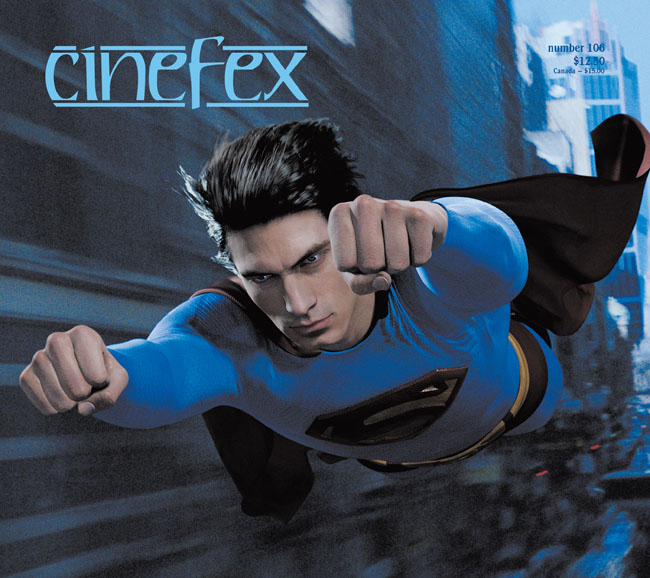
July/August/September
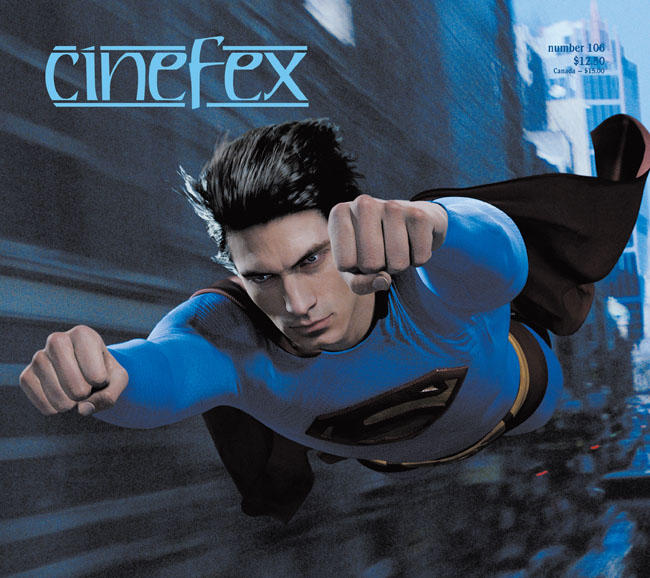
Contents
X-Men: The Last Stand: Dark Phoenix Rising: The X-Men and their mutant adversaries once again come to blows -- this time over thorny ethical issues -- in X-Men: The Last Stand, the third installment in the popular film franchise based on the Marvel Comics series. Faced with a breakneck schedule and a heavy slate of effects, visual effects supervisor John Bruno opted for an in-camera approach whenever possible, relying heavily on practical makeups designed and executed by Spectral Motion for lead mutants - several of them new to the story - and special effects by Mike Vezina. Innovative visual effects - some 900 of them mandated by the ambitious storyline, were distributed among ten vendors from around the globe. Article by Jody Duncan.
Superman Returns: A Hero's Return: In Superman Returns, D.C. Comics' venerable superhero returns to the screen after an absence of nearly twenty years. Director Bryan Singer and newcomer Brandon Routh as the 'Man of Steel' breathe fresh life into the series with the help of physical effects supervisor Neil Corbould, stunt coordinator R.A. Rondell and visual effects supervisor Mark Stetson. Lead effects house Sony Pictures Imageworks and a host of other vendors spread across three continents contributed everything from digital set extensions and atmospherics to fully synthetic environments and CG stunt doubles for the film's exhilarating actions scenes. Article by Joe Fordham.
Poseidon: Wipeout: For Poseidon, an update on the classic 1970s disaster film The Poseidon Adventure, director Wolfgang Petersen traded models and in-camera effects for sophisticated digital imagery to tell the tale of a small band of survivors who attempt a perilous climb out of a giant cruise ship overturned by a rogue wave. Visual effects supervisor Boyd Shermis challenged Industrial Light & Magic to push the boundaries of digital model complexity and fluid dynamics in the creation of an all-synthetic ship, rogue wave and ocean environments. Interior scenes of mayhem were the work of Giant Killer Robots, The Moving Picture Company, CIS Hollywood, Hydraulx, and a handful of other vendors. John Frazier handled practical effects. Article by Jody Duncan.
OVERVIEWS
V for Vendetta: Coming off the Matrix films and Batman Begins, visual effects supervisor Dan Glass discusses the challenges of working on the smaller-scale V for Vendetta, a thriller based on an Alan Moore graphic novel about a masked vigilante in a near-future society, chafing under the rigid rule of a fascist regime.
The Da Vinci Code: For the much anticipated film version of The Da Vinci Code, Dan Brown's best-selling and controversial thriller steeped in unorthodox religious ideology, visual effects supervisor Angus Bickerton reveals the methods used to achieve a seamless blend of effects involving real-life ecclesiastical settings that were off-limits to the film crew, and a series of historical flashbacks key to the movie's complex narrative.
Superman Returns: A Hero's Return: In Superman Returns, D.C. Comics' venerable superhero returns to the screen after an absence of nearly twenty years. Director Bryan Singer and newcomer Brandon Routh as the 'Man of Steel' breathe fresh life into the series with the help of physical effects supervisor Neil Corbould, stunt coordinator R.A. Rondell and visual effects supervisor Mark Stetson. Lead effects house Sony Pictures Imageworks and a host of other vendors spread across three continents contributed everything from digital set extensions and atmospherics to fully synthetic environments and CG stunt doubles for the film's exhilarating actions scenes. Article by Joe Fordham.
Poseidon: Wipeout: For Poseidon, an update on the classic 1970s disaster film The Poseidon Adventure, director Wolfgang Petersen traded models and in-camera effects for sophisticated digital imagery to tell the tale of a small band of survivors who attempt a perilous climb out of a giant cruise ship overturned by a rogue wave. Visual effects supervisor Boyd Shermis challenged Industrial Light & Magic to push the boundaries of digital model complexity and fluid dynamics in the creation of an all-synthetic ship, rogue wave and ocean environments. Interior scenes of mayhem were the work of Giant Killer Robots, The Moving Picture Company, CIS Hollywood, Hydraulx, and a handful of other vendors. John Frazier handled practical effects. Article by Jody Duncan.
OVERVIEWS
V for Vendetta: Coming off the Matrix films and Batman Begins, visual effects supervisor Dan Glass discusses the challenges of working on the smaller-scale V for Vendetta, a thriller based on an Alan Moore graphic novel about a masked vigilante in a near-future society, chafing under the rigid rule of a fascist regime.
The Da Vinci Code: For the much anticipated film version of The Da Vinci Code, Dan Brown's best-selling and controversial thriller steeped in unorthodox religious ideology, visual effects supervisor Angus Bickerton reveals the methods used to achieve a seamless blend of effects involving real-life ecclesiastical settings that were off-limits to the film crew, and a series of historical flashbacks key to the movie's complex narrative.
X-Men: The Last Stand: Dark Phoenix Rising: The X-Men and their mutant adversaries once again come to blows -- this time over thorny ethical issues -- in X-Men: The Last...
more

Issue 107
October/November/December

October/November/December

Contents
Pirates of the Caribbean: Dead Man's Chest: Beneath the Barnacles: In Pirates of the Caribbean: Dead Man's Chest, a rousing sequel to the immensely popular original, Curse of the Black Pearl, returning director Gore Verbinski once again joins forces with Industrial Light & Magic and a host of supporting visual effects vendors to deliver all-new adventures on the high seas with Captain Jack Sparrow and his cohorts. ILM visual effects supervisor John Knoll, whose work on the original garnered an Academy Award nomination, this time pushes the boundaries of motion capture and CG animation in depicting a tentacled sea monster and legendary pirate Davy Jones and his crew, hideously mutated by an ancient mariner's curse. Other key contributors include conceptual artist Mark 'Crash' McCreery, makeup supervisor Ve Neill and physical effects supervisors Michael Lantieri and Allen Hall. Article by Joe Fordham.
The Fountain: Celestial Alchemy: Exploring metaphysical themes of life, death and rebirth interwoven in a narrative that spans past, present and future, The Fountain follows one man's quest for the Fountain of Youth and eternal life. Writer/director Darren Aronofsky, who favored a traditional optical approach over CG, called upon visual effects designers Dan Schrecker and Jeremy Dawson to oversee the effects work, which ranged from ancient Mayan battles to a futuristic starship's exploration of uncharted space. Heading up the roster of visual effects vendors was Intelligent Creatures, a Toronto-based company assigned the majority of shots, many of them featuring spectacular cosmic vistas derived from macrophotographic imagery. Zero-gravity rigs and other practical effects were the work of Les Productions de l'Intrigue. Article by Joe Fordham.
Flags of our Fathers: One for All Time: The iconographic photograph of six young soldiers raising the American flag during World War II's bloody battle of Iwo Jima serves as the focal point of Flags of our Fathers, director Clint Eastwood's latest film, based on the bestselling nonfiction book by James Bradley. Production visual effects supervisor Michael Owens and a team of artists at Digital Domain were challenged to re-create the famous battle and flag-raising, as well as views of 1940s-era New York and other period settings for scenes of the surviving soldiers on a cross-country tour to promote the sale of war bonds. Seeking a gritty photorealism, digital artists augmented live-action, shot mostly in Iceland, with everything from CG environments and set extensions, to virtual ships and assorted atmospheric effects. Article by Jody Duncan.
OVERVIEWS
World Trade Center: Visual effects supervisor John Scheele discusses the challenges inherent in simulating the horrific events of September 11, 2001 for Oliver Stone's World Trade Center, a recounting of the nation's worst terrorist attack as seen through the eyes of two New York Port Authority police officers, buried and later rescued from the rubble of the twin towers.
Lady in the Water: For Lady in the Water, a scary bedtime tale adapted to the big screen by writer/director M. Night Shyamalan, creature effects supervisor Mike Elizalde of Spectral Motion and visual effects supervisor Ed Hirsh of Industrial Light & Magic share their approach to the design and creation of the story's array of mythical creatures.
A Scanner Darkly: Lead animator Sterling Allen elaborates on the novel technique of digitally rotoscoping live-action performances to achieve the uniquely stylized, yet realistic look of Richard Linklater's all-animated film, A Scanner Darkly.
The Fountain: Celestial Alchemy: Exploring metaphysical themes of life, death and rebirth interwoven in a narrative that spans past, present and future, The Fountain follows one man's quest for the Fountain of Youth and eternal life. Writer/director Darren Aronofsky, who favored a traditional optical approach over CG, called upon visual effects designers Dan Schrecker and Jeremy Dawson to oversee the effects work, which ranged from ancient Mayan battles to a futuristic starship's exploration of uncharted space. Heading up the roster of visual effects vendors was Intelligent Creatures, a Toronto-based company assigned the majority of shots, many of them featuring spectacular cosmic vistas derived from macrophotographic imagery. Zero-gravity rigs and other practical effects were the work of Les Productions de l'Intrigue. Article by Joe Fordham.
Flags of our Fathers: One for All Time: The iconographic photograph of six young soldiers raising the American flag during World War II's bloody battle of Iwo Jima serves as the focal point of Flags of our Fathers, director Clint Eastwood's latest film, based on the bestselling nonfiction book by James Bradley. Production visual effects supervisor Michael Owens and a team of artists at Digital Domain were challenged to re-create the famous battle and flag-raising, as well as views of 1940s-era New York and other period settings for scenes of the surviving soldiers on a cross-country tour to promote the sale of war bonds. Seeking a gritty photorealism, digital artists augmented live-action, shot mostly in Iceland, with everything from CG environments and set extensions, to virtual ships and assorted atmospheric effects. Article by Jody Duncan.
OVERVIEWS
World Trade Center: Visual effects supervisor John Scheele discusses the challenges inherent in simulating the horrific events of September 11, 2001 for Oliver Stone's World Trade Center, a recounting of the nation's worst terrorist attack as seen through the eyes of two New York Port Authority police officers, buried and later rescued from the rubble of the twin towers.
Lady in the Water: For Lady in the Water, a scary bedtime tale adapted to the big screen by writer/director M. Night Shyamalan, creature effects supervisor Mike Elizalde of Spectral Motion and visual effects supervisor Ed Hirsh of Industrial Light & Magic share their approach to the design and creation of the story's array of mythical creatures.
A Scanner Darkly: Lead animator Sterling Allen elaborates on the novel technique of digitally rotoscoping live-action performances to achieve the uniquely stylized, yet realistic look of Richard Linklater's all-animated film, A Scanner Darkly.
Pirates of the Caribbean: Dead Man's Chest: Beneath the Barnacles: In Pirates of the Caribbean: Dead Man's Chest, a rousing sequel to the immensely popular original, Curse of the Black...
more

2007
Issue 108
January/February/March

January/February/March

Contents
Casino Royale: Back to Basics: In a break from tradition, Casino Royale, the latest entry in the enduring James Bond series, directed by Martin Campbell, reverts back to the franchise's leaner beginnings, eschewing the fancy gadgetry and slick CG tricks of more recent installments in favor of practical effects, exhilarating stunt work and meatier character development. Special effects supervisor Chris Corbould and stunt coordinator Gary Powell teamed with visual effects supervisor Steven Begg and Peerless Camera Company to handle the requisite high-octane action featuring a new, more intense Bond - Daniel Craig - who, having just earned his stripes as a double-0 agent, falls in love and tangles with terrorists in a plot that spans the globe from Madagascar to Miami. Article by Joe Fordham.
Charlotte's Web: Arachnophilia: Adapted from the children's classic about the unlikely friendship between a barnyard pig and a spider, Charlotte's Web offers up a live-action retelling of the beloved tale, directed by Gary Winick. Visual effects supervisor John Berton invited Rhythm & Hues - whose pioneering use of CG muzzle replacement in Babe made it the go-to company for talking animal effects - to craft an even more sophisticated version of that technique in the service of Wilbur, the talking pig. Tippett Studio and Rising Sun Pictures provided CG character animation for the film's other two protagonists, Charlotte and a rat named Templeton, while other contributors to the project included Digital Pictures Iloura, Fuel and Stan Winston Studio. Article by Jody Duncan.
Eragon: Searching for Saphira: For his debut film, Eragon, based on the best-selling novel about a boy and the sapphire-colored dragon he raises from a hatchling, former visual effects supervisor-turned-director Stefen Fangmeier appealed to former colleagues at Industrial Light & Magic for help in conceiving and animating the CG fantasy creature. When the volume of shots grew in postproduction, additional CG dragon shots were assigned to Weta Digital, with visual effects supervisor Michael McAlister coordinating the work emerging from the two facilities. A variety of non-dragon effects were divvied among eight other facilities, with visual effects supervisor John Van Vliet overseeing the work. Article by Jody Duncan.
OVERVIEWS
Q&A: Rob Legato: Operating out of a home-based visual effects unit set up in his basement, Oscar-winning freelance visual effects supervisor Rob Legato discusses his decision to break away from a studio-based paradigm, as well as his most recent work with Martin Scorsese on The Departed, and Robert De Niro on The Good Shepherd.
Flyboys: Visual effects supervisor Peter Chiang elaborates on the clever use of practical, CG and miniature effects to capture authentic aerial battles for Flyboys - a film about the daring escapades of the Lafayette Escadrille, a combat unit of youthful American pilots who battled German forces in Europe prior to the United States' entry into World War I.
Night at the Museum: A Tyrannosaurus rex skeleton and myriad other exhibits in New York's American Museum of Natural History magically come alive in Night at the Museum. Visual effects supervisor Jim Rygiel and associate producer Ellen Somers examine the challenges of mining the film's fanciful premise for its full comic potential.
Charlotte's Web: Arachnophilia: Adapted from the children's classic about the unlikely friendship between a barnyard pig and a spider, Charlotte's Web offers up a live-action retelling of the beloved tale, directed by Gary Winick. Visual effects supervisor John Berton invited Rhythm & Hues - whose pioneering use of CG muzzle replacement in Babe made it the go-to company for talking animal effects - to craft an even more sophisticated version of that technique in the service of Wilbur, the talking pig. Tippett Studio and Rising Sun Pictures provided CG character animation for the film's other two protagonists, Charlotte and a rat named Templeton, while other contributors to the project included Digital Pictures Iloura, Fuel and Stan Winston Studio. Article by Jody Duncan.
Eragon: Searching for Saphira: For his debut film, Eragon, based on the best-selling novel about a boy and the sapphire-colored dragon he raises from a hatchling, former visual effects supervisor-turned-director Stefen Fangmeier appealed to former colleagues at Industrial Light & Magic for help in conceiving and animating the CG fantasy creature. When the volume of shots grew in postproduction, additional CG dragon shots were assigned to Weta Digital, with visual effects supervisor Michael McAlister coordinating the work emerging from the two facilities. A variety of non-dragon effects were divvied among eight other facilities, with visual effects supervisor John Van Vliet overseeing the work. Article by Jody Duncan.
OVERVIEWS
Q&A: Rob Legato: Operating out of a home-based visual effects unit set up in his basement, Oscar-winning freelance visual effects supervisor Rob Legato discusses his decision to break away from a studio-based paradigm, as well as his most recent work with Martin Scorsese on The Departed, and Robert De Niro on The Good Shepherd.
Flyboys: Visual effects supervisor Peter Chiang elaborates on the clever use of practical, CG and miniature effects to capture authentic aerial battles for Flyboys - a film about the daring escapades of the Lafayette Escadrille, a combat unit of youthful American pilots who battled German forces in Europe prior to the United States' entry into World War I.
Night at the Museum: A Tyrannosaurus rex skeleton and myriad other exhibits in New York's American Museum of Natural History magically come alive in Night at the Museum. Visual effects supervisor Jim Rygiel and associate producer Ellen Somers examine the challenges of mining the film's fanciful premise for its full comic potential.
Casino Royale: Back to Basics: In a break from tradition, Casino Royale, the latest entry in the enduring James Bond series, directed by Martin Campbell, reverts back to the franchise's...
more

Issue 109
April/May/June
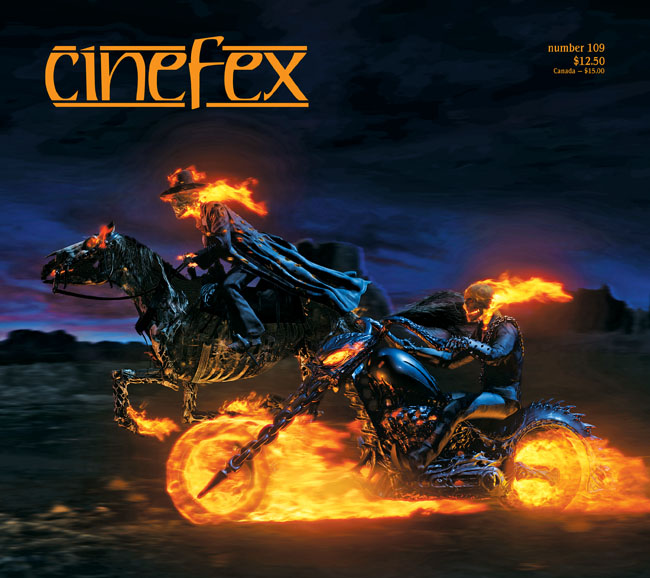
April/May/June
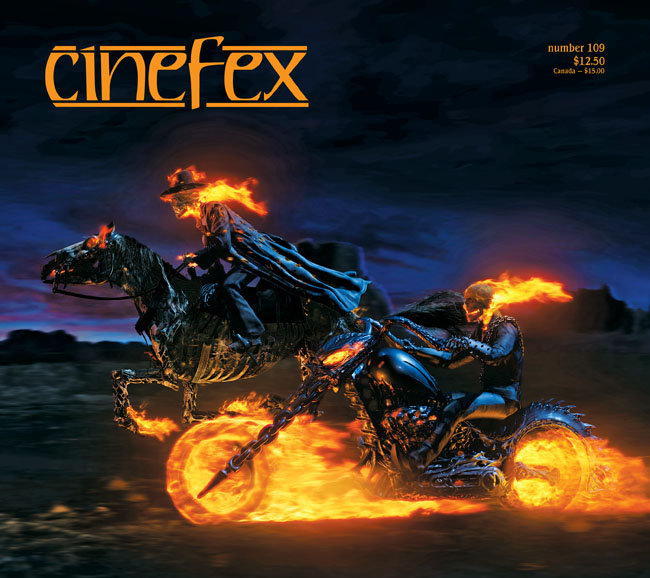
Contents
Ghost Rider: Hell on Wheels: In Ghost Rider, adapted from the Marvel comic, stunt motorcyclist Johnny Blaze strikes a deal with the Devil that transforms him into a fiery skeletal avenger. For the film's array of Hellfire effects, demonic character transformations, phantom materializations and grisly confrontations, director Mark Steven Johnson called upon visual effects supervisor Kevin Mack to oversee the effort, with lead effects house Sony Pictures Imageworks assigned the majority of the Hellfire and Ghost Rider effects, while supporting vendors CafeFX, Digital Dream and Gray Matter tackled the rest. Article by Jody Duncan
300: A Beautiful Death: The Battle of Thermopylae, in which 300 Spartans fought to the death against a massive Persian onslaught in 480 B.C., forms the basis of 300, a big-screen adaptation of the Frank Miller graphic novel loosely based on historical accounts of the incident. As with Sin City, a previous Frank Miller movie adaptation, director Zack Snyder captured Miller's impressionistic style by shooting most of the action against bluescreen and compositing it into computer generated sets and environments. Visual effects supervisor Chris Watts oversaw the digital work involving nearly a dozen vendors, led by Hybride Technologies, Animal Logic and Hydraulx. Article by Joe Fordham
Pan's Labyrinth: Into the Labyrinth: In Pan's Labyrinth, the acclaimed film written, produced and directed by horror mogul Guillermo Del Toro, a young girl, caught up in the brutality of the Spanish Civil War, escapes her grim reality by immersing herself in a gothic fantasy world of her own creation. To realize the myriad strange creatures and magical environments of her fantasy life, Del Toro relied on long-time collaborators DDT Efectos Especiales for makeup and animatronic effects, while visual effects were provided by CafeFX. Article by Joe Fordham
Zodiac: The Streets of San Francisco: Director David Fincher explores the serial killer theme with Zodiac, a chilling cinematic account of the real-life search to find the infamous murderer who terrorized the San Francisco Bay area in the late 1960s and '70s. Seeking historically accurate, era-appropriate environments for the period film, Fincher called upon visual effects artists at Matte World Digital and Digital Domain to provide the desired look, with effects ranging from simple split-screens to all-CG shots. Additional fix-it and cleanup work was provided by a host of independent artists and vendors. Article by Jody Duncan
OVERVIEWS
Ted Rae on Apocalypto: To realize his epic film, Apocalypto, a look into the ancient Mayan civilization, as seen through the eyes of a young hunter on the run from brutal enemies, director Mel Gibson creates an immersive experience enhanced by a full range of effects that included extensive makeup and animatronics, plus miniatures and visual effects contributed by seven vendors.
Rick Baker & Erik Bruhwiler on Norbit: With the help of makeup veteran Rick Baker and visual effects house Digital Dimension, actor Eddie Murphy once again inhabits multiple roles in the DreamWorks comedy Norbit, playing the meek and nerdy Norbit, his 400-pound bully of wife, Rasputia, and an irascible Asian named Mr. Wong.
300: A Beautiful Death: The Battle of Thermopylae, in which 300 Spartans fought to the death against a massive Persian onslaught in 480 B.C., forms the basis of 300, a big-screen adaptation of the Frank Miller graphic novel loosely based on historical accounts of the incident. As with Sin City, a previous Frank Miller movie adaptation, director Zack Snyder captured Miller's impressionistic style by shooting most of the action against bluescreen and compositing it into computer generated sets and environments. Visual effects supervisor Chris Watts oversaw the digital work involving nearly a dozen vendors, led by Hybride Technologies, Animal Logic and Hydraulx. Article by Joe Fordham
Pan's Labyrinth: Into the Labyrinth: In Pan's Labyrinth, the acclaimed film written, produced and directed by horror mogul Guillermo Del Toro, a young girl, caught up in the brutality of the Spanish Civil War, escapes her grim reality by immersing herself in a gothic fantasy world of her own creation. To realize the myriad strange creatures and magical environments of her fantasy life, Del Toro relied on long-time collaborators DDT Efectos Especiales for makeup and animatronic effects, while visual effects were provided by CafeFX. Article by Joe Fordham
Zodiac: The Streets of San Francisco: Director David Fincher explores the serial killer theme with Zodiac, a chilling cinematic account of the real-life search to find the infamous murderer who terrorized the San Francisco Bay area in the late 1960s and '70s. Seeking historically accurate, era-appropriate environments for the period film, Fincher called upon visual effects artists at Matte World Digital and Digital Domain to provide the desired look, with effects ranging from simple split-screens to all-CG shots. Additional fix-it and cleanup work was provided by a host of independent artists and vendors. Article by Jody Duncan
OVERVIEWS
Ted Rae on Apocalypto: To realize his epic film, Apocalypto, a look into the ancient Mayan civilization, as seen through the eyes of a young hunter on the run from brutal enemies, director Mel Gibson creates an immersive experience enhanced by a full range of effects that included extensive makeup and animatronics, plus miniatures and visual effects contributed by seven vendors.
Rick Baker & Erik Bruhwiler on Norbit: With the help of makeup veteran Rick Baker and visual effects house Digital Dimension, actor Eddie Murphy once again inhabits multiple roles in the DreamWorks comedy Norbit, playing the meek and nerdy Norbit, his 400-pound bully of wife, Rasputia, and an irascible Asian named Mr. Wong.
Ghost Rider: Hell on Wheels: In Ghost Rider, adapted from the Marvel comic, stunt motorcyclist Johnny Blaze strikes a deal with the Devil that transforms him into a fiery skeletal...
more

Issue 110
July/August/September
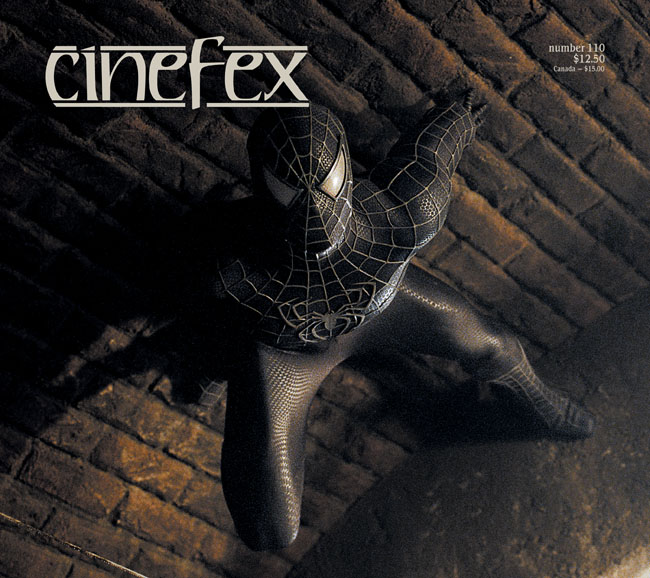
July/August/September
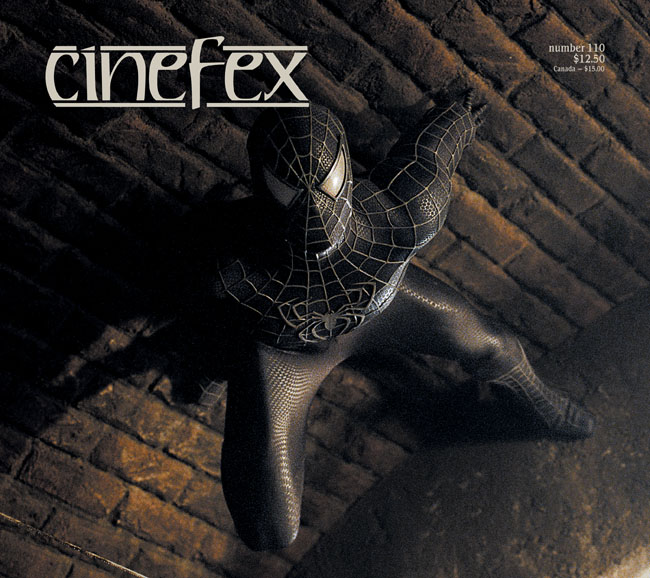
Contents
Spider-Man 3: The Enemy Within: With Spider-Man 3, director Sam Raimi returns for the third installment in his blockbuster franchise based on Marvel Comics' famed superhero, this time delving into the darker side of Peter Parker, whose predatory nature emerges after he is exposed to a symbiotic alien virus. Visual effects supervisor Scott Stokdyk tackled the effects assignment, with Sony Pictures Imageworks handling the bulk of the work, while a dozen other vendors contributed. Chief among the challenges were high-octane action scenes featuring a new black-suited Spider-Man and a trio of villains that included Venom, Sandman and Harry Osborn in updated Goblin guise. Special effects were supervised by John Frazier. Article by Jody Duncan.
Pirates of the Caribbean: At World's End: Into the Maelstrom: Riding the wave of pirate mania generated by their first two films based on the popular Disney theme park attraction, producer Jerry Bruckheimer and director Gore Verbinski deliver a spectacular conclusion to their swashbuckling trilogy with Pirates of the Caribbean: At World's End. Returning visual effects supervisor Charles Gibson and lead effects house Industrial Light & Magic - along with a large contingent of supporting vendors - pull out all the stops, spicing up the requisite sea lore with even more pirate ships, large-scale sea battles, ghostly effects and fantastic environments than the two previous films combined. Miniatures by Kerner Optical and special effects by John Frazier added to the thrills. Article by Joe Fordham.
Children of Men: The Human Project: To create a dystopian near-future England for his critically acclaimed Children of Men, director Alfonso Cuar?n relied on subtle visual effects by Double Negative and Framestore CFC. Double Negative created altered environments and digital blends for a number of intricately choreographed shots running several minutes each, while Framestore CFC created a digital newborn for a pivotal childbirth scene. Physical effects by Paul Corbould and makeup effects by Nick Dudman added to the gritty realism. Article by Joe Fordham.
OVERVIEWS
Eric Durst & Stu Maschwitz on The Last Mizmy: New Line Cinema founder Robert Shaye called upon visual effects supervisor Eric Durst and a contingent of effects vendors headed by The Orphanage to design and create fanciful, yet realistic effects for The Last Mimzy, a metaphysical tale of two children who rescue mankind from a bleak fate with the help of a strange box of futuristic toys.
John Sullivan on Next: For Next, based on a Philip K. Dick story about a man with the ability to see into his own future, visual effects supervisor John Sullivan, digital artists from seven companies, and special effects supervisor Clay Pinney joined forces to realize high-powered actions scenes and a cataclysmic finale.
Pirates of the Caribbean: At World's End: Into the Maelstrom: Riding the wave of pirate mania generated by their first two films based on the popular Disney theme park attraction, producer Jerry Bruckheimer and director Gore Verbinski deliver a spectacular conclusion to their swashbuckling trilogy with Pirates of the Caribbean: At World's End. Returning visual effects supervisor Charles Gibson and lead effects house Industrial Light & Magic - along with a large contingent of supporting vendors - pull out all the stops, spicing up the requisite sea lore with even more pirate ships, large-scale sea battles, ghostly effects and fantastic environments than the two previous films combined. Miniatures by Kerner Optical and special effects by John Frazier added to the thrills. Article by Joe Fordham.
Children of Men: The Human Project: To create a dystopian near-future England for his critically acclaimed Children of Men, director Alfonso Cuar?n relied on subtle visual effects by Double Negative and Framestore CFC. Double Negative created altered environments and digital blends for a number of intricately choreographed shots running several minutes each, while Framestore CFC created a digital newborn for a pivotal childbirth scene. Physical effects by Paul Corbould and makeup effects by Nick Dudman added to the gritty realism. Article by Joe Fordham.
OVERVIEWS
Eric Durst & Stu Maschwitz on The Last Mizmy: New Line Cinema founder Robert Shaye called upon visual effects supervisor Eric Durst and a contingent of effects vendors headed by The Orphanage to design and create fanciful, yet realistic effects for The Last Mimzy, a metaphysical tale of two children who rescue mankind from a bleak fate with the help of a strange box of futuristic toys.
John Sullivan on Next: For Next, based on a Philip K. Dick story about a man with the ability to see into his own future, visual effects supervisor John Sullivan, digital artists from seven companies, and special effects supervisor Clay Pinney joined forces to realize high-powered actions scenes and a cataclysmic finale.
Spider-Man 3: The Enemy Within: With Spider-Man 3, director Sam Raimi returns for the third installment in his blockbuster franchise based on Marvel Comics' famed superhero, this time delving into...
more

Issue 111
October/November/December

October/November/December

Contents
Transformers: Bots & Bayhem: Inspired by the immensely popular 1980s-era toy line, director Michael Bay's summer blockbuster, Transformers, re-introduced all the denizens of the much-loved Transformers mythology - including good-guy Autobots and bad-guy Decepticons, disguised as cars, jets, tanks and other machinery. Principal effects house Industrial Light & Magic rose to the challenge of creating the film's sizable contingent of CG robots, animating them to transform and battle each other over the fate of humankind. Additional visual effects support was provided by Digital Domain, with miniature effects by Kerner Optical. Article by Jody Duncan.
Harry Potter and the Order of the Phoenix: Army of Darkness: Harry Potter and the Order of the Phoenix, the fifth installment in the blockbuster film franchise based on the bestselling books by J. K. Rowling, reunited key behind-the-scenes creatives from the previous films, including visual effects supervisor Tim Burke and makeup and creature designer Nick Dudman. Joining them, and new director David Yates, was an international team of visual effects vendors charged with creating the colorful array of magical creatures, dark villains, exotic locales and wizarding action audiences have come to expect from the series. Physical effects, including flying rigs and pyrotechnics, were the work of special effects supervisor John Richardson. Article by Joe Fordham.
Stardust: Starstruck: For Stardust, an enchanting tale about a lovelorn hero who falls for a fallen star in the form of a beautiful young woman, director Matthew Vaughn opted for a no-frills, straightforward approach to the movie's slate of fanciful effects involving ghosts, witches and magical realms. Visual effects supervisor Peter Chiang called upon Double Negative and LipSync Post to oversee much of the work, with additional shots distributed among six supporting vendors. Makeup effects were designed by Nik Williams and created by Animated Extras. Article by Jody Duncan.
OVERVIEWS
Tom Wood on Sunshine: A dying sun threatens extinction of all life on earth, necessitating a daring rescue mission to reignite the star in Sunshine, directed by Danny Boyle, with visual effects by The Moving Picture Company.
Evan Jacobs & Patrick Tatopoulos on Resident Evil 3: Refugee survivors of a zombie holocaust, led by a genetically altered soldier, fight back in Resident Evil: Extinction, third in a film series based on the popular shoot-'em-up videogame. Visual effects were provided by Mr. X, makeup effects by Patrick Tatopoulos Studios and miniatures by New Deal Studios.
Q&A: Hoyt Yeatman: Veteran visual effects supervisor and Dream Quest founding partner Hoyt Yeatman expounds on the closure of his company, the vicissitudes of a rapidly-changing industry, and his recent efforts to reinvent himself as both a director and creator of content for motion pictures.
Harry Potter and the Order of the Phoenix: Army of Darkness: Harry Potter and the Order of the Phoenix, the fifth installment in the blockbuster film franchise based on the bestselling books by J. K. Rowling, reunited key behind-the-scenes creatives from the previous films, including visual effects supervisor Tim Burke and makeup and creature designer Nick Dudman. Joining them, and new director David Yates, was an international team of visual effects vendors charged with creating the colorful array of magical creatures, dark villains, exotic locales and wizarding action audiences have come to expect from the series. Physical effects, including flying rigs and pyrotechnics, were the work of special effects supervisor John Richardson. Article by Joe Fordham.
Stardust: Starstruck: For Stardust, an enchanting tale about a lovelorn hero who falls for a fallen star in the form of a beautiful young woman, director Matthew Vaughn opted for a no-frills, straightforward approach to the movie's slate of fanciful effects involving ghosts, witches and magical realms. Visual effects supervisor Peter Chiang called upon Double Negative and LipSync Post to oversee much of the work, with additional shots distributed among six supporting vendors. Makeup effects were designed by Nik Williams and created by Animated Extras. Article by Jody Duncan.
OVERVIEWS
Tom Wood on Sunshine: A dying sun threatens extinction of all life on earth, necessitating a daring rescue mission to reignite the star in Sunshine, directed by Danny Boyle, with visual effects by The Moving Picture Company.
Evan Jacobs & Patrick Tatopoulos on Resident Evil 3: Refugee survivors of a zombie holocaust, led by a genetically altered soldier, fight back in Resident Evil: Extinction, third in a film series based on the popular shoot-'em-up videogame. Visual effects were provided by Mr. X, makeup effects by Patrick Tatopoulos Studios and miniatures by New Deal Studios.
Q&A: Hoyt Yeatman: Veteran visual effects supervisor and Dream Quest founding partner Hoyt Yeatman expounds on the closure of his company, the vicissitudes of a rapidly-changing industry, and his recent efforts to reinvent himself as both a director and creator of content for motion pictures.
Transformers: Bots & Bayhem: Inspired by the immensely popular 1980s-era toy line, director Michael Bay's summer blockbuster, Transformers, re-introduced all the denizens of the much-loved Transformers mythology - including good-guy...
more

2008
Issue 112
January/February/March

January/February/March

Contents
The Golden Compass
New Line Cinema returns to large-scale fantasy filmmaking with The Golden Compass, written and directed by Chris Weitz and based on the first book in Philip Pullman's His Dark Materials trilogy. Visual effects supervisor Michael L. Fink orchestrated the work of nine companies in creating the film's rich array of magical characters and exotic locales, with lead vendors Rhythm & Hues and Cinesite responsible for the film's signature CG effect - shape-shifting, talking spirit animals known as 'd?mons.'
Article by Joe Fordham.
I Am Legend:
In I Am Legend, based on a novella by Richard Matheson, a viral plague has transformed the inhabitants of Manhattan into bloodthirsty, carnivorous and preternaturally strong creatures, leaving a lone survivor to fend for himself. Visual effects supervisor Janek Sirrs engaged Sony Pictures Imageworks to handle the effects, which included digitally generating the hordes of infected creatures and creating a post-apocalyptic look for location photography shot in New York.
Article by Jody Duncan.
Beowulf:
Director Robert Zemeckis re-teams with visual effects supervisor Jerome Chen and Sony Pictures Imageworks to bring the ancient epic tale, Beowulf, to the big screen as an all-CG feature. Expanding on and further refining the groundbreaking performance capture developed for The Polar Express, Chen and his team reached new heights of realism in the creation of the film's synthetic humans, while breathing new life into its fabled beasts, exotic environments and dynamic battle action.
Article by Jody Duncan.
OVERVIEWS
Enchanted:
2D characters from an animated fairytale are magically transported to the real world of modern-day New York in the Walt Disney fantasy Enchanted, directed by Kevin Lima, with visual effects by Tippett Studio.
The Mist:
For The Mist, adapted from a Stephen King novella, director Frank Darabont and visual effects supervisor Everett Burrell combined full-scale animatronic puppets, maquettes and makeup effects provided by KNB EFX with CG creatures created by CafeFX.
Q&A: Dennis Berardi:
Visual effects supervisor Dennis Berardi discusses the work of Toronto-based effects company Mr. X, and the state of the burgeoning visual effects industry in Canada.
New Line Cinema returns to large-scale fantasy filmmaking with The Golden Compass, written and directed by Chris Weitz and based on the first book in Philip Pullman's His Dark Materials trilogy. Visual effects supervisor Michael L. Fink orchestrated the work of nine companies in creating the film's rich array of magical characters and exotic locales, with lead vendors Rhythm & Hues and Cinesite responsible for the film's signature CG effect - shape-shifting, talking spirit animals known as 'd?mons.'
Article by Joe Fordham.
I Am Legend:
In I Am Legend, based on a novella by Richard Matheson, a viral plague has transformed the inhabitants of Manhattan into bloodthirsty, carnivorous and preternaturally strong creatures, leaving a lone survivor to fend for himself. Visual effects supervisor Janek Sirrs engaged Sony Pictures Imageworks to handle the effects, which included digitally generating the hordes of infected creatures and creating a post-apocalyptic look for location photography shot in New York.
Article by Jody Duncan.
Beowulf:
Director Robert Zemeckis re-teams with visual effects supervisor Jerome Chen and Sony Pictures Imageworks to bring the ancient epic tale, Beowulf, to the big screen as an all-CG feature. Expanding on and further refining the groundbreaking performance capture developed for The Polar Express, Chen and his team reached new heights of realism in the creation of the film's synthetic humans, while breathing new life into its fabled beasts, exotic environments and dynamic battle action.
Article by Jody Duncan.
OVERVIEWS
Enchanted:
2D characters from an animated fairytale are magically transported to the real world of modern-day New York in the Walt Disney fantasy Enchanted, directed by Kevin Lima, with visual effects by Tippett Studio.
The Mist:
For The Mist, adapted from a Stephen King novella, director Frank Darabont and visual effects supervisor Everett Burrell combined full-scale animatronic puppets, maquettes and makeup effects provided by KNB EFX with CG creatures created by CafeFX.
Q&A: Dennis Berardi:
Visual effects supervisor Dennis Berardi discusses the work of Toronto-based effects company Mr. X, and the state of the burgeoning visual effects industry in Canada.
The Golden Compass New Line Cinema returns to large-scale fantasy filmmaking with The Golden Compass, written and directed by Chris Weitz and based on the first book in Philip Pullman's...
more

Issue 113
April/May/June

April/May/June

Contents
10,000 B.C.:
The First Hero:
Director Roland Emmerich resurrects the prehistoric world -- populated with mammoths, saber-tooth tigers and giant terror birds -- in 10,000 B.C. Visual effects supervisor Karen Goulekas engaged Tatopoulos Studios to supply early creature designs, which were later refined and translated into photoreal CG beasts by The Moving Picture Company and Double Negative. Additional contributors included The Senate, Machine FX and a production-side visual effects team. An expansive miniature environment for the film's climax was provided by Magicon.
Article by Jody Duncan.
The Spiderwick Chronicles:
Fierce Creatures:
A young girl and her twin brothers tangle with magical fairy folk who invade their rural New England home in The Spiderwick Chronicles, adapted from the popular childrens' fantasy books by Tony DiTerlizzi and Holly Black. Director Mark Waters called upon Tippett Studio to develop creature concepts, ranging from goblins, trolls and ogres to a tiny brownie guardian of the Spiderwick Estate. The extensive creature animation assignment was shared by Tippett and Industrial Light & Magic.
Article by Joe Fordham.
Cloverfield:
Ground Zero:
In Cloverfield, New Yorkers flee for their lives as a colossal beast of unknown origin destroys the city. Conceived by J.J. Abrams and directed by Matt Reeves, the film put a new spin on the rampaging-monster genre by having all of the action filtered through the shaky lens of a bystander's handheld camcorder. Visual effects supervisors Kevin Blank, Eric Leven and Michael Ellis teamed with special effects coordinator David Waine to oversee the guerrilla-style shoot, while Tippett Studio and Double Negative handled environmental and creature effects.
Article by Joe Fordham.
Charlie Wilson's War:
Mike Nichols' War:
Based on a true story, Charlie Wilson's War recounts the remarkable tale of how a playboy congressman, aided by a wealthy socialite and a renegade CIA agent, waged a secret war against the Soviet Union, leading to its defeat in Afghanistan, and ultimately to its collapse. Working under director Mike Nichols, veteran visual effects supervisor Richard Edlund and a team at Whodoo EFX contributed shots designed to establish the time period, extend location settings and simulate combat action.
Article by Jody Duncan.
OVERVIEWS
Chas Jarrett on Sweeney Todd:
Tim Burton adapts the popular Steven Sondheim stage musical to the big screen in a moodier and more intimate retelling of the macabre tale, enlisting the aid of visual effects supervisor Chas Jarrett and a team at The Moving Picture Company to re-create a squalid Victorian England.
Joel Hynek and Keven Elam on Jumper:
In the science fiction adventure Jumper, a teenager discovers the ability to teleport himself instantly to any locale. Jump effects and action sequences spanning the globe necessitated a major visual effects effort involving more than a dozen vendors led by visual effects supervisors Joel Hynek and Kevin Elam.
Greg and Colin Strause on Alien Vs. Predator: Requiem:
Brothers Colin and Greg Strause, founders of the visual effects company Hydraulx, discuss the highlights of their career in visual effects, culminating in their recent gig as directors of their first full-length feature film, Alien Vs. Predator: Requiem.
10,000 B.C.:
The First Hero:
Director Roland Emmerich resurrects the prehistoric world -- populated with mammoths, saber-tooth tigers and giant terror birds -- in 10,000 B.C. Visual effects supervisor Karen Goulekas engaged Tatopoulos Studios to supply early creature designs, which were later refined and translated into photoreal CG beasts by The Moving Picture Company and Double Negative. Additional contributors included The Senate, Machine FX and a production-side visual effects team. An expansive miniature environment for the film's climax was provided by Magicon.
Article by Jody Duncan.
The Spiderwick Chronicles:
Fierce Creatures:
A young girl and her twin brothers tangle with magical fairy folk who invade their rural New England home in The Spiderwick Chronicles, adapted from the popular childrens' fantasy books by Tony DiTerlizzi and Holly Black. Director Mark Waters called upon Tippett Studio to develop creature concepts, ranging from goblins, trolls and ogres to a tiny brownie guardian of the Spiderwick Estate. The extensive creature animation assignment was shared by Tippett and Industrial Light & Magic.
Article by Joe Fordham.
Cloverfield:
Ground Zero:
In Cloverfield, New Yorkers flee for their lives as a colossal beast of unknown origin destroys the city. Conceived by J.J. Abrams and directed by Matt Reeves, the film put a new spin on the rampaging-monster genre by having all of the action filtered through the shaky lens of a bystander's handheld camcorder. Visual effects supervisors Kevin Blank, Eric Leven and Michael Ellis teamed with special effects coordinator David Waine to oversee the guerrilla-style shoot, while Tippett Studio and Double Negative handled environmental and creature effects.
Article by Joe Fordham.
Charlie Wilson's War:
Mike Nichols' War:
Based on a true story, Charlie Wilson's War recounts the remarkable tale of how a playboy congressman, aided by a wealthy socialite and a renegade CIA agent, waged a secret war against the Soviet Union, leading to its defeat in Afghanistan, and ultimately to its collapse. Working under director Mike Nichols, veteran visual effects supervisor Richard Edlund and a team at Whodoo EFX contributed shots designed to establish the time period, extend location settings and simulate combat action.
Article by Jody Duncan.
OVERVIEWS
Chas Jarrett on Sweeney Todd:
Tim Burton adapts the popular Steven Sondheim stage musical to the big screen in a moodier and more intimate retelling of the macabre tale, enlisting the aid of visual effects supervisor Chas Jarrett and a team at The Moving Picture Company to re-create a squalid Victorian England.
Joel Hynek and Keven Elam on Jumper:
In the science fiction adventure Jumper, a teenager discovers the ability to teleport himself instantly to any locale. Jump effects and action sequences spanning the globe necessitated a major visual effects effort involving more than a dozen vendors led by visual effects supervisors Joel Hynek and Kevin Elam.
Greg and Colin Strause on Alien Vs. Predator: Requiem:
Brothers Colin and Greg Strause, founders of the visual effects company Hydraulx, discuss the highlights of their career in visual effects, culminating in their recent gig as directors of their first full-length feature film, Alien Vs. Predator: Requiem.
10,000 B.C.: The First Hero: Director Roland Emmerich resurrects the prehistoric world -- populated with mammoths, saber-tooth tigers and giant terror birds -- in 10,000 B.C. Visual effects supervisor...
more

Issue 114
July/August/September

July/August/September

Contents
Iron Man: The Man in the Iron Mask:
Article by Jody Duncan
In Iron Man, Robert Downey Jr. stars as weapons mogul Tony Stark, whose flying suit of armor serves as a life-support system after a near-fatal run-in with terrorists in Afghanistan. For its debut film, based on the iconic comic book character, Marvel Studios enlisted director Jon Favreau to bring an air of fun and originality to the proceedings, aided by Stan Winston Studio's elaborate practical suits, and eye-popping visuals by Industrial Light & Magic, The Orphanage and a host of other vendors working under the guidance of visual effects supervisor John Nelson.
The Chronicles of Narnia: Prince Caspian: Lost World:
Article by Joe Fordham
In The Chronicles of Narnia: Prince Caspian, the second in C. S. Lewis' classic novel series to receive a big-screen adaptation, returning director Andrew Adamson offers up a darker tale in which the Pevensie children join forces with an exiled prince in his bid to rescue Narnia from a power-hungry usurper. Orchestrated by Dean Wright and Wendy Rogers, visual effects created at The Moving Picture Company, Framestore and Weta Digital invested the Narnian universe with all-new fantasy characters and environments, while practical creature effects by KNB EFX Group, and miniatures by Weta Workshop, provided a gritty realism.
Speed Racer: Formula for a Universe:
Article by Joe Fordham
The Wachowski Brothers reunite with their Matrix series collaborators -- visual effects supervisors John Gaeta and Dan Glass -- for Speed Racer, adapted from a colorful Japanese anime cartoon series about an elite group of auto racers. The effects-laden film, shot mostly against greenscreen, captured the anime feel through highly stylized animation and compositing techniques, executed by Digital Domain, BUF Compagnie, Sony Pictures Imageworks, CafeFX and nearly a dozen additional supporting vendors.
Get Smart: Overview: Joe Bauer on Get Smart:
Article by Jody Duncan
Director Peter Segal teams with visual effects supervisor Joe Bauer and special effects supervisor Michael Lantieri to pay homage to the popular 1960s-era TV spy spoof about a bumbling agent and his female sidekick.
The Incredible Hulk: Overview: Kurt Williams on The Incredible Hulk:
Article by Estelle Shay
Marvel Studios and director Louis Leterrier conjure up a fresh cinematic approach and an all-new, more sympathetic Hulk for the latest incarnation of the comic book character, with help from creature designer Aaron Sims and a team of vendors led by visual effects supervisor Kurt Williams.
Article by Jody Duncan
In Iron Man, Robert Downey Jr. stars as weapons mogul Tony Stark, whose flying suit of armor serves as a life-support system after a near-fatal run-in with terrorists in Afghanistan. For its debut film, based on the iconic comic book character, Marvel Studios enlisted director Jon Favreau to bring an air of fun and originality to the proceedings, aided by Stan Winston Studio's elaborate practical suits, and eye-popping visuals by Industrial Light & Magic, The Orphanage and a host of other vendors working under the guidance of visual effects supervisor John Nelson.
The Chronicles of Narnia: Prince Caspian: Lost World:
Article by Joe Fordham
In The Chronicles of Narnia: Prince Caspian, the second in C. S. Lewis' classic novel series to receive a big-screen adaptation, returning director Andrew Adamson offers up a darker tale in which the Pevensie children join forces with an exiled prince in his bid to rescue Narnia from a power-hungry usurper. Orchestrated by Dean Wright and Wendy Rogers, visual effects created at The Moving Picture Company, Framestore and Weta Digital invested the Narnian universe with all-new fantasy characters and environments, while practical creature effects by KNB EFX Group, and miniatures by Weta Workshop, provided a gritty realism.
Speed Racer: Formula for a Universe:
Article by Joe Fordham
The Wachowski Brothers reunite with their Matrix series collaborators -- visual effects supervisors John Gaeta and Dan Glass -- for Speed Racer, adapted from a colorful Japanese anime cartoon series about an elite group of auto racers. The effects-laden film, shot mostly against greenscreen, captured the anime feel through highly stylized animation and compositing techniques, executed by Digital Domain, BUF Compagnie, Sony Pictures Imageworks, CafeFX and nearly a dozen additional supporting vendors.
Get Smart: Overview: Joe Bauer on Get Smart:
Article by Jody Duncan
Director Peter Segal teams with visual effects supervisor Joe Bauer and special effects supervisor Michael Lantieri to pay homage to the popular 1960s-era TV spy spoof about a bumbling agent and his female sidekick.
The Incredible Hulk: Overview: Kurt Williams on The Incredible Hulk:
Article by Estelle Shay
Marvel Studios and director Louis Leterrier conjure up a fresh cinematic approach and an all-new, more sympathetic Hulk for the latest incarnation of the comic book character, with help from creature designer Aaron Sims and a team of vendors led by visual effects supervisor Kurt Williams.
Iron Man: The Man in the Iron Mask:
Article by Jody Duncan
In Iron Man, Robert Downey Jr. stars as weapons mogul Tony Stark, whose flying suit of armor... more
Article by Jody Duncan
In Iron Man, Robert Downey Jr. stars as weapons mogul Tony Stark, whose flying suit of armor... more

Issue 115
October/November/December
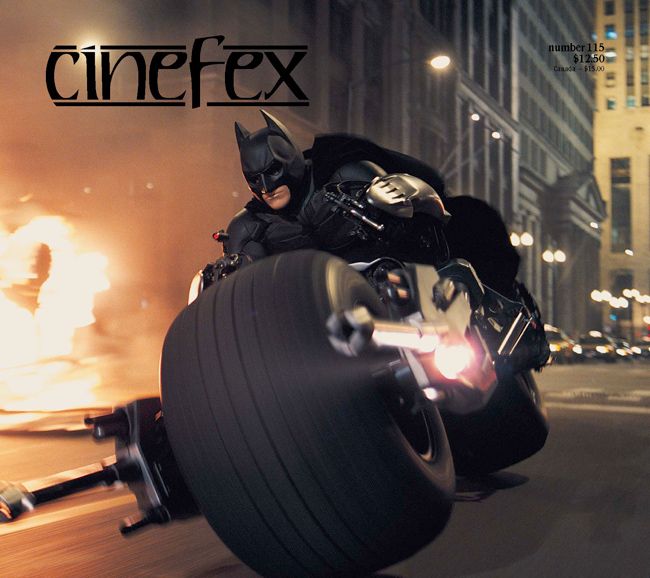
October/November/December
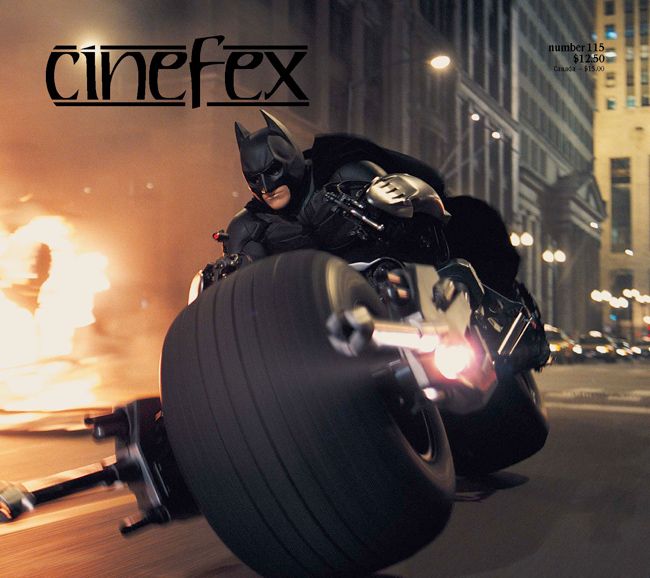
Contents
The Dark Knight: Batman Grounded:
Article by Jody Duncan
Director Christopher Nolan follows up his hugely successful Batman Begins with an even grittier take on the enduring comic book saga, as his Caped Crusader faces off against The Joker, portrayed with darkly comic and disturbing lunacy by Heath Ledger. Lending verisimilitude to Gotham locales were IMAX-resolution shots by Double Negative, Framestore and BUF Compagnie, under visual effects supervisor Nick Davis. Jaw-dropping effects and paraphernalia devised by special effects supervisor Chris Corbould and his team added to the film's gripping sense of reality.
Indiana Jones and the Kingdom of the Crystal Skull: Atomic Age Hero:
Article by Joe Fordham
Following a 20-year hiatus, director Steven Spielberg and producer George Lucas pick up the trail of cinema's most iconic adventurer in Indiana Jones and the Kingdom of the Crystal Skull, featuring Harrison Ford as the aging archeologist, who teams with a young accomplice to track a mysterious crystal skull in the jungles of South America. Special effects by Daniel Sudick, and practical props by Stan Winston Studio, paid homage to the pre-digital look of the franchise's earlier films, while visual effects supervisor Pablo Helman orchestrated digital effects by Industrial Light & Magic.
Hellboy II: The Golden Army: Paranormal Parade:
Article by David W. Marshall
In Hellboy II: The Golden Army, a sequel to the 2004 film based on the demonic hero, writer/director Guillermo Del Toro returns with all-new parade of paranormal characters. Joining him were Hellboy veterans Spectral Motion and Efectos Especiales DDT, who led the makeup and practical creature effects, while visual effects supervisor Mike Wassel, working with lead effects company Double Negative and a host of supporting vendors, added digital panache to the visual feast. Article by David W. Marshall.
Hancock: Overview: Carey Villegas & Ken Hahn on Hancock:
Article by Joe Fordham
Will Smith stars as an unlikable and reluctant superhero in serious need of an image makeover in Hancock, a clever twist on the genre. Sony Pictures Imageworks and a host of supporting vendors breathed life into director Peter Berg's vision of the offbeat hero's rough and tumble world.
Journey to the Center of the Earth 3D: Q&A with Eric Brevig:
Interview by Jody Duncan
Oscar-winning visual effects supervisor Eric Brevig shares insights and anecdotes about his directorial debut, Journey to the Center of the Earth 3D.
Article by Jody Duncan
Director Christopher Nolan follows up his hugely successful Batman Begins with an even grittier take on the enduring comic book saga, as his Caped Crusader faces off against The Joker, portrayed with darkly comic and disturbing lunacy by Heath Ledger. Lending verisimilitude to Gotham locales were IMAX-resolution shots by Double Negative, Framestore and BUF Compagnie, under visual effects supervisor Nick Davis. Jaw-dropping effects and paraphernalia devised by special effects supervisor Chris Corbould and his team added to the film's gripping sense of reality.
Indiana Jones and the Kingdom of the Crystal Skull: Atomic Age Hero:
Article by Joe Fordham
Following a 20-year hiatus, director Steven Spielberg and producer George Lucas pick up the trail of cinema's most iconic adventurer in Indiana Jones and the Kingdom of the Crystal Skull, featuring Harrison Ford as the aging archeologist, who teams with a young accomplice to track a mysterious crystal skull in the jungles of South America. Special effects by Daniel Sudick, and practical props by Stan Winston Studio, paid homage to the pre-digital look of the franchise's earlier films, while visual effects supervisor Pablo Helman orchestrated digital effects by Industrial Light & Magic.
Hellboy II: The Golden Army: Paranormal Parade:
Article by David W. Marshall
In Hellboy II: The Golden Army, a sequel to the 2004 film based on the demonic hero, writer/director Guillermo Del Toro returns with all-new parade of paranormal characters. Joining him were Hellboy veterans Spectral Motion and Efectos Especiales DDT, who led the makeup and practical creature effects, while visual effects supervisor Mike Wassel, working with lead effects company Double Negative and a host of supporting vendors, added digital panache to the visual feast. Article by David W. Marshall.
Hancock: Overview: Carey Villegas & Ken Hahn on Hancock:
Article by Joe Fordham
Will Smith stars as an unlikable and reluctant superhero in serious need of an image makeover in Hancock, a clever twist on the genre. Sony Pictures Imageworks and a host of supporting vendors breathed life into director Peter Berg's vision of the offbeat hero's rough and tumble world.
Journey to the Center of the Earth 3D: Q&A with Eric Brevig:
Interview by Jody Duncan
Oscar-winning visual effects supervisor Eric Brevig shares insights and anecdotes about his directorial debut, Journey to the Center of the Earth 3D.
The Dark Knight: Batman Grounded:
Article by Jody Duncan
Director Christopher Nolan follows up his hugely successful Batman Begins with an even grittier take on the enduring comic book saga,... more
Article by Jody Duncan
Director Christopher Nolan follows up his hugely successful Batman Begins with an even grittier take on the enduring comic book saga,... more

2009
Issue 116
January/February/March
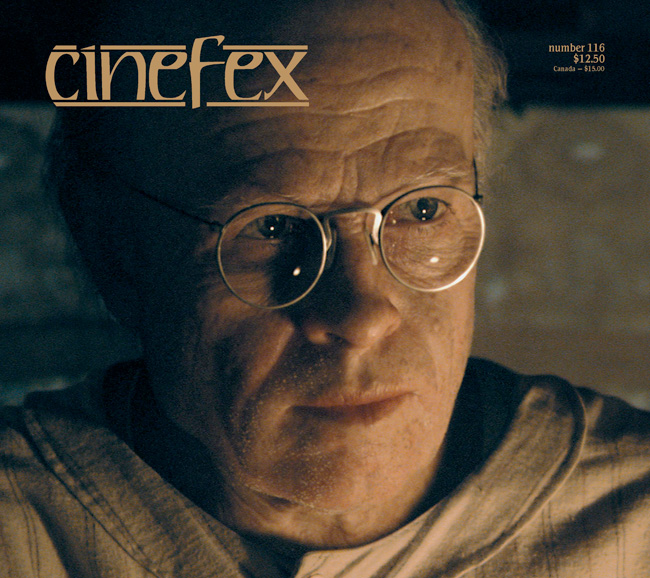
January/February/March
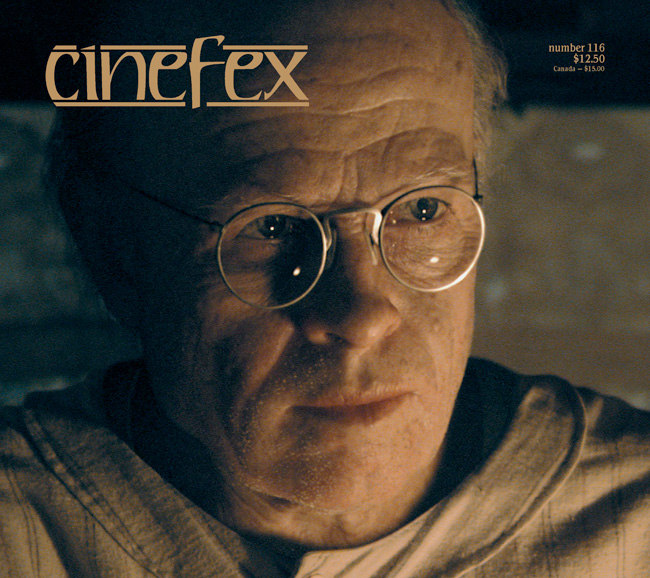
Contents
The Curious Case of Benjamin Button: The Unusual Birth of Benjamin Button:
Article by Jody Duncan
More than a decade in development, The Curious Case of Benjamin Button, about a man who ages in reverse, led director David Fincher, visual effects supervisor Eric Barba and technical wizards at Digital Domain to major breakthroughs in CG animation, rendering and tracking techniques required to convincingly age actor Brad Pitt in scenes of Benjamin's early years. Other effects involving the film's many period settings were the work of Matte World Digital, Asylum and Hydraulx, while Lola VFX performed 'youthening' effects on Pitt and Cate Blanchett, as Benjamin's lifelong love.
The Day the Earth Stood Still: Global Warning:
Article by Bill Butler
In The Day the Earth Stood Still, a modern-day remake of a classic 1951 science-fiction film in which an intergalactic emissary arrives on earth with a warning for earth's leaders, director Scott Derrickson charged visual effects supervisor Jeffrey Okun with updating the film's core effects while still paying homage to the original. Weta Digital, Cinesite, Flash Film Works and CosFX, along with a handful of supporting vendors, were enlisted to put a new spin on such iconic elements as the alien Klaatu, his robot companion Gort, and their mode of interplanetary transport. Special creature effects were the work of Todd Masters of Masters FX.
Quantum of Solace: Quantum Leap:
Article by Joe Fordham
The ever-popular Bond franchise returns with Quantum Leap, starring Daniel Craig as secret agent 007 in an edgy tale of revenge as Bond, on a trail of intrigue and corruption, sets out to even the score following the death of his former lover. To realize the film's ambitious action - which spanned the globe and encompassed land, sea and air - director Marc Forster and frequent collaborator and visual effects designer Kevin Tod Haug called upon Double Negative, The Moving Picture Company, Framestore, Machine and MK12, to join forces with special effects supervisor and franchise veteran Chris Corbould in a perfect marriage of visual and physical effects.
City of Ember: Countdown to Doomsday:
Article by Joe Fordham
Physical effects by Kit West and digital set extensions by BUF Compagnie and Luma Pictures lend verisimilitude to subterranean settings in City of Ember, about the inhabitants of an underground city who learn that their singular existence is owing to a long-ago nuclear war that destroyed everything above-ground.
Stuart Freeborn:
Profile by Mark Burman
Legendary makeup artist Stuart Freeborn - a veteran of 2001: A Space Odyssey and the Star Wars franchise - discusses his remarkable and prolific career in this special Cinefex retrospective.
Article by Jody Duncan
More than a decade in development, The Curious Case of Benjamin Button, about a man who ages in reverse, led director David Fincher, visual effects supervisor Eric Barba and technical wizards at Digital Domain to major breakthroughs in CG animation, rendering and tracking techniques required to convincingly age actor Brad Pitt in scenes of Benjamin's early years. Other effects involving the film's many period settings were the work of Matte World Digital, Asylum and Hydraulx, while Lola VFX performed 'youthening' effects on Pitt and Cate Blanchett, as Benjamin's lifelong love.
The Day the Earth Stood Still: Global Warning:
Article by Bill Butler
In The Day the Earth Stood Still, a modern-day remake of a classic 1951 science-fiction film in which an intergalactic emissary arrives on earth with a warning for earth's leaders, director Scott Derrickson charged visual effects supervisor Jeffrey Okun with updating the film's core effects while still paying homage to the original. Weta Digital, Cinesite, Flash Film Works and CosFX, along with a handful of supporting vendors, were enlisted to put a new spin on such iconic elements as the alien Klaatu, his robot companion Gort, and their mode of interplanetary transport. Special creature effects were the work of Todd Masters of Masters FX.
Quantum of Solace: Quantum Leap:
Article by Joe Fordham
The ever-popular Bond franchise returns with Quantum Leap, starring Daniel Craig as secret agent 007 in an edgy tale of revenge as Bond, on a trail of intrigue and corruption, sets out to even the score following the death of his former lover. To realize the film's ambitious action - which spanned the globe and encompassed land, sea and air - director Marc Forster and frequent collaborator and visual effects designer Kevin Tod Haug called upon Double Negative, The Moving Picture Company, Framestore, Machine and MK12, to join forces with special effects supervisor and franchise veteran Chris Corbould in a perfect marriage of visual and physical effects.
City of Ember: Countdown to Doomsday:
Article by Joe Fordham
Physical effects by Kit West and digital set extensions by BUF Compagnie and Luma Pictures lend verisimilitude to subterranean settings in City of Ember, about the inhabitants of an underground city who learn that their singular existence is owing to a long-ago nuclear war that destroyed everything above-ground.
Stuart Freeborn:
Profile by Mark Burman
Legendary makeup artist Stuart Freeborn - a veteran of 2001: A Space Odyssey and the Star Wars franchise - discusses his remarkable and prolific career in this special Cinefex retrospective.
The Curious Case of Benjamin Button: The Unusual Birth of Benjamin Button:
Article by Jody Duncan
More than a decade in development, The Curious Case of Benjamin Button, about a... more
Article by Jody Duncan
More than a decade in development, The Curious Case of Benjamin Button, about a... more

Issue 117
April/May/June

April/May/June

Contents
Watchmen: The Manhattan Project; Article by Joe Fordham
Adapted from the darkly complex graphic novel considered the finest and most influential of its genre, Watchmen, directed by Zack Snyder, called for a seamless blending of practical and visual effects, makeup and miniatures to bring the story's band of misfit superheroes and villains to the big screen. Visual effects supervisor John 'DJ' DesJardin oversaw the work at Sony Pictures Imageworks, The Moving Picture Company, Intelligent Creatures and CIS Hollywood, while Joel Whist supervised special effects. Greg Cannom's Drac Studios contributed prosthetic makeups, and Global Effects fabricated custom suits.
Coraline: A Handmade World; Article by Joe Fordham
In Coraline, director Henry Selick returns to the genre of stop-motion animation with a fantasy feature - his first to be shot in 3D - based on a novella by Neil Gaiman about an inquisitive young girl who walks through a secret door in her new home and discovers an alternate version of her life that seems more attractive than the real one. Puppetry and animation on a grand scale was provided by Laika Entertainment, making its theatrical film debut. Director of photography Pete Kozachik captured the stereoscopic effects, and visual effects supervisor Brian Van't Hul oversaw extensive postproduction work.
The Spirit: Summoning the Spirit; Article by George Mo?se
Master graphic novelist Frank Miller, in his solo directing debut, taps into the oeuvre of renowned 1940s-era comic-book artist Will Eisner for his adaptation of The Spirit, a crime story about a rookie cop who returns from the dead as a masked vigilante. Told in the signature style of Miller's Sin City and 300, The Spirit's hybrid live-action/CG approach featured stark, noir-ish, all-CG environments composited into minimalist greenscreen sets. Visual effects supervisor Stu Maschwitz led the work at The Orphanage, Digital Dimension, Rising Sun Pictures and six other supporting companies.
Changeling: Urban Renewal; Article by Jody Duncan
Visual effects supervisor Michael Owens discusses the challenges of re-creating 1920s Los Angeles for director Clint Eastwood's period drama Changeling, based on the true story of a woman who takes on the corrupt Los Angeles Police Department following the abduction of her young son by a pedophile serial killer.
Inkheart: Into Inkworld; Article by Jody Duncan
A bookbinder has the power to conjure characters in and out of books through the act of reading them aloud in the fantasy adventure Inkheart, directed by Iain Softley. Seeking photorealism, Softley and visual effects supervisor Angus Bickerton made judicious use of visual effects by Double Negative, The Senate, Cinesite, Rainmaker and Peerless Camera Company, while relying heavily on practical effects by special effects supervisor Paul Corbould, and miniatures by Mattes & Miniatures.
Adapted from the darkly complex graphic novel considered the finest and most influential of its genre, Watchmen, directed by Zack Snyder, called for a seamless blending of practical and visual effects, makeup and miniatures to bring the story's band of misfit superheroes and villains to the big screen. Visual effects supervisor John 'DJ' DesJardin oversaw the work at Sony Pictures Imageworks, The Moving Picture Company, Intelligent Creatures and CIS Hollywood, while Joel Whist supervised special effects. Greg Cannom's Drac Studios contributed prosthetic makeups, and Global Effects fabricated custom suits.
Coraline: A Handmade World; Article by Joe Fordham
In Coraline, director Henry Selick returns to the genre of stop-motion animation with a fantasy feature - his first to be shot in 3D - based on a novella by Neil Gaiman about an inquisitive young girl who walks through a secret door in her new home and discovers an alternate version of her life that seems more attractive than the real one. Puppetry and animation on a grand scale was provided by Laika Entertainment, making its theatrical film debut. Director of photography Pete Kozachik captured the stereoscopic effects, and visual effects supervisor Brian Van't Hul oversaw extensive postproduction work.
The Spirit: Summoning the Spirit; Article by George Mo?se
Master graphic novelist Frank Miller, in his solo directing debut, taps into the oeuvre of renowned 1940s-era comic-book artist Will Eisner for his adaptation of The Spirit, a crime story about a rookie cop who returns from the dead as a masked vigilante. Told in the signature style of Miller's Sin City and 300, The Spirit's hybrid live-action/CG approach featured stark, noir-ish, all-CG environments composited into minimalist greenscreen sets. Visual effects supervisor Stu Maschwitz led the work at The Orphanage, Digital Dimension, Rising Sun Pictures and six other supporting companies.
Changeling: Urban Renewal; Article by Jody Duncan
Visual effects supervisor Michael Owens discusses the challenges of re-creating 1920s Los Angeles for director Clint Eastwood's period drama Changeling, based on the true story of a woman who takes on the corrupt Los Angeles Police Department following the abduction of her young son by a pedophile serial killer.
Inkheart: Into Inkworld; Article by Jody Duncan
A bookbinder has the power to conjure characters in and out of books through the act of reading them aloud in the fantasy adventure Inkheart, directed by Iain Softley. Seeking photorealism, Softley and visual effects supervisor Angus Bickerton made judicious use of visual effects by Double Negative, The Senate, Cinesite, Rainmaker and Peerless Camera Company, while relying heavily on practical effects by special effects supervisor Paul Corbould, and miniatures by Mattes & Miniatures.
Watchmen: The Manhattan Project; Article by Joe Fordham
Adapted from the darkly complex graphic novel considered the finest and most influential of its genre, Watchmen, directed by Zack Snyder, called... more
Adapted from the darkly complex graphic novel considered the finest and most influential of its genre, Watchmen, directed by Zack Snyder, called... more

Issue 118
July/August/September

July/August/September

Contents
Star Trek:
A New Enterprise,
Article by Joe Fordham
For Star Trek, the 11th entry in the feature-film canon based on Gene Roddenberry's long-running television series, director J. J. Abrams reboots the franchise by returning to the series' original characters, Captain James T. Kirk and Vulcan Science Officer Spock, as they meet and compete at Starfleet Academy, then commence their illustrious careers aboard the newly-minted starship Enterprise. Visual effects supervisor Roger Guyett led teams at Industrial Light & Magic, Digital Domain and a handful of supporting vendors, who joined forces with special effects supervisor Burt Dalton and teams of makeup artists to reinvigorate the Star Trek universe.
Terminator Salvation:
Rage Against the Machines,
Article by Jody Duncan
In Terminator Salvation, fourth in the saga launched in 1984 with James Cameron's The Terminator, director McG expands the Terminator mythology, exploring the post-apocalyptic years that gave rise to resistance leader John Connor and his efforts to save mankind from extermination by machines. McG and visual effects supervisor Charles Gibson called upon Industrial Light & Magic, veterans of Terminator 2 and 3, and Stan Winston Studio, designers of the original endoskeletons, to create an array of killer robots that provided continuity with those seen in the earlier films, while Asylum Effects and Matte World Digital provided post-apocalyptic environments.
X-Men Origins: Wolverine:
Blood Brothers,
Article by Jody Duncan:
Wolverine, the edgiest and most popular of the X-Men superheroes is given his due in X-Men Origins: Wolverine, the fourth film in the franchise about a society of mutant outcasts, based on the Marvel Comics series. Director Gavin Hood explores Wolverine's violent past and ascendancy to membership in the X-Men, with help from visual effects supervisor Patrick McClung, who led a team of 17 vendors charged with digital mutant effects, and with bringing the story's dynamic action to life. Amalgamated Dynamics Incorporated provided practical makeup effects.
Angels & Demons:
Infernal Designs,
Article by Joe Fordham
In Angels & Demons, the second film based on novelist Dan Brown's runaway bestsellers exploring papal politics and intrigue, director Ron Howard and actor Tom Hanks return to follow Harvard symbologist Robert Langdon as he attempts to uncover a secret plot by an ancient society to destroy the Vatican. Returning visual effects supervisor Angus Bickerton led a team of vendors that included Double Negative, CIS Vancouver, The Moving Picture Company and The Senate in extending production designer Allan Cameron's expansive sets to create photorealistic Vatican interiors and exteriors.
Moon:
Moon Madness,
Article by Estelle Shay
An astronaut encounters a clone of himself as he prepares to return to earth following a three-year stint manning an energy mining operation based on the moon, in the low-budget indie film Moon. Inventive visual effects by Cinesite and miniatures by model supervisor Bill Pearson enabled first-time feature-film director Duncan Jones to bring the effects-intensive small film to the screen in a big way.
A New Enterprise,
Article by Joe Fordham
For Star Trek, the 11th entry in the feature-film canon based on Gene Roddenberry's long-running television series, director J. J. Abrams reboots the franchise by returning to the series' original characters, Captain James T. Kirk and Vulcan Science Officer Spock, as they meet and compete at Starfleet Academy, then commence their illustrious careers aboard the newly-minted starship Enterprise. Visual effects supervisor Roger Guyett led teams at Industrial Light & Magic, Digital Domain and a handful of supporting vendors, who joined forces with special effects supervisor Burt Dalton and teams of makeup artists to reinvigorate the Star Trek universe.
Terminator Salvation:
Rage Against the Machines,
Article by Jody Duncan
In Terminator Salvation, fourth in the saga launched in 1984 with James Cameron's The Terminator, director McG expands the Terminator mythology, exploring the post-apocalyptic years that gave rise to resistance leader John Connor and his efforts to save mankind from extermination by machines. McG and visual effects supervisor Charles Gibson called upon Industrial Light & Magic, veterans of Terminator 2 and 3, and Stan Winston Studio, designers of the original endoskeletons, to create an array of killer robots that provided continuity with those seen in the earlier films, while Asylum Effects and Matte World Digital provided post-apocalyptic environments.
X-Men Origins: Wolverine:
Blood Brothers,
Article by Jody Duncan:
Wolverine, the edgiest and most popular of the X-Men superheroes is given his due in X-Men Origins: Wolverine, the fourth film in the franchise about a society of mutant outcasts, based on the Marvel Comics series. Director Gavin Hood explores Wolverine's violent past and ascendancy to membership in the X-Men, with help from visual effects supervisor Patrick McClung, who led a team of 17 vendors charged with digital mutant effects, and with bringing the story's dynamic action to life. Amalgamated Dynamics Incorporated provided practical makeup effects.
Angels & Demons:
Infernal Designs,
Article by Joe Fordham
In Angels & Demons, the second film based on novelist Dan Brown's runaway bestsellers exploring papal politics and intrigue, director Ron Howard and actor Tom Hanks return to follow Harvard symbologist Robert Langdon as he attempts to uncover a secret plot by an ancient society to destroy the Vatican. Returning visual effects supervisor Angus Bickerton led a team of vendors that included Double Negative, CIS Vancouver, The Moving Picture Company and The Senate in extending production designer Allan Cameron's expansive sets to create photorealistic Vatican interiors and exteriors.
Moon:
Moon Madness,
Article by Estelle Shay
An astronaut encounters a clone of himself as he prepares to return to earth following a three-year stint manning an energy mining operation based on the moon, in the low-budget indie film Moon. Inventive visual effects by Cinesite and miniatures by model supervisor Bill Pearson enabled first-time feature-film director Duncan Jones to bring the effects-intensive small film to the screen in a big way.
Star Trek: A New Enterprise, Article by Joe Fordham
For Star Trek, the 11th entry in the feature-film canon based on Gene Roddenberry's long-running television series, director J. J. Abrams... more
For Star Trek, the 11th entry in the feature-film canon based on Gene Roddenberry's long-running television series, director J. J. Abrams... more

Issue 119
October/November/December

October/November/December

Contents
Transformers: Revenge of the Fallen: Heavy Metal; Article by Jody Duncan
In Transformers: Revenge of the Fallen, a sequel to the 2007 hit about an age-old war between two races of giant alien robots, director Michael Bay raises the bar on visual effects with 40 new robots, more dynamic battle sequences and large-scale robot destruction, and the use of high-resolution IMAX cameras. Industrial Light & Magic and Digital Domain led the visual onslaught.
G.I. Joe: The Rise of Cobra: Military Maneuvers; Article by Jody Duncan
An elite G.I. Joe combat unit confronts a malevolent criminal organization intent on world domination in G.I. Joe: The Rise of Cobra, directed by Stephen Sommers and inspired by the popular Hasbro toy line. Visual effects supervisor Boyd Shermis led a team of ten vendors charged with depicting the film's exotic, globe-spanning locales, futuristic weaponry, and nonstop, high-octane action. Stan Winston Studio contributed an array of practical effects.
Harry Potter and the Half-Blood Prince: Earth, Wind and Fire; Article by Joe Fordham
For this sixth installment in the blockbuster film franchise, wizard-in-training Harry Potter survives teen angst, Death Eater attacks, and a dangerous mission aimed at defeating the Dark Lord Voldemort. Returning director David Yates reunited with visual effects supervisor Tim Burke and vendors in London, California and Australia to realize the magical mayhem. Also re-joining the team were series regulars John Richardson, in charge of special effects, and Nick Dudman, who oversaw creature designs.
District 9: Slumdog Aliens; Article by Joe Fordham
First-time features director Neil Blomkamp combines alien visitation with the gritty realities of poverty, racism and life in a Third World ghetto, for District 9, a science-fiction film about downtrodden extraterrestrials living in slums on the outskirts of Johannesburg. Backed by producer Peter Jackson, Blomkamp called upon Weta Workshop for conceptual designs, while Image Engine and The Embassy generated the insect-like aliens, mothership and alien hardware.
G-Force: Animal Action; Article by Joe Fordham
An unlikely team of crime-fighting guinea pigs and rodents brings down an evil inventor with illusions of grandeur in G-Force, a live-action comedy conceived and directed by veteran visual effects supervisor Hoyt Yeatman. Sony Pictures Imageworks created the digitally animated creatures and visual effects generated in stereoscopic 3D.
In Transformers: Revenge of the Fallen, a sequel to the 2007 hit about an age-old war between two races of giant alien robots, director Michael Bay raises the bar on visual effects with 40 new robots, more dynamic battle sequences and large-scale robot destruction, and the use of high-resolution IMAX cameras. Industrial Light & Magic and Digital Domain led the visual onslaught.
G.I. Joe: The Rise of Cobra: Military Maneuvers; Article by Jody Duncan
An elite G.I. Joe combat unit confronts a malevolent criminal organization intent on world domination in G.I. Joe: The Rise of Cobra, directed by Stephen Sommers and inspired by the popular Hasbro toy line. Visual effects supervisor Boyd Shermis led a team of ten vendors charged with depicting the film's exotic, globe-spanning locales, futuristic weaponry, and nonstop, high-octane action. Stan Winston Studio contributed an array of practical effects.
Harry Potter and the Half-Blood Prince: Earth, Wind and Fire; Article by Joe Fordham
For this sixth installment in the blockbuster film franchise, wizard-in-training Harry Potter survives teen angst, Death Eater attacks, and a dangerous mission aimed at defeating the Dark Lord Voldemort. Returning director David Yates reunited with visual effects supervisor Tim Burke and vendors in London, California and Australia to realize the magical mayhem. Also re-joining the team were series regulars John Richardson, in charge of special effects, and Nick Dudman, who oversaw creature designs.
District 9: Slumdog Aliens; Article by Joe Fordham
First-time features director Neil Blomkamp combines alien visitation with the gritty realities of poverty, racism and life in a Third World ghetto, for District 9, a science-fiction film about downtrodden extraterrestrials living in slums on the outskirts of Johannesburg. Backed by producer Peter Jackson, Blomkamp called upon Weta Workshop for conceptual designs, while Image Engine and The Embassy generated the insect-like aliens, mothership and alien hardware.
G-Force: Animal Action; Article by Joe Fordham
An unlikely team of crime-fighting guinea pigs and rodents brings down an evil inventor with illusions of grandeur in G-Force, a live-action comedy conceived and directed by veteran visual effects supervisor Hoyt Yeatman. Sony Pictures Imageworks created the digitally animated creatures and visual effects generated in stereoscopic 3D.
Transformers: Revenge of the Fallen: Heavy Metal; Article by Jody Duncan
In Transformers: Revenge of the Fallen, a sequel to the 2007 hit about an age-old war between two races... more
In Transformers: Revenge of the Fallen, a sequel to the 2007 hit about an age-old war between two races... more
